 Save
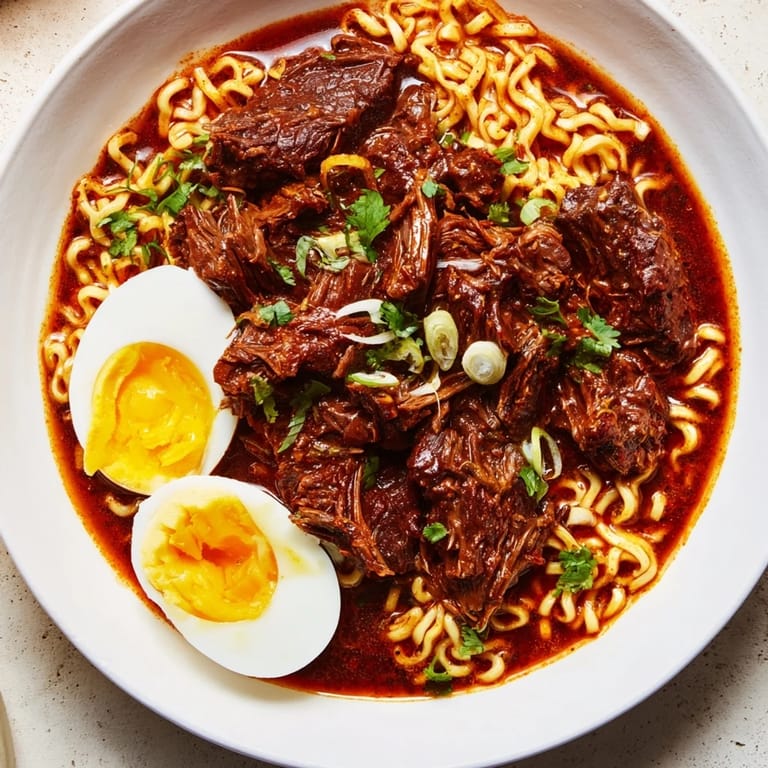
Save I discovered birria ramen completely by accident one rainy Tuesday when my friend texted that she was craving both her grandmother's Mexican beef stew and the ramen she'd eaten in Tokyo. I stared at my Dutch oven, then at a package of ramen noodles, and thought—why not? Three hours later, when that first spoonful of tender, chile-spiced beef hit the umami-rich broth, something clicked. It felt like two worlds had collided on purpose, not by mistake.
I made this for a dinner party on a cold February night, and watching everyone's faces when they tasted it—that moment of confusion followed by recognition, then pure contentment—made me understand why people write love letters to food. One guest actually closed her eyes between bites, and another asked for the recipe before dessert even arrived. That's when I knew this wasn't just fusion; it was honest.
Ingredients
- Beef chuck roast: The fattier cut means it shreds beautifully and enriches the broth; don't use lean beef here or you'll regret it.
- Dried guajillo and ancho chilies: Toasting them first wakes up their flavor—it's a small step that makes an enormous difference in depth.
- Chipotle in adobo: Just one brings smokiness and heat that makes people wonder what secret ingredient you used.
- Apple cider vinegar: It cuts through the richness and adds a brightness that keeps the broth from feeling heavy.
- Spices (cumin, cinnamon, cloves): This combination is what makes birria birria; don't skip or swap them out or the whole identity changes.
- Fresh ramen noodles or instant: If using instant, discard the seasoning packets—they'll fight with the complex broth you've built.
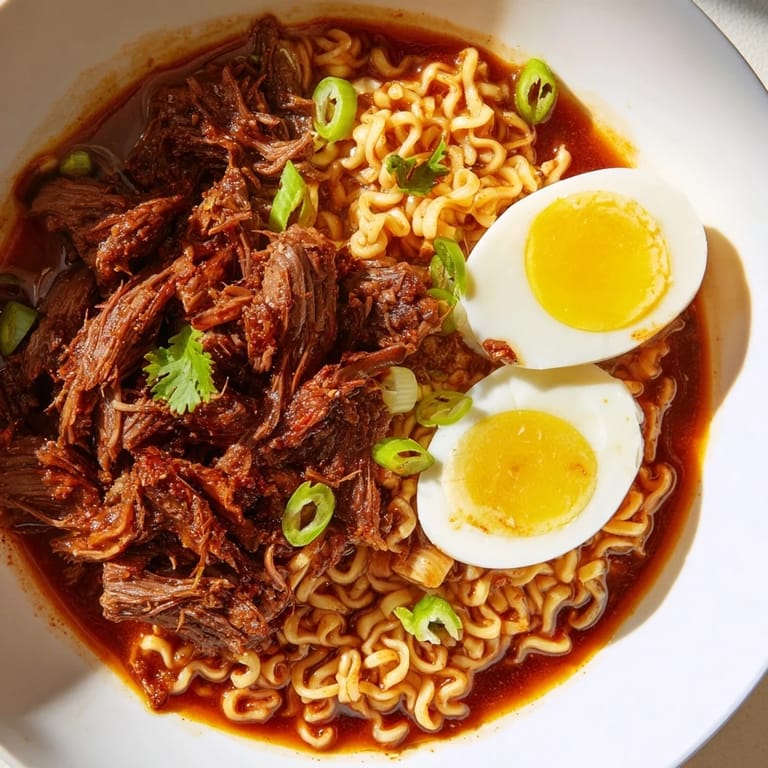
- Soft-boiled eggs, scallions, bean sprouts, cilantro: These aren't just garnish; they're textural contrast and freshness that make each spoonful different from the last.
Tired of Takeout? 🥡
Get 10 meals you can make faster than delivery arrives. Seriously.
One email. No spam. Unsubscribe anytime.
Instructions
- Toast and soak the chilies:
- Dry-toast the guajillo and ancho chilies in a skillet until you smell that toasted, almost nutty aroma—about a minute or two. Cover them with hot water and let them soften for 10 minutes; they'll turn almost burgundy and soften like leather.
- Blend the chile paste:
- Combine the soaked chilies, chipotle, onion, garlic, tomatoes, vinegar, and all those spices in a blender until completely smooth. You're building the soul of this dish right here.
- Sear the beef:
- Season those chunks generously and get them golden brown on all sides in a hot pot—this takes patience but creates flavor you can't fake. Don't crowd the pan; let each piece have room.
- Simmer low and slow:
- Pour in the chile mixture and beef broth, add bay leaves, and let it bubble gently on low heat for 2.5 to 3 hours. The house will smell incredible, and the beef will go from tough to falling-apart tender.
- Shred and strain:
- Once the beef shreds easily with two forks, pull it out and set it aside. Skim the fat from the surface of the broth, then strain it into another pot to remove solids.
- Build the final broth:
- Combine the strained birria broth with chicken broth, soy sauce, and sesame oil in a pot and bring to a gentle simmer. This is where East meets West.
- Cook the noodles:
- Follow the package directions—whether fresh or instant—and drain them well so they don't get soggy.
- Assemble each bowl:
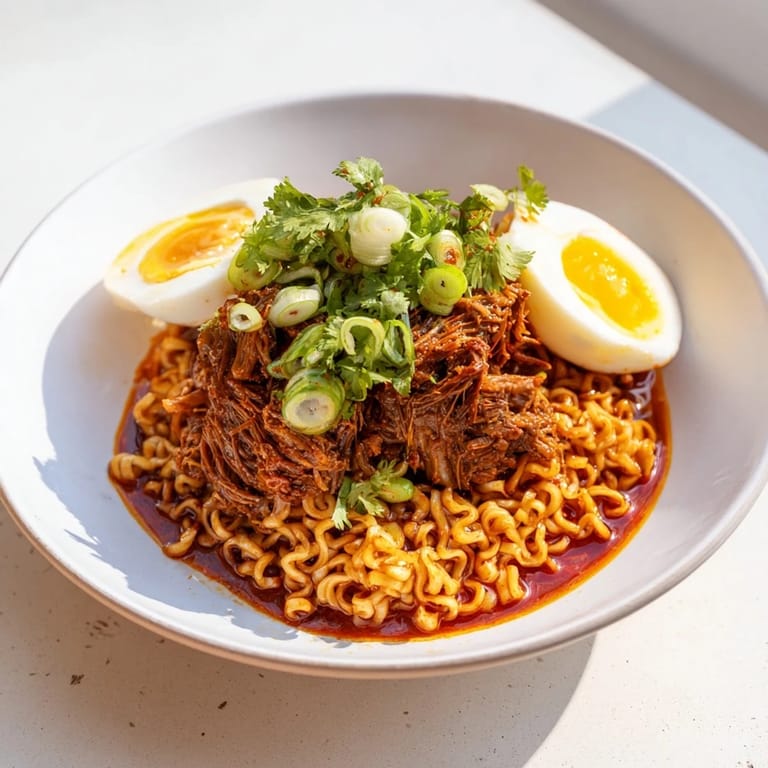
- Noodles in the bowl first, then ladle the hot broth over them, top with shredded beef, and let people pile on their own eggs, greens, and condiments.
 Save
Save There's something almost meditative about watching someone taste this dish for the first time—the moment they realize it's neither purely Mexican nor purely Japanese, but somehow both at once. That's when food becomes more than sustenance; it becomes a conversation.
Why This Fusion Works
Birria and ramen are closer cousins than they seem. Both are deeply flavored, slow-cooked broths meant to warm you from the inside out; both center on tenderized meat and allow for personal customization at the table. Where traditional birria uses a consomé for dipping or dunking tortillas, here we use noodles instead, and suddenly the two dishes speak the same language. The spices in the chile paste play beautifully against the umami of soy sauce and sesame oil—nothing fights, everything harmonizes.
Make-Ahead and Timing
The best part about this dish is that you can make the birria broth a day or two ahead; it actually tastes better when flavors have time to settle and deepen. When guests are coming, just reheat the broth, cook the noodles fresh, soft-boil your eggs that morning, and prep the toppings. The final assembly takes maybe 10 minutes for four bowls, which means you're actually relaxed when people arrive instead of frantic in the kitchen.
Customization and Variations
The beauty of serving this in a bowl with toppings on the side is that everyone eats it differently. Some people like it spicy with extra jalapeños and chili oil; others go gentle with extra cilantro and lime. I've had guests who top theirs with crispy shredded beef that's been pan-fried until the edges curl, while others prefer it soft throughout. You can also swap chicken for beef if you want something lighter, use gluten-free ramen and tamari to make it accessible to more people, and even sneak in extra vegetables like shiitake mushrooms or bok choy if you want to stretch it further.
- For extra richness and crunch, crisp some shredded beef in a hot skillet until the edges char slightly before plating.
- Keep the chili oil, lime wedges, and extra cilantro within arm's reach so people can adjust the heat and brightness to their taste.
- Pair this with a dry rosé or a light Mexican lager if you're serving it to company.
 Save
Save This dish taught me that the best recipes aren't about staying loyal to a single tradition—they're about respecting both traditions enough to let them coexist. Serve this with confidence, knowing that you're not breaking rules; you're writing new ones.
Recipe FAQs
- → How is the beef prepared for this dish?
The beef is slow-cooked in a spiced chili and tomato broth until tender enough to shred easily, enhancing depth and richness.
- → What kind of noodles are best suited here?
Fresh or instant ramen noodles work well; discard seasoning packets if using instant to avoid overpowering flavors.
- → Can the broth be customized?
Yes, the broth combines beef and chicken stocks with soy and sesame oil for a balanced, aromatic base that can be adjusted for savoriness.
- → Which toppings complement this dish?
Soft-boiled eggs, scallions, bean sprouts, cilantro, lime wedges, jalapeños, toasted sesame seeds, and chili oil add texture and brightness.
- → Are there alternatives for dietary restrictions?
Chicken can replace beef for lighter fare; gluten-free noodles and soy sauce substitutes accommodate gluten sensitivities.