 Save
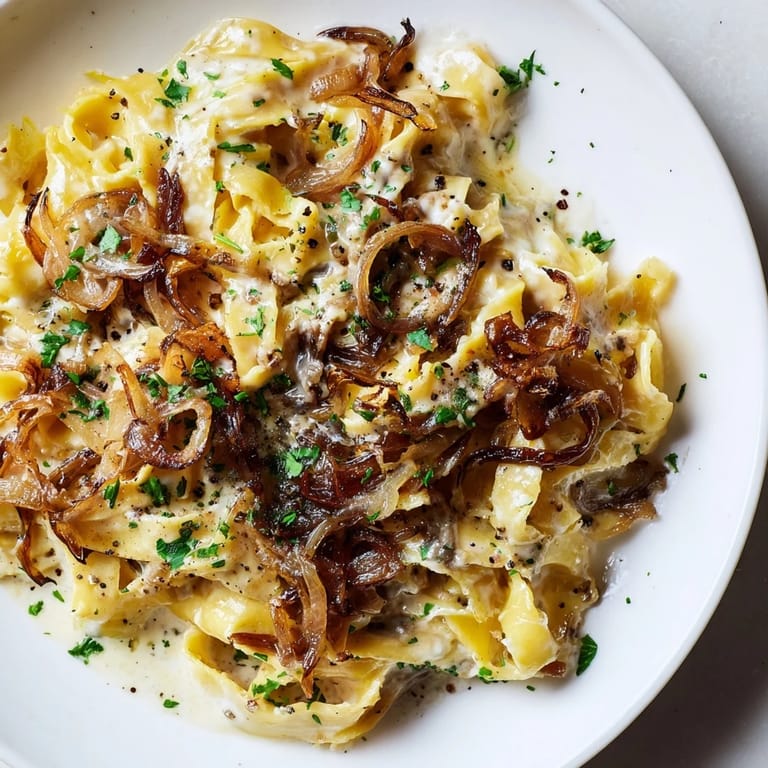
Save There's something about the smell of onions slowly turning golden that makes you forget you're cooking something as simple as pasta. I discovered this dish on a chilly evening when I had leftover wine, a bag of onions, and the sudden craving for something that felt both elegant and humble. What started as improvisation became my go-to comfort meal, the kind that tastes like French bistro food but comes together in one pot without fuss.
I made this for friends who were skeptical about onion-forward pasta, and watching their faces when they tasted it was worth the slow caramelization alone. One guest asked for the recipe before finishing her bowl, which told me everything I needed to know about whether this dish worked.
Ingredients
- Large yellow onions (3, thinly sliced): These are your foundation—the longer they cook, the deeper and more complex their sweetness becomes, so don't rush the caramelization.
- Garlic (2 cloves, minced): Added at just the right moment so it perfumes the pan without burning or overpowering the delicate onion work.
- Dry fettuccine or linguine (350 g): Choose a shape that cradles the silky onion sauce; avoid thin pasta that might break apart during the simmer.
- Dry white wine (60 ml): The wine cuts through the richness and adds brightness that balances the deep caramelization.
- Vegetable or beef broth (1 L): Beef broth deepens everything, but vegetable works beautifully if you want to keep this vegetarian.
- Unsalted butter (2 tbsp): Use real butter—it emulsifies with the olive oil and creates a more delicate caramelization than oil alone.
- Gruyère cheese (120 g, grated): This is the star of the finish; Gruyère melts into silky ribbons and has a nutty depth that Parmesan alone can't achieve.
- Parmesan cheese (60 g, grated): The sharper counterpoint to Gruyère, adding bite and complexity to the final dish.
- Olive oil (2 tbsp): Combines with butter to create a better caramelization temperature and prevent the butter from browning too quickly.
- Sugar (1 tsp): A small amount nudges the onions toward caramelization without making them taste sweet.
- Dried thyme (1/2 tsp): Adds an herbal whisper that echoes French bistro flavors without being obvious.
- Bay leaf (1): Infuses the broth with subtle earthiness; remember to fish it out before serving.
- Salt and freshly ground black pepper: Season at the end when you can taste the full picture of caramelized onions and melted cheese.
- Fresh parsley and extra cheese (optional garnish): The parsley brightens each bite, and extra cheese is never a mistake.
Tired of Takeout? 🥡
Get 10 meals you can make faster than delivery arrives. Seriously.
One email. No spam. Unsubscribe anytime.
Instructions
- Start the caramelization:
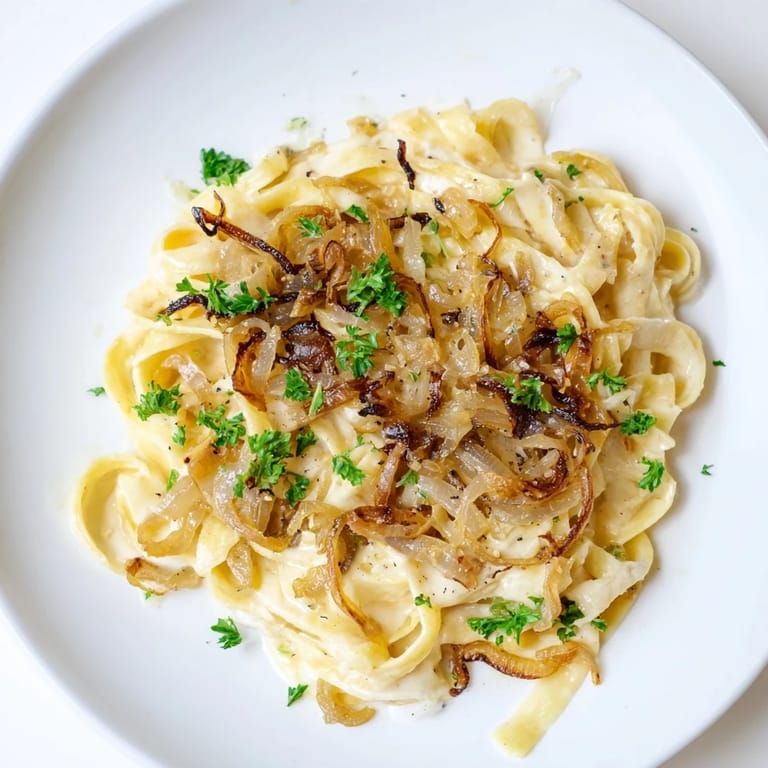
- Heat butter and olive oil together in a large, deep skillet or Dutch oven over medium heat until the butter foams slightly. Add your sliced onions and that teaspoon of sugar, then settle in—this is the slow part where patience turns onions into silk.
- Let them turn golden:
- Stir occasionally for 20 to 25 minutes, watching as the onions gradually deepen from pale yellow to honey-gold to rich amber. You'll notice they release their moisture first, then start to stick slightly as the sugars caramelize; that's exactly what you want.
- Add the garlic:
- Once the onions are deeply golden, add minced garlic and cook for just one minute until the smell fills your kitchen. Don't let it brown or it will taste bitter.
- Deglaze with wine:
- Pour in the white wine and scrape the bottom of the pan with your wooden spoon, lifting all those browned, flavorful bits into the liquid. Let it bubble gently for about two minutes until most of the wine has evaporated.
- Build the broth:
- Add the thyme, bay leaf, and all the broth to the pan and bring everything to a boil. The aroma at this moment is pure comfort.
- Add the pasta:
- Break or stir in the uncooked pasta, making sure it's submerged, then reduce the heat to medium-low. Simmer uncovered for 10 to 12 minutes, stirring frequently so the pasta cooks evenly and absorbs the flavorful broth instead of just sitting in it.
- Finish with cheese:
- Once the pasta is tender and most of the liquid has been absorbed, fish out the bay leaf and stir in the grated Gruyère and Parmesan. The cheese will melt into the remaining liquid and create a creamy, silky sauce that clings to every strand.
- Taste and season:
- Add salt and fresh black pepper to taste, remembering that the cheeses are salty, so go easy at first.
 Save
Save The moment this dish transcended being just a recipe for me was when my partner came home to the smell of caramelizing onions and just stood in the kitchen, breathing it in without saying anything. That's when I knew I'd stumbled onto something that felt both a little fancy and completely unpretentious.
The Magic of Slow Caramelization
Caramelizing onions is one of those kitchen skills that seems to require patience but actually just requires showing up and stirring occasionally. The first time I tried to rush it, I ended up with onions that were brown on the outside but still had a sharp, raw taste underneath. Now I set a timer and resist the urge to turn up the heat—the slower the cook, the more naturally sweet they become, and that sweetness is what makes this pasta taste nothing like everyday food.
Why This Works as One Pot
Most pasta dishes ask you to boil water separately, drain the pasta, then combine everything in a bowl or pan. This method cooks the pasta directly in the broth, which means the noodles absorb all that caramelized onion flavor from the very start. The starch that releases from the pasta also helps thicken the broth into a light sauce without needing cream or flour—it's elegant without being fussy.
From Weeknight to Special Occasion
I've served this on quiet Tuesday nights and brought it to dinner parties, and it performs equally well in both settings. The ingredient list feels special enough for guests, but nothing about it demands complicated timing or stress. You can make it while someone is opening a bottle of wine or setting the table, which is exactly how comfort food should work.
- Beef broth instead of vegetable makes this richer and more bistro-like, though vegetable keeps it lighter and vegetarian.
- If you have sautéed mushrooms or crispy bacon, stir them in at the end for extra depth without changing the core recipe.
- Leftovers reheat beautifully with a splash of broth stirred back in to loosen them up.
 Save
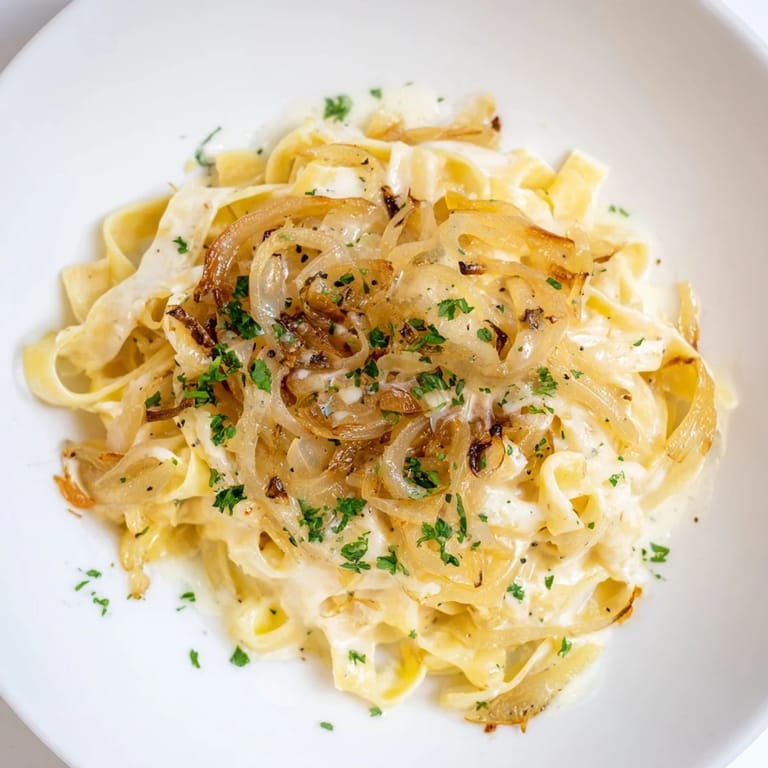
Save This dish lives somewhere between French bistro tradition and practical weeknight cooking, and that balance is exactly why it keeps finding its way back onto my table. Make it, and it will probably end up on yours too.
Recipe FAQs
- → How do I caramelize the onions properly?
Cook onions slowly over medium heat with butter and olive oil, stirring occasionally for 20–25 minutes until they turn deep golden and sweetly caramelized.
- → Can I use a different type of pasta?
Yes, long pasta like fettuccine or linguine works best as it cooks evenly in the broth, but feel free to experiment with other dry pastas of similar thickness.
- → What broth is recommended for richer flavor?
Beef broth adds a richer, deeper taste, while vegetable broth keeps the dish lighter and vegetarian-friendly.
- → How do I prevent the pasta from sticking while cooking?
Stir frequently during simmering and keep heat moderately low to allow pasta to absorb liquid without sticking or clumping.
- → Can I substitute the cheeses?
Gruyère can be swapped for Swiss cheese, and Parmesan can be replaced with a hard aged cheese to maintain the melt and savory notes.