 Save
Save There's something magical about reducing an entire bowl of onions down to a glossy, mahogany pile while potatoes turn golden in the oven. I discovered this dish on a cold evening when I wanted French onion soup but didn't have the patience for a full pot of broth. Instead, I grabbed potatoes and cheese and layered them like I was building something special. The result was better than I expected—crispy edges, sweet caramelized onions, and melted Gruyère that sealed everything together into pure comfort.
Last fall, I made this for a dinner where my friend brought a standing rib roast, and I realized halfway through caramelizing the onions that I'd finally created the perfect companion dish. The moment she tasted it, her eyes got wider—that silent nod that means you've gotten it right. She asked for the recipe before dessert was even mentioned.
Ingredients
- Yukon Gold potatoes: These waxy potatoes hold their shape beautifully when roasted and won't turn mealy—I learned this the hard way with russets years ago.
- Butter and olive oil: The combination creates a richer base for the onions than either one alone, and the butter adds a subtle nuttiness.
- Yellow onions: They're sweeter than white onions and caramelize into an almost jam-like consistency when given proper time and heat.
- Gruyère cheese: Its nutty, slightly earthy flavor echoes the caramelized onions perfectly—Swiss or Emmental work, but Gruyère is worth seeking out.
- Fresh thyme: Just a small amount adds an herbal backbone that prevents the dish from becoming one-note sweet.
Tired of Takeout? 🥡
Get 10 meals you can make faster than delivery arrives. Seriously.
One email. No spam. Unsubscribe anytime.
Instructions
- Get your oven ready and prep the potatoes:
- Preheat to 425°F with parchment paper on a baking sheet. Toss sliced potatoes with olive oil, salt, and pepper until each slice is glistening, then arrange them in a single layer where they can breathe and crisp up.
- Roast until golden:
- After 12–15 minutes, flip each slice so they brown evenly on both sides over the next 12–15 minutes. You're looking for edges that are turning translucent and spots of deep golden brown.
- Start the onions early:
- While potatoes roast, melt butter with olive oil over medium-low heat and add your sliced onions with a pinch of salt. Stir often for the first 10 minutes until they collapse into a soft, glossy mass.
- Caramelize slowly and patiently:
- This is where you can't rush—cook for another 20–25 minutes, stirring occasionally and letting the bottom develop those sweet, dark brown bits. Add sugar and thyme toward the end, which helps them deepen without burning.
- Layer everything:
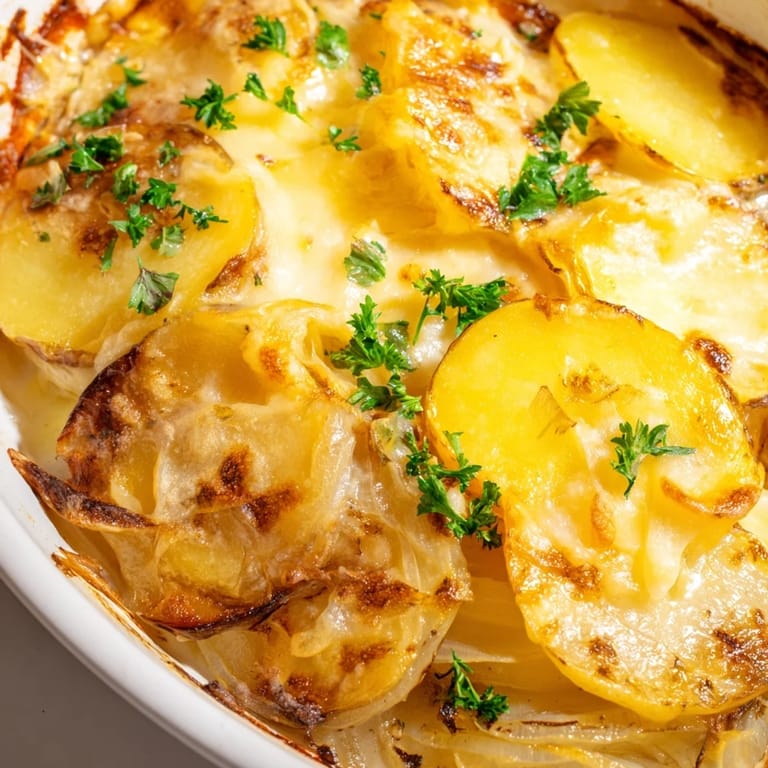
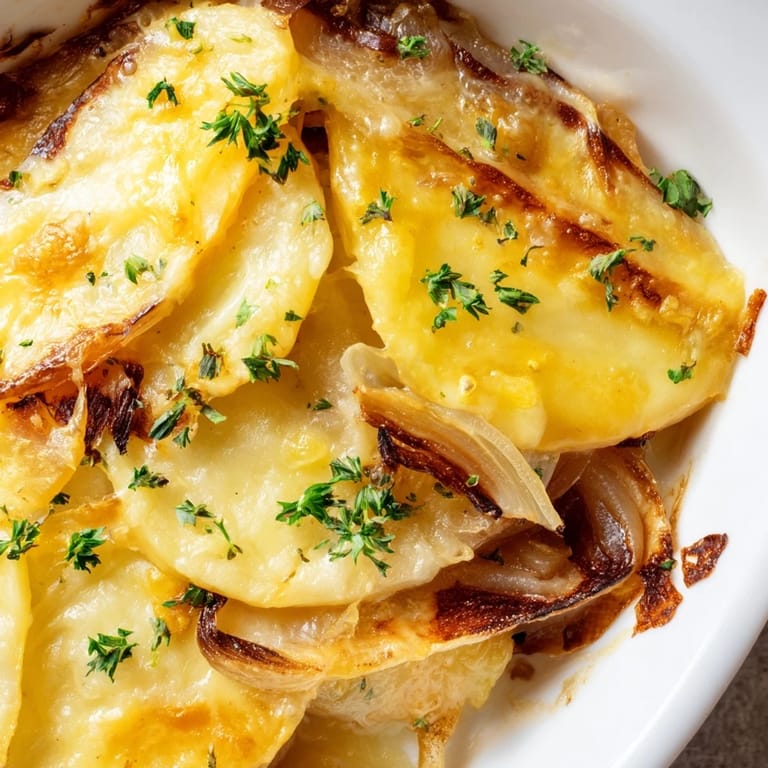
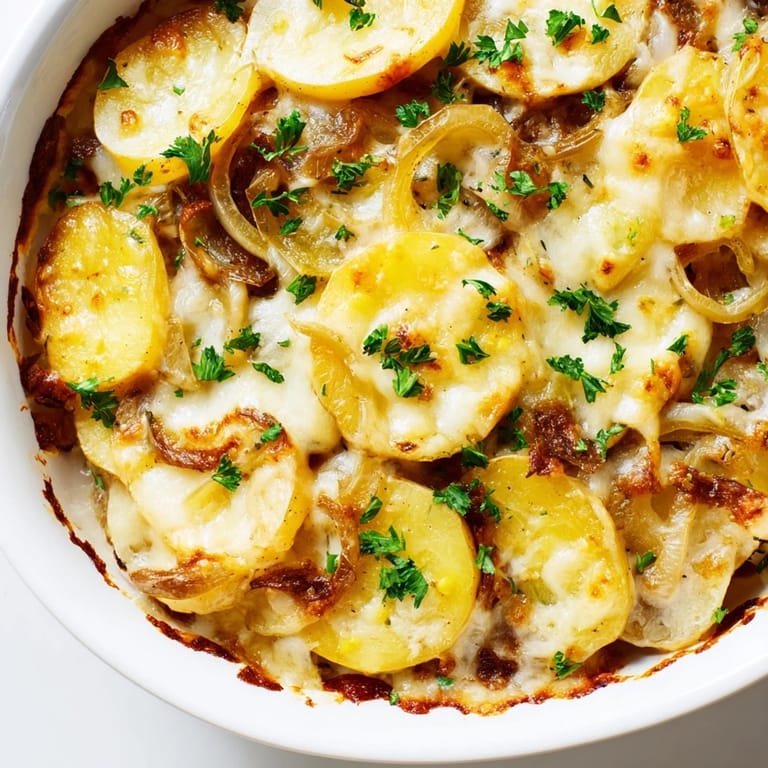
- Move your roasted potatoes to an ovenproof dish, slightly overlapping them like roof shingles. Spread the caramelized onions over top, then crown it all with grated Gruyère.
- Finish with bubbling cheese:
- Return to the oven for 10–12 minutes until the cheese melts and starts to bubble at the edges. A quick 2–3 minute broil gives you those golden, slightly crispy spots if you want them.
 Save
Save I remember bringing a baking dish of this to a potluck and watching it disappear before anything else touched the table. It's strange how something so simple—potatoes, onions, cheese—becomes this small miracle on a plate.
The Soul of Caramelization
Caramelizing onions properly is less about temperature and more about patience and attention. Low heat, stirring regularly, giving each layer time to turn golden before it browns—this is the foundation. I used to try to rush this step, thinking I could turn up the heat to save time, and I'd end up with onions that tasted burnt instead of sweet. Once I committed to the slow method, everything changed.
Why This Works as a Side Dish
There's a reason French onion soup pairs with rich roasted meats—those deep, caramelized onions cut through richness while the cheese and potatoes add substance. I've served this alongside roast chicken, steak, and even lamb chops, and it never feels out of place. It's hearty enough to satisfy without overshadowing the main course, and somehow it makes everything around it taste better.
Variations Worth Trying
This dish is forgiving and invites experimenting. A splash of dry white wine stirred into the onions near the end adds a subtle complexity that lingers. Some nights I add a whisper of nutmeg to the cheese layer, or swap half the potatoes for thinly sliced celeriac for a different texture. It's the kind of dish that works as written but also rewards small creative touches.
- A pinch of nutmeg or smoked paprika in the cheese layer adds unexpected depth.
- If you have leftover onions, they're brilliant on a burger or folded into scrambled eggs the next morning.
- Make this ahead and reheat gently in a 350°F oven for 15 minutes—it reheats beautifully.
 Save
Save This recipe taught me that the best dishes aren't always complicated—sometimes they're just the right elements in the right order, given enough time to become themselves. Serve it hot, straight from the oven, and watch it disappear.
Recipe FAQs
- → What type of potatoes work best for this dish?
Yukon Gold potatoes are ideal due to their creamy texture and ability to hold shape when roasted, creating tender yet crisp slices.
- → How are the onions prepared to achieve deep caramelization?
Onions are slowly cooked over medium-low heat with butter, olive oil, sugar, salt, and fresh thyme until they turn rich golden brown and develop sweet, complex flavors.
- → Can I substitute Gruyère cheese with another variety?
Yes, Swiss or Emmental cheese are excellent alternatives that melt well and offer a similar nutty flavor profile.
- → Is this dish suitable for gluten-free diets?
Yes, using the specified ingredients, the dish is naturally gluten-free, though it's important to verify cheese packaging for cross-contamination risks.
- → What cooking methods are used for the potatoes and topping?
Potato slices are oven-roasted until golden and tender. After layering with caramelized onions and cheese, the dish is baked again to melt and brown the cheese topping.
- → How can I add extra flavor to the caramelized onions?
Adding a splash of dry white wine or sherry as the onions finish cooking enhances their richness without overpowering the dish.