 Save
Save There's something about a bowl of stew that stops you cold on a November afternoon—the kind of weather where you can't quite decide if you're hungry or just tired. I was testing out a new vegetable delivery box, staring at a pile of sweet potatoes and wondering what to do with them, when it hit me: a stew that could hold its own as a proper meal, not just a side dish. The first batch was too thin, the potatoes fell apart before the beans softened, but by the third attempt something clicked. Now it's the recipe I return to whenever I need something that feels like both nourishment and comfort.
I made this for a friend who'd just moved to a new place with a kitchen barely bigger than a closet, and watching her eat a second bowl while sitting on moving boxes made the whole recipe feel worthwhile. She texted me weeks later asking if I remembered how I'd made it, which is when I realized this wasn't just my comfort food anymore.
Ingredients
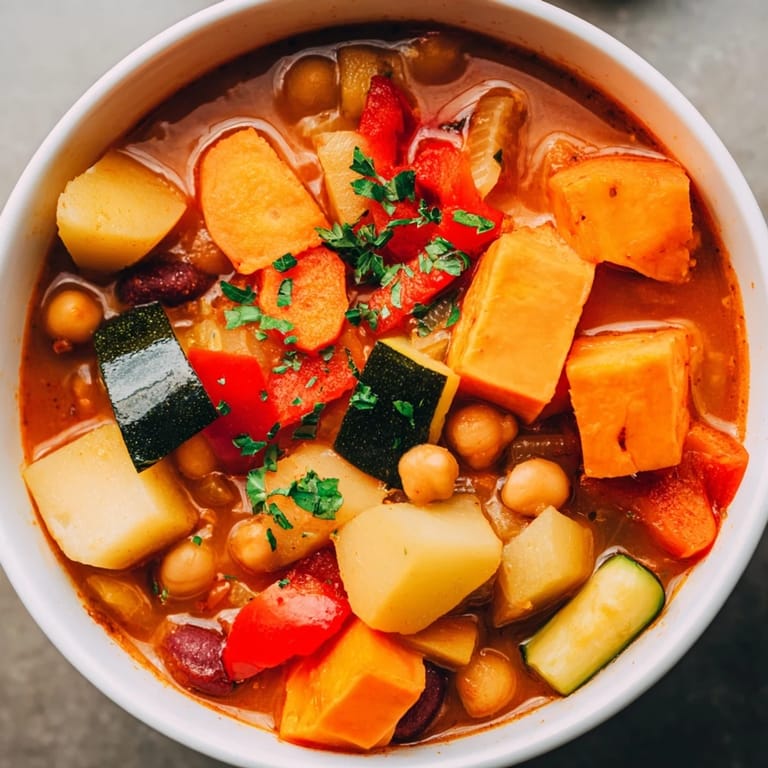
- Sweet potatoes: The real backbone here—they add natural sweetness that balances the tomato broth without needing any added sugar, and they hold their shape better if you cut them into even chunks.
- Regular potatoes (Yukon Gold or russet): They break down slightly and thicken the stew while keeping things grounded, and mixing both types gives you the best texture.
- Cannellini or kidney beans: Cannellini are creamier if you like a softer mouthfeel, but kidney beans hold their shape better if you prefer more texture—use what speaks to you.
- Chickpeas: Adding both beans and chickpeas creates layers of protein and fiber without making it feel heavy or one-note.
- Carrots, celery, and onion: This is your flavor foundation, so don't rush the sauté—those extra five minutes of browning changes everything.
- Garlic, red bell pepper, and zucchini: Garlic goes in after the softer vegetables to avoid burning, while the pepper and zucchini add brightness that cuts through the richness.
- Diced tomatoes and tomato paste: Tomato paste adds depth that tastes like the stew has been simmering for hours, even though it hasn't.
- Smoked paprika, thyme, and cumin: Smoked paprika is the secret weapon—it adds a whisper of smokiness that makes people ask what's in here, even though it's only a teaspoon.
- Baby spinach: Add it at the very end so it wilts in just enough time to become tender without losing its brightness.
- Olive oil: Good quality makes a difference here since you're using it early and letting it carry other flavors.
Tired of Takeout? 🥡
Get 10 meals you can make faster than delivery arrives. Seriously.
One email. No spam. Unsubscribe anytime.
Instructions
- Build your base:
- Heat olive oil over medium heat and add onion, celery, and carrot—let them soften and turn golden, which takes about five minutes and fills your kitchen with the smell that means something good is happening. Don't skip this step just because you're in a hurry; it's worth those five minutes.
- Layer in the heat:
- Add garlic, bell pepper, and zucchini, cooking just until fragrant—about three minutes, until the garlic stops smelling raw. You want everything still slightly firm at this point.
- Toast the spices:
- Stir in your sweet potatoes, regular potatoes, and all the dry spices, letting them cook for two minutes so the spices release their oils and wake up. This is when your kitchen smells like you know what you're doing.
- Build the broth:
- Stir in tomato paste first, cooking it for a minute so it darkens slightly, then add your diced tomatoes, vegetable broth, and bay leaf. Bring everything to a boil—you'll see it shift from simmering to rolling, which is your signal to turn down the heat.
- Let it simmer:
- Cover and reduce heat to low, then let it go for twenty minutes until the potatoes are just barely fork-tender. If you stab one and it falls apart, you've waited too long; you want them to hold together.
- Add the beans:
- Stir in your cannellini and chickpeas and let everything simmer uncovered for ten to fifteen minutes so the broth can thicken slightly and the flavors really marry together. Taste as you go—this is when the stew starts tasting like itself.
- Finish with green:
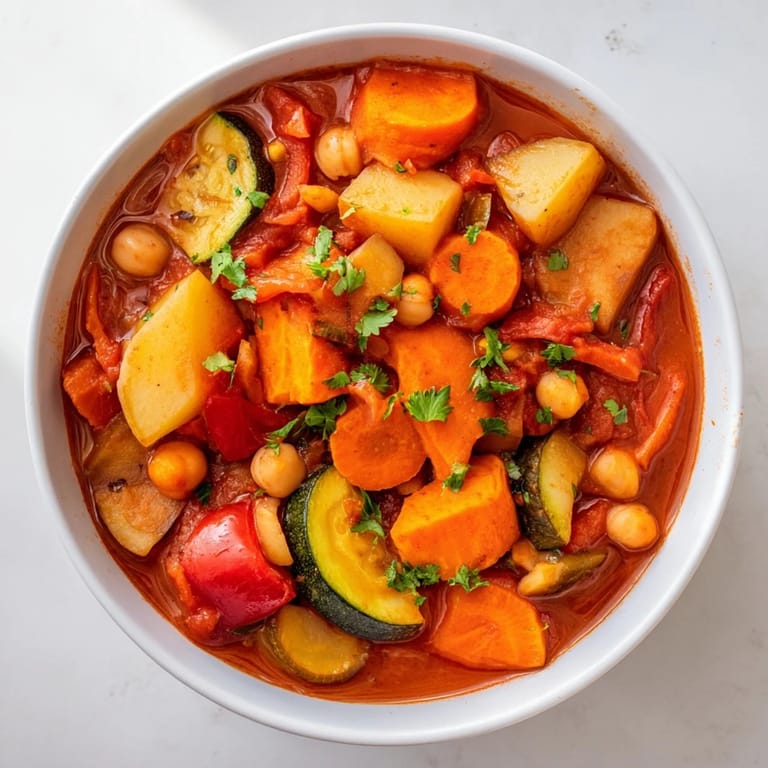
- Add spinach in the last two minutes, just enough time for it to become tender without disappearing into the broth. Remove the bay leaf and taste one more time for salt.
 Save
Save One winter morning, I brought a thermos of this to someone dealing with a difficult time, and they told me later that having something warm and real made them feel seen. That's when I understood that recipes like this aren't just about feeding yourself—they're about showing up for people in small, nourishing ways.
Variations and Swaps
If you're working with what you have rather than what the recipe says, this stew is remarkably flexible. Swap the regular potatoes for parsnips if you like something earthier, or use whatever beans you have in your pantry—lentils work beautifully if you add them earlier since they won't fall apart. Root vegetables are your friend here: butternut squash adds sweetness, turnips add earthiness, and kale can replace spinach if that's what's in your crisper drawer.
Make It Your Own
The beauty of this recipe is that it adapts to what you're craving and what's actually in your kitchen. If you want heat, add chili flakes or a pinch of cayenne when you toast the spices—start with a quarter teaspoon and taste from there. For something richer, stir in a tablespoon of coconut milk at the end, which rounds out the flavors without making it heavy. If you're serving it over rice or with crusty bread, the stew becomes something more substantial, almost a celebration.
Storage and Reheating
This stew genuinely gets better after a day or two, as everything settles and the flavors deepen—that's the mark of a recipe worth making. Store it in an airtight container in the fridge for up to five days, or freeze it in portions for whenever you need something quick and nourishing. Reheat gently on the stovetop with a splash of broth if it thickens too much, and taste again for seasoning because sometimes salt fades during storage.
- Cold stew thickens as it sits, so don't panic if it seems too thick when you reheat it—a little broth brings it right back.
- If you're freezing it, leave it slightly more liquid than you like the finished version since it won't thicken further in the freezer.
- Spinach doesn't freeze well, so add fresh greens when you reheat if you want that brightness back.
 Save
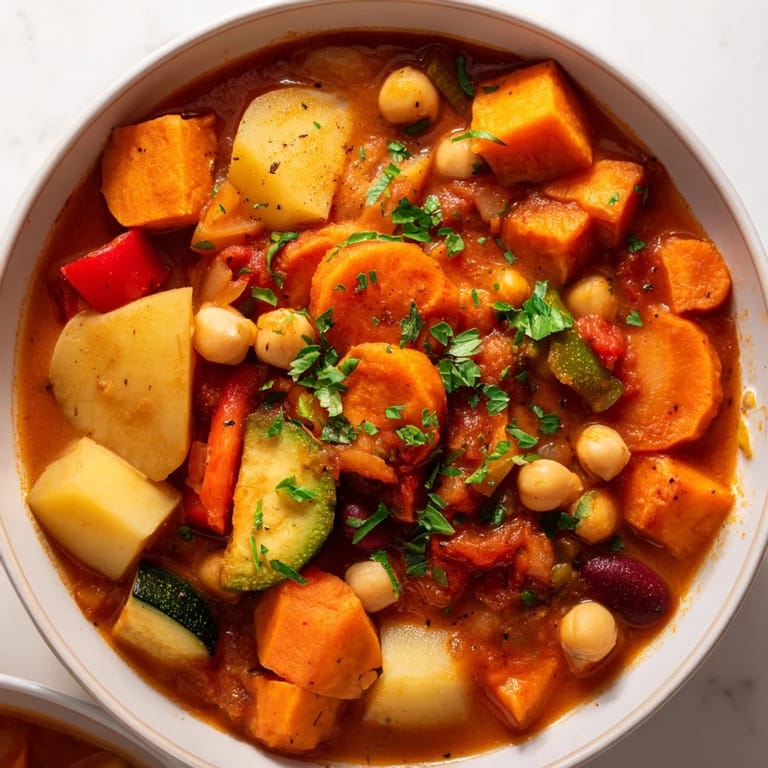
Save A good stew is proof that simple ingredients, patience, and showing up in your kitchen can create something that feeds more than just your stomach. Make this when you need comfort, when you're cooking for someone else, or when you simply want to know you'll have something good waiting in the fridge.
Recipe FAQs
- → Can I substitute the beans with other legumes?
Yes, lentils or different types of beans can be used interchangeably depending on preference or availability.
- → What can I add to make the stew spicier?
Adding ½ teaspoon of chili flakes or a dash of cayenne pepper enhances the heat level naturally.
- → Is it possible to prepare this stew in advance?
Absolutely. The flavors deepen when allowed to sit, making it ideal for meal prep and reheating.
- → Can I omit baby spinach or parsley?
Yes, those are optional garnishes that add freshness but the stew remains delicious without them.
- → What side dishes pair well with this stew?
Crusty bread, rice, or quinoa complement the stew nicely, adding texture and heartiness.
- → How do I ensure the potatoes are tender but not mushy?
Simmer the stew until potatoes are just tender to maintain texture and avoid overcooking.