 Save
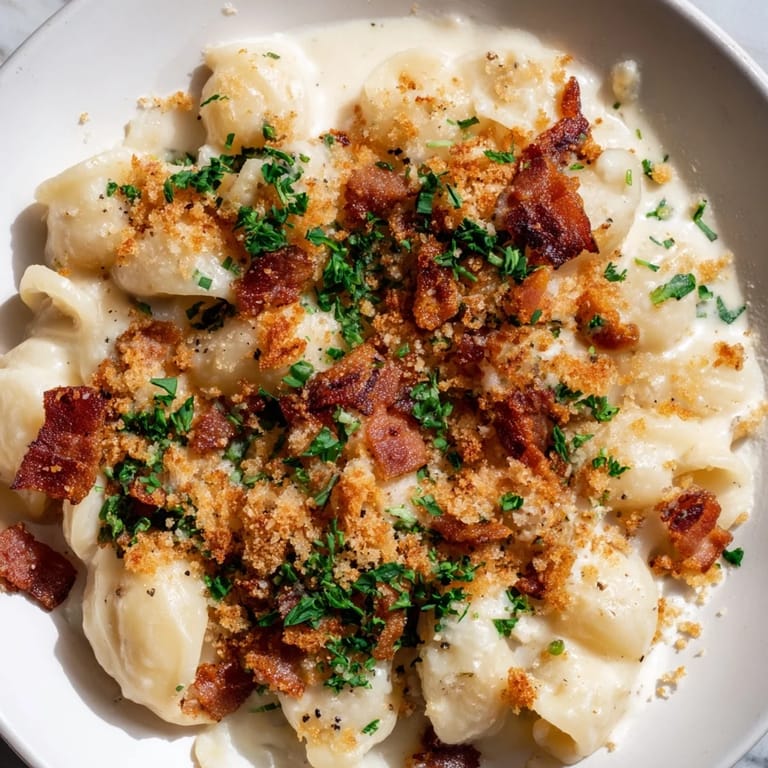
Save The first time I made this mac and cheese, I was genuinely trying to recreate that viral Keith Lee moment—you know, that satisfied nod after a perfectly balanced bite of creamy cheese and crispy bacon. What started as a casual weeknight dinner became something I found myself craving constantly, not because it was fancy, but because it hit every note at once: silky, rich, textured, indulgent without apology. That contrast between the molten cheese sauce and the shattered bacon pieces became my quiet obsession. I've made it dozens of times since, and each time someone takes that first forkful, they get it immediately.
I remember making this for a group of friends on a random Tuesday, and the kitchen filled with this incredible smell—butter and flour getting toasted, cream coming to a simmer, bacon crisping in the oven. One of my friends literally paused mid-conversation and just inhaled deeply, then said, 'Whatever you're making, I'm staying for that.' The dish came together so smoothly that night, and watching people come back for seconds without being asked taught me that sometimes the simplest foods, made with proper technique and real ingredients, feel more luxurious than anything complicated.
Ingredients
- Elbow macaroni (400 g): The shape traps sauce perfectly, so don't swap for tubes or shells unless you want a different eating experience—al dente is non-negotiable here.
- Unsalted butter and whole milk: These are your sauce foundation, so use quality dairy; it genuinely tastes different than cheaper versions.
- Heavy cream (120 ml): This small amount prevents the sauce from breaking and keeps it silky instead of gluey.
- Sharp cheddar, mozzarella, and Gruyère (350 g total): Each cheese brings different qualities—cheddar for bite, mozzarella for creaminess, Gruyère for nutty depth.
- Spices (garlic powder, onion powder, smoked paprika): These whisper in the background rather than shouting; they're the secret to preventing the dish from tasting one-note.
- Thick-cut bacon (8 slices): Thinner bacon crisps up too aggressively and loses presence; thick-cut stays substantial and flavorful.
- Panko breadcrumbs and melted butter: The topping needs this combination to turn golden and crunchy, not greasy or burnt.
Tired of Takeout? 🥡
Get 10 meals you can make faster than delivery arrives. Seriously.
One email. No spam. Unsubscribe anytime.
Instructions
- Get your oven ready and prep your pan:
- Preheat to 200°C and grease your 9x13 baking dish so nothing sticks. This small step saves frustration later when you're plating.
- Cook the macaroni just shy of tender:
- Package instructions are a starting point, but pull it one minute early—the pasta will soften more in the oven. Drain it well and set it aside.
- Crisp the bacon with intention:
- Lay it flat on parchment, dust with pepper and garlic powder, and bake it rather than frying. Oven baking gives you even crispness without babysitting a skillet, and you'll hear it shatter when it's done.
- Build your sauce foundation with the roux:
- Melt butter, whisk in flour, and let it bubble gently for 1–2 minutes without browning. This paste is where your sauce gets body.
- Add cream and milk slowly and smoothly:
- Whisk constantly as you pour to prevent lumps. The sauce will thicken noticeably once it simmers, so watch for gentle bubbles rather than aggressive boiling.
- Melt your cheeses into the warm sauce:
- Remove from heat first, then stir them in so they incorporate smoothly without separating. You'll feel when it's right—totally glossy and uniform.
- Coat the macaroni evenly:
- Fold the drained pasta into the cheese sauce gently but thoroughly so every piece gets coated. This is where patience pays off.
- Layer strategically in your baking dish:
- Half the mac and cheese, half the bacon, remaining mac and cheese, then the rest of the bacon on top. Layering keeps the bacon texture intact instead of sinking into sauce.
- Make and apply the topping:
- Mix panko with melted butter and optional Parmesan, then scatter it evenly across the top. This will turn golden and deeply crunchy.
- Bake until golden and bubbling at the edges:
- 15–18 minutes should do it; look for the top to turn a rich golden brown and the edges to bubble up. Let it rest 5 minutes so it sets slightly before serving.
 Save
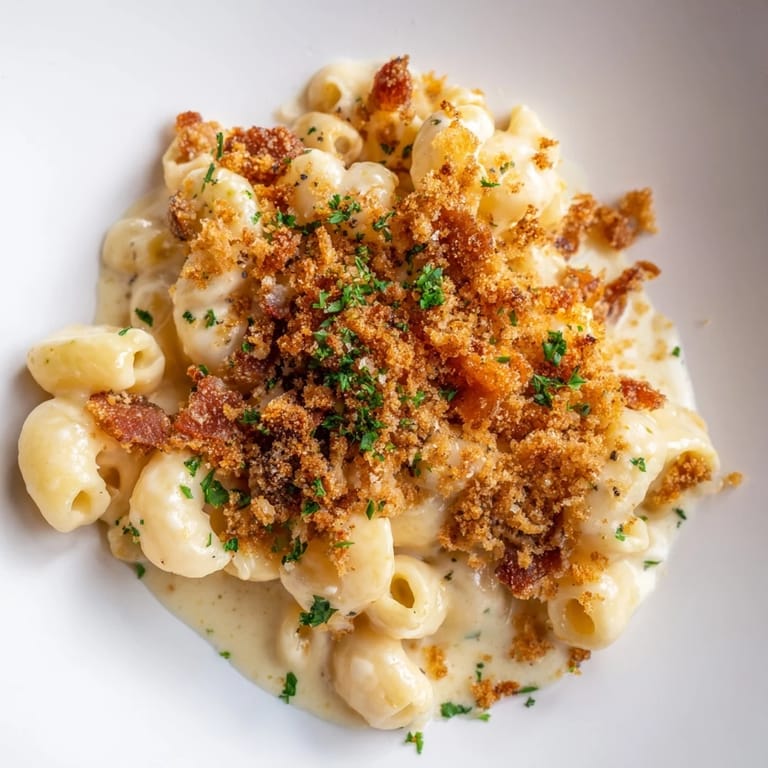
Save There's this moment after plating when someone cuts into it and the cheese pulls in those delicate strands, and the bacon shatters between their teeth, and their expression just shifts. Food doesn't need to be complicated to move people; it just needs to be made with attention and real ingredients. This dish became my proof of that.
Why the Three-Cheese Blend Works
I used to make mac and cheese with just cheddar, and it was fine but flat—one flavor dominating the whole thing. Adding mozzarella gave me that creamy, stretchy quality that makes the sauce cling to the pasta, and Gruyère brought this subtle nuttiness that sits in the background. The three together create something more than the sum of their parts, a sauce that tastes layered and sophisticated without requiring any fancy technique. Sharp cheddar especially matters because it has enough bite to cut through the richness of the cream and keep the dish from feeling heavy.
The Bacon Question
I've gotten questions about adding bacon to the sauce or cooking it traditionally in a skillet, and I've tried both—they both diminish what makes this dish special. Oven-baking the bacon at the same temperature gives you control and even results, and keeping it separate until the end means it stays structurally intact and textually distinct. When someone bites into this mac and cheese, they should hear and feel that crunch, not bite through and wonder where it went. Thick-cut bacon is crucial here because it has enough substance to stay crispy and actually taste like something rather than dissolving into the sauce.
Make It Your Own
The beauty of a cream sauce is that it's a canvas for whatever flavors you're craving that day. I've added smoked paprika when I wanted something deeper, a pinch of cayenne when I wanted heat, even some crispy sage one autumn because fresh herbs were sitting on my counter. The dish is forgiving enough to handle these experiments without falling apart, and structured enough that you can't really break it. One version I made with extra-sharp aged cheddar and some Dijon mustard felt restaurant-quality in the best way—tangy, complex, still comforting.
- Try adding a pinch of chipotle powder for smokiness that echoes the bacon.
- Fresh herbs like parsley or chives stirred in just before serving brighten the heavy richness.
- If you want to stretch it further, sautéed mushrooms or roasted broccoli add bulk and nutrition without changing the core character.
 Save
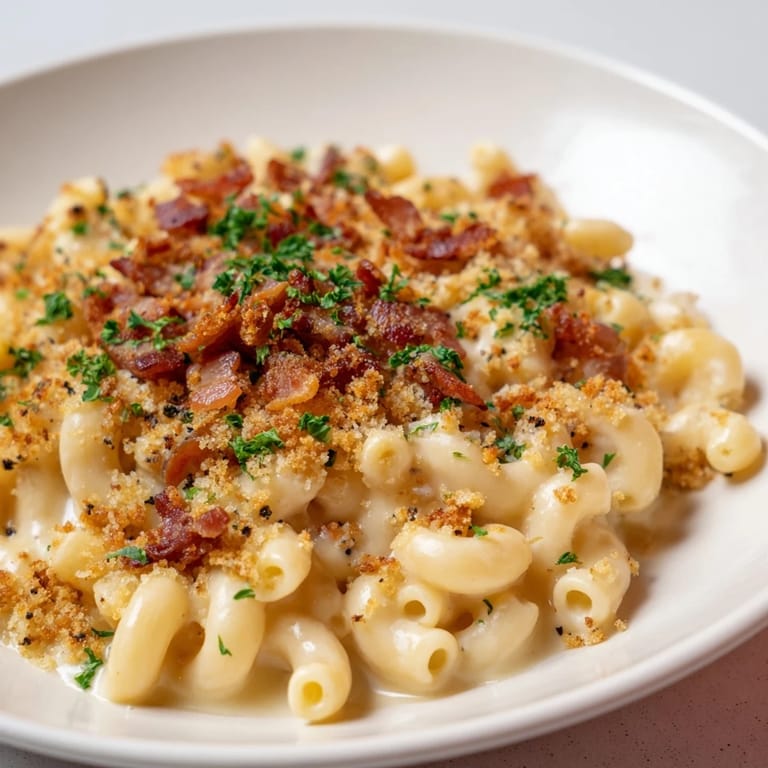
Save This mac and cheese is the kind of dish that reminds you why people cook in the first place—not for complexity or technique points, but because gathering around something warm and real is how you actually connect with people. Make it, share it, and watch what happens.
Recipe FAQs
- → What type of pasta is best for this dish?
Elbow macaroni works best due to its shape, allowing the cheese sauce to coat it evenly for creamy bites.
- → How can I achieve crispy bacon without burning?
Bake thick-cut bacon at 200°C (400°F) on parchment paper for 15-18 minutes until deeply golden and crisp before chopping.
- → Can I substitute cheeses in the sauce?
Yes, Gruyère can be swapped for Monterey Jack or extra cheddar without sacrificing creaminess or flavor depth.
- → What is the purpose of the panko topping?
Panko breadcrumbs add a crunchy contrast atop the smooth cheese and pasta, enhancing texture and appearance.
- → How to make it suitable for vegetarians?
Omit bacon and consider adding sautéed mushrooms or roasted cauliflower to maintain texture and savory notes.
- → Can I prepare any components in advance?
Yes, cheese sauce and cooked pasta can be made ahead and combined before topping and baking for convenience.