 Save
Save I discovered this bowl on a Tuesday afternoon when I opened my pantry and found a forgotten can of salmon staring back at me. No elaborate grocery run, no meal plan—just curiosity and whatever vegetables were lingering in my crisper drawer. I mixed that salmon with a spoonful of mayo and a dash of sriracha out of pure improvisation, and somehow it tasted less like making do and more like I'd unlocked something intentional. Now it's become my go-to when I need lunch that feels effortless but tastes like I tried.
I made this for my roommate on a chaotic workday when neither of us had eaten since breakfast. She watched me assemble it in real-time, skeptical at first—canned salmon seemed beneath her standards—but the moment she took a bite, something shifted. She asked for the recipe before she'd finished chewing. That's when I realized this bowl wasn't about simplicity; it was about honesty, flavor, and the way good food can turn an ordinary day into something worth remembering.
Ingredients
- Jasmine or sushi rice, 1 cup uncooked: Jasmine rice gives you that slightly fragrant, fluffy base that catches the creamy salmon sauce perfectly. Rinse it well under cold water until the water runs clear—this removes excess starch and prevents mushiness.
- Water, 2 cups: The ratio matters more than you'd think; too little and you'll have crunchy rice, too much and it turns into porridge.
- Canned salmon, 1 can (6 oz / 170 g), drained and flaked: Choose wild-caught if you can; the flavor is deeper and the color richer. Drain it thoroughly and break it into flakes with a fork, checking for any stray bones (yes, the soft ones are edible and calcium-rich, but they surprise people).
- Mayonnaise, 2 tablespoons: This is your binder and the silent flavor carrier; it makes the sriracha cling to every piece of salmon and rounds out the heat.
- Sriracha sauce, 1–2 teaspoons: Start with one teaspoon, taste, and adjust. Some srirahas are hotter than others, and you're looking for a warm glow, not a five-alarm fire.
- Soy sauce, 1 teaspoon: A small amount adds umami depth without oversalting the mixture; it's the secret whisper that makes people ask what you did differently.
- Toasted sesame oil, ½ teaspoon: Use the toasted kind, not the clear stuff. Half a teaspoon is all you need—it's potent and aromatic, and too much becomes overpowering.
- Shredded carrot, ½ cup: Raw carrots add crunch and a clean sweetness that balances the spice; they're also pretty, which matters more than you might think.
- Cucumber, ½ cup, thinly sliced or julienned: Thin slices mean they soak up some of the sauce while staying crisp. A mandoline makes this faster, but a steady knife hand works too.
- Avocado, ½, sliced: Add this just before serving so it doesn't darken; it's the creamy counterpoint to the spicy salmon and acts like a silencer for the heat.
- Scallions, 2 tablespoons, sliced: The green parts add a fresh onion bite; slice them at the last second so they stay bright and alive.
- Toasted sesame seeds, 1 teaspoon: These little seeds are toasted, which means they've already got a nutty depth. Sprinkle them right before eating for maximum texture.
- Edamame, ½ cup, shelled (optional): If you use them, steam or microwave until just warm; they add protein and a soft, slightly nutty element.
- Nori sheets, cut into strips (optional): Tear them into bite-sized strips right before serving so they stay crispy and don't absorb moisture from the bowl.
Tired of Takeout? 🥡
Get 10 meals you can make faster than delivery arrives. Seriously.
One email. No spam. Unsubscribe anytime.
Instructions
- Rinse and cook the rice:
- Run your rice under cold water and stir it with your fingers until the water stops looking milky. This takes about a minute and changes everything about the texture. Put it in a saucepan with 2 cups of water, bring it to a rolling boil, then lower the heat, cover it, and let it sit undisturbed for 12–15 minutes. You'll know it's done when the water is absorbed and the grains are tender but not mushy.
- Build the spicy salmon mixture:
- Drain your canned salmon well—I usually press it gently against the can with a fork to squeeze out extra liquid. In a bowl, combine the flaked salmon with mayonnaise, sriracha, soy sauce, and sesame oil, stirring until it's creamy and evenly coated. Taste it as you go; this is your chance to dial in the spice to your preference.
- Prep your vegetables:
- Julienne the cucumber into thin matchsticks, slice the avocado just before you assemble (so it doesn't turn brown), and shred the carrot if you haven't already. If you're using edamame, steam or microwave them for 2–3 minutes until they're warm through.
- Assemble the bowls:
- Divide the hot rice between two bowls, and top each mound with half of the spicy salmon mixture. The warmth of the rice will slightly soften the creamy sauce, which is exactly what you want.
- Add the fresh elements:
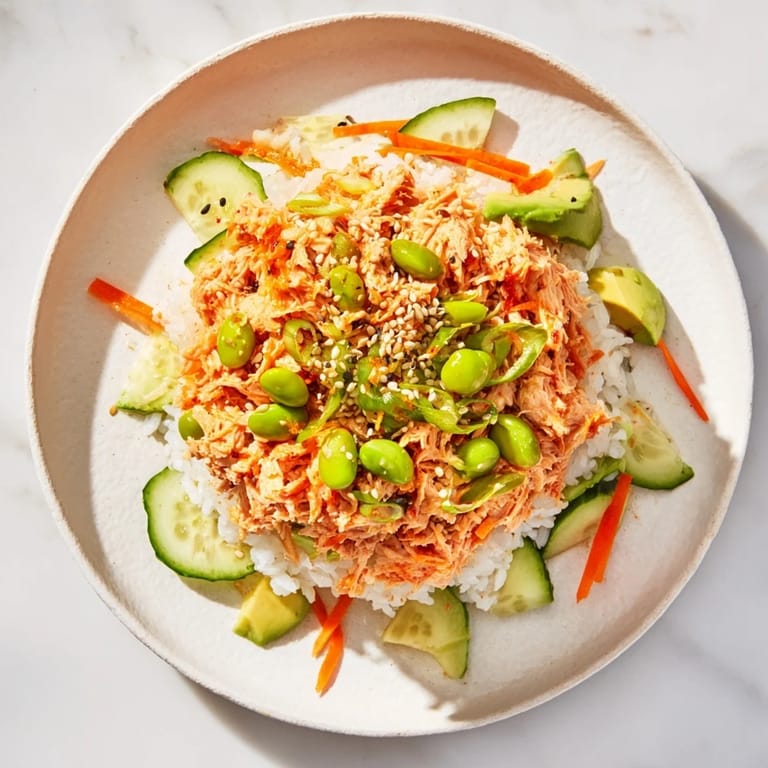
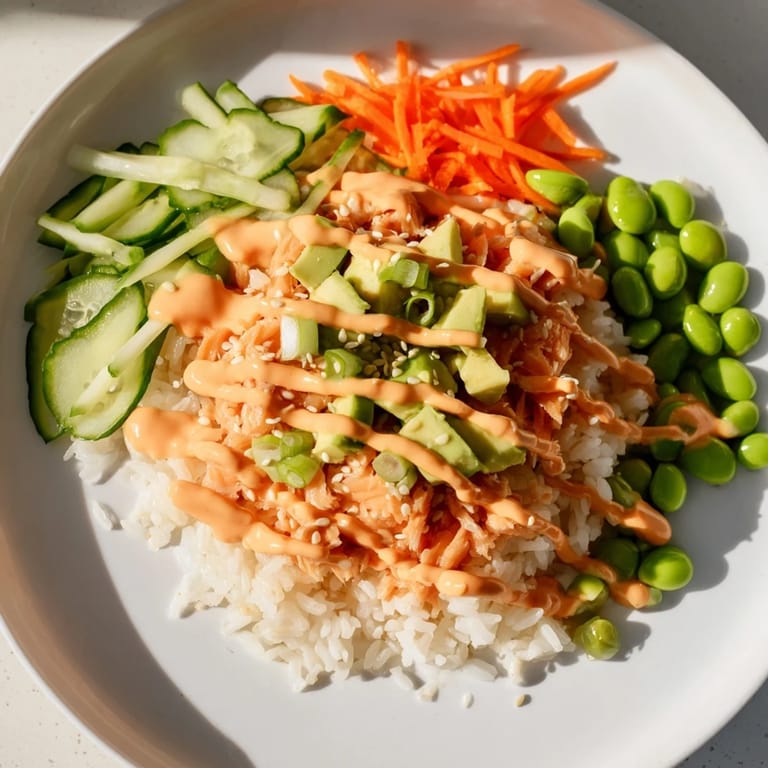
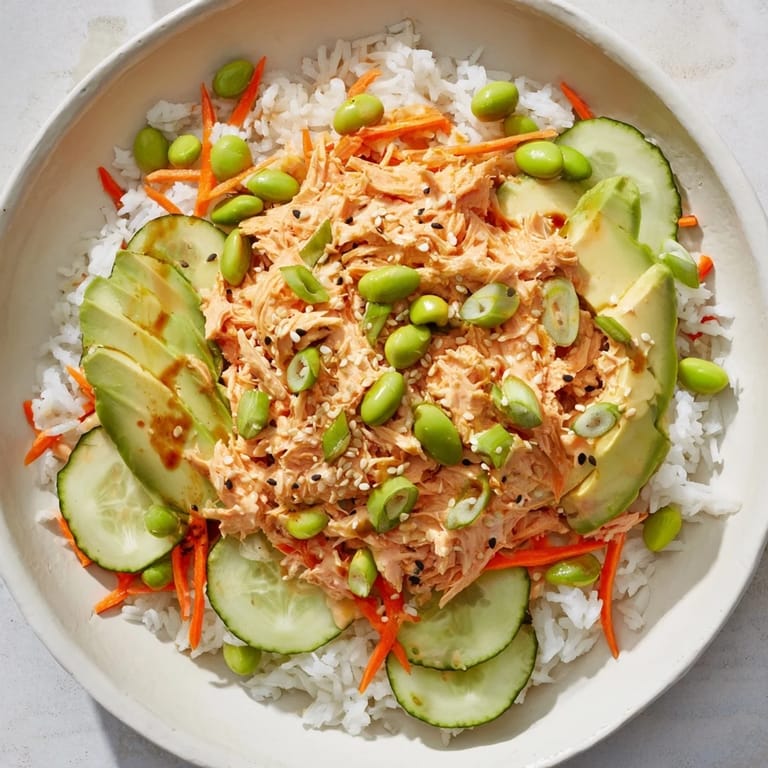
- Arrange the carrot, cucumber, avocado, and edamame around the salmon in whatever pattern appeals to you. There's no wrong way to do this, though I like to create little sections so every spoonful gets a mix of textures.
- Finish and serve:
- Sprinkle scallions and toasted sesame seeds over the top. Add nori strips if you want that crispy seaweed element. Serve immediately with extra sriracha or soy sauce on the side so everyone can adjust the heat to their taste.
 Save
Save What I love most about this bowl is that it's proved itself over time. I've made it for lazy lunches alone, shared it with friends who needed something fast and nourishing, and even brought it to work potlucks where people were skeptical about canned salmon until they tasted it. It's the kind of dish that doesn't need fancy ingredients or technique—it just needs intention and a willingness to let simple things shine.
Why Canned Salmon Deserves Your Respect
There's a weird snobbery around canned fish that I've never understood. Canned salmon is wild-caught, flash-frozen at peak freshness, and often packed the same day it's caught. The soft bones are edible and full of calcium. The fat content that makes canned salmon more forgiving in recipes is the same omega-3s nutritionists keep telling us to eat more of. I've had canned salmon that tastes richer and cleaner than fresh salmon I've bought at the store, especially when I'm far from the coast or in the middle of winter.
The Art of Building a Better Rice Bowl
A great rice bowl isn't about following rules; it's about balance. You need something warm (the rice), something creamy (the salmon mixture), something fresh and crunchy (the vegetables), and something to tie it all together (the sauce and sesame seeds). Think of it as a landscape where every element has a purpose. The avocado softens the spice, the cucumber cools things down, the carrot adds sweetness, and the scallions bring sharpness. It's not accidental; it's architecture.
Variations and Swaps That Actually Work
This bowl is forgiving enough to bend to what you have on hand. Brown rice or cauliflower rice work if you want a different texture or fewer carbs. Canned tuna is a direct substitute for salmon if that's what's in your pantry. Roasted broccoli, shredded beets, or pickled ginger add crunch and personality. I've even made this with leftover roasted chicken on nights when I had it, and it was equally delicious. The point is the combination of creamy, crunchy, spicy, and fresh—everything else is details.
- Radish or pickled ginger add a sharp, vinegary note that cuts through the richness beautifully.
- A soft-boiled egg on top turns this into a heartier meal if you're extra hungry.
- If you want more greens, a small handful of spinach or arugula under the rice soaks up all the flavors.
 Save
Save This bowl has become my proof that the simplest meals can be the most satisfying. Come back to it whenever you need something fast that doesn't taste rushed.
Recipe FAQs
- → Can I use a different type of rice?
Yes, brown rice or cauliflower rice can be used as a nutritious alternative while keeping a similar texture.
- → How can I adjust the spice level?
Modify the amount of sriracha sauce in the salmon mixture to suit your preferred heat intensity.
- → Is it possible to swap the salmon for other proteins?
Canned tuna works well as a substitute, providing a similar flaky texture and mild flavor.
- → What toppings can enhance texture and flavor?
Adding radish slices or pickled ginger offers extra crunch and a refreshing bite.
- → How long does it take to prepare this dish?
The entire process, including cooking rice and assembling the bowl, takes about 20 minutes.
- → Can this bowl be served cold or only warm?
It’s best served warm to enjoy the fluffy rice and melded flavors, but it can also be enjoyed at room temperature.