 Save
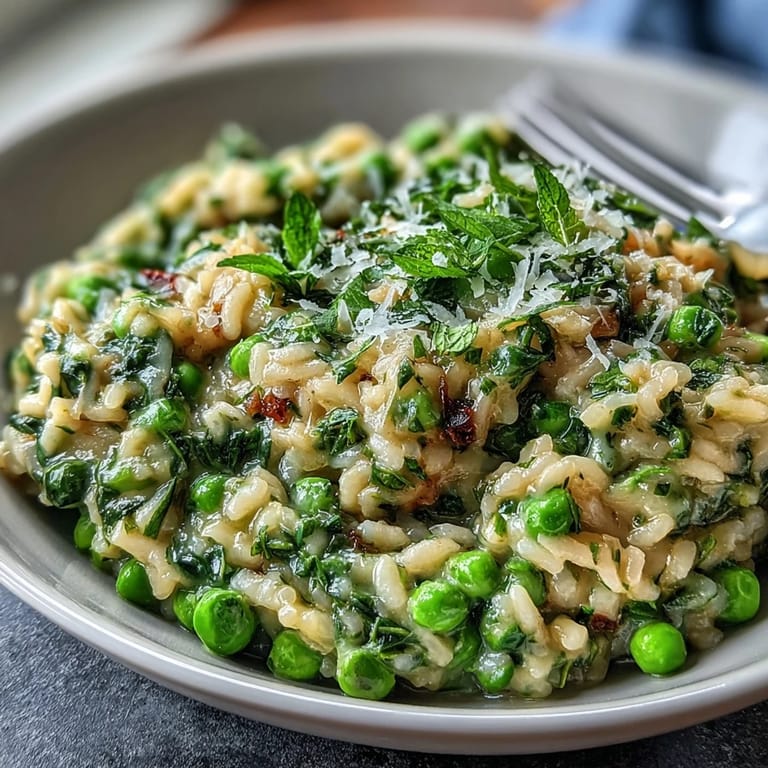
Save There's something about the moment when spring arrives that makes me crave risotto—not the heavy, autumnal kind, but something bright and almost delicate that tastes like the season itself. I was standing in the farmers market last April, holding a bag of the first tender peas of the year, when an older woman next to me mentioned she always finishes her spring risotto with mint torn at the last second. That small detail changed everything for me, and now I can't imagine making it any other way.
I made this for my sister during a surprise visit, and watching her eat it while sitting on my porch overlooking the garden felt like the whole point of cooking. She went quiet for a moment, the way people do when something tastes exactly right, and asked for the recipe before she'd even finished the bowl. That's when I knew it wasn't just good—it was the kind of dish that sticks with people.
Ingredients
- Fresh or frozen spring peas (1 cup): Use frozen if fresh aren't available—they're honestly just as good and already blanched, so no quality loss there.
- Small onion, finely chopped: This is your flavor foundation, so chop it small enough that it melts into the rice as you stir.
- Garlic cloves (2), minced: Let it sit for a minute after mincing before adding to the pan so the flavor develops properly.
- Fresh mint leaves (2 tablespoons), finely chopped: Chop this right before you need it—the longer mint sits after cutting, the less bright it becomes.
- Lemon zest (1 lemon): The optional citrus lifts everything and makes people wonder what that subtle brightness is.
- Arborio rice (1 1/2 cups): Don't substitute with long-grain rice; Arborio's starches are what create that creamy texture you're after.
- Unsalted butter (3 tablespoons total), divided: The butter finishing the dish is just as important as the butter starting it—this is where richness lives.
- Grated Parmesan cheese (1/2 cup): Grate it fresh if you can; pre-shredded loses something in the coating that prevents clumping.
- Heavy cream (1/4 cup), optional: I skip this most of the time and let the rice do the work, but add it if you like extra luxuriousness.
- Vegetable broth (4 cups), kept warm: Keep it simmering the whole time—cold broth shocking the rice stalls the cooking process.
- Dry white wine (1/2 cup): Something you'd drink yourself, not cooking wine, which tastes like regret.
- Extra-virgin olive oil (2 tablespoons): This is your starting fat, so use one you like tasting straight from a spoon.
- Salt and freshly ground black pepper: Taste as you go; risotto is forgiving but seasoning can't be adjusted after it's finished.
Tired of Takeout? 🥡
Get 10 meals you can make faster than delivery arrives. Seriously.
One email. No spam. Unsubscribe anytime.
Instructions
- Keep your broth warm and waiting:
- Pour your vegetable broth into a separate saucepan and let it stay at a gentle simmer while you work—this is non-negotiable if you want the rice to cook evenly. Think of it as a warm bath the rice steps into slowly, not a shock of heat.
- Build your aromatics base:
- Heat the olive oil and two tablespoons of butter together in your largest skillet over medium heat, then add the chopped onion. Cook it slowly for about four minutes until it's soft and turning translucent—you'll know it's ready when the edges start to caramelize slightly and the smell fills your kitchen.
- Wake up the garlic:
- Add the minced garlic and stir constantly for just one minute; this is all it needs to become fragrant without turning bitter. Any longer and you've lost the subtlety.
- Toast the rice grains:
- Stir the Arborio rice into the pan and keep stirring for about two minutes—you're coating each grain with butter and oil while they start to turn slightly translucent at the edges. This step creates a tiny flavor base inside each grain.
- Add the wine and let it disappear:
- Pour in the white wine and stir until it's almost completely absorbed into the rice, which takes maybe two minutes. You'll hear the pan hiss slightly as the liquid reduces.
- Add broth in stages and keep stirring:
- Starting now, add one ladleful of the warm broth to the rice and stir it almost constantly, letting each addition absorb before adding the next. This is the rhythm of risotto—about eighteen to twenty minutes of gentle, meditative stirring. You'll watch the rice grains swell and the liquid transform into creaminess.
- Introduce the peas at the right moment:
- With about five minutes of cooking time left, stir in your fresh or frozen peas—they need just enough time to warm through and marry into the dish without getting mushy.
- Finish strong with butter, cheese, and brightness:
- When the rice is creamy and tender but still has a slight bite to it, remove the pan from heat and stir in the remaining tablespoon of butter, the Parmesan cheese, your heavy cream if using, the freshly chopped mint, and lemon zest. The warmth of the pan will melt everything together into something silky.
- Rest and serve immediately:
- Let the risotto sit undisturbed for two minutes—this actually helps the starches set slightly so it's less likely to break apart when plated. Serve it right away, spooning it into shallow bowls and finishing with extra mint and Parmesan.
 Save
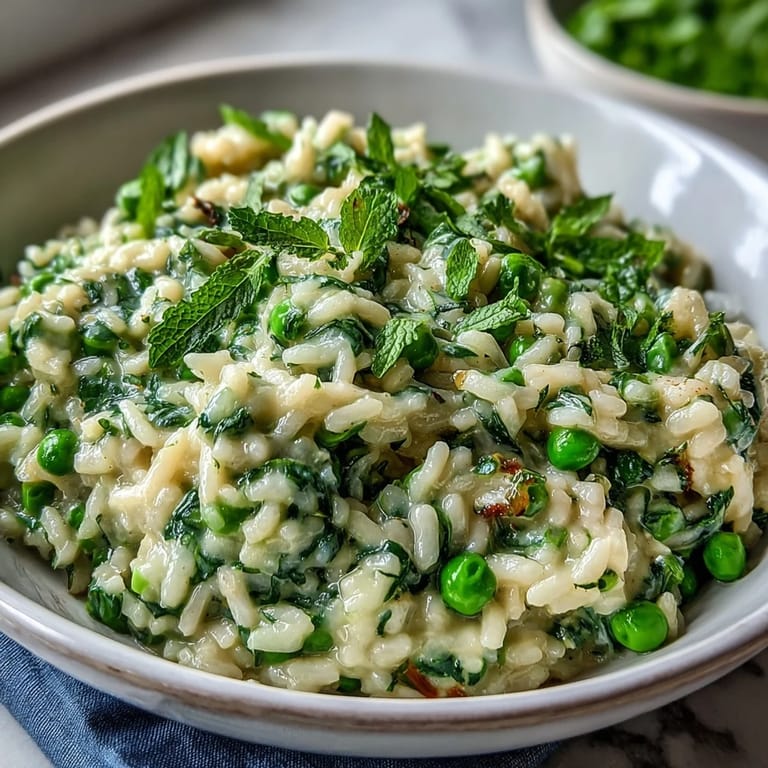
Save I remember my friend mentioning that cooking risotto made her feel meditative, like the constant stirring and watching gave her brain permission to quiet down. Now I get it—there's something about standing at the stove, adding broth and stirring, that turns cooking into something almost therapeutic. This dish isn't rushed; it insists you be present for it.
Why Spring Peas Matter
Spring peas taste nothing like the frozen peas you might remember from childhood dinners—they're sweet and delicate, almost grassy in the best way. The moment they hit the warm risotto, they brighten everything, adding color and a subtle flavor that makes people lean in to taste more. If you can find them fresh at a farmers market, it's worth the trip; if not, frozen peas from a good brand are honestly just as reliable and won't disappoint.
The Mint Finishing Touch
Mint is the element that transforms this from a nice risotto into something that tastes like the season changing. I learned to chop it just before using it, sometimes even tearing it by hand if I'm feeling protective of its oils, because mint starts to fade the moment you cut it. A little bit goes a long way—enough to notice, not so much that it overwhelms the cheese and peas.
Serving and Pairing Ideas
This risotto is almost never better than when you eat it fresh from the pan, spooned into warm bowls while it's still steaming. A crisp, cold glass of Sauvignon Blanc or light Pinot Grigio next to it makes the whole meal feel like spring arrived on a plate.
- Top with toasted pine nuts for a subtle crunch that plays against the creaminess.
- A handful of fresh baby spinach stirred in at the last second adds green without changing the flavor profile.
- If you want something on the side, a simple arugula salad with lemon dressing cuts through the richness perfectly.
 Save
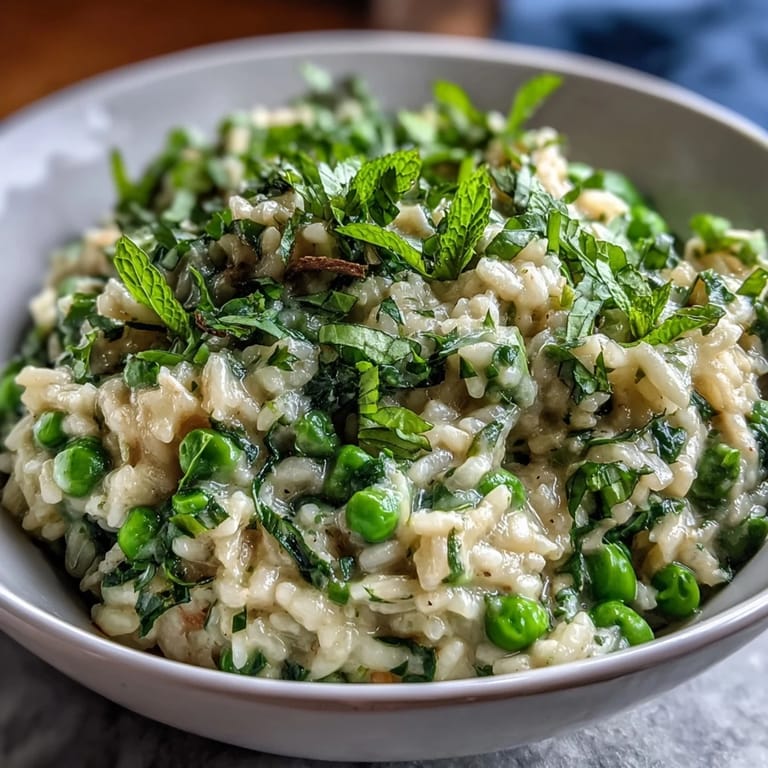
Save This is the kind of recipe that reminds me why I cook—something simple, made with attention, tastes like you actually care. Make it when spring peas are available and you have time to stand at the stove without rushing.
Recipe FAQs
- → What makes risotto creamy?
The creaminess comes from slowly adding warm broth to the Arborio rice while stirring, which releases starches creating a smooth texture.
- → Can I use frozen peas instead of fresh?
Yes, frozen peas work well and should be added toward the end of cooking to retain their sweet flavor and bright color.
- → How important is stirring during cooking?
Frequent stirring is essential to prevent sticking and to help the rice release its starch for a creamy consistency.
- → What role does white wine play?
White wine adds acidity that balances the richness and enhances the overall depth of flavor in the dish.
- → Can I substitute Parmesan cheese?
While Parmesan adds distinctive savory notes, alternatives like aged Pecorino can be used, though flavor will vary.