 Save
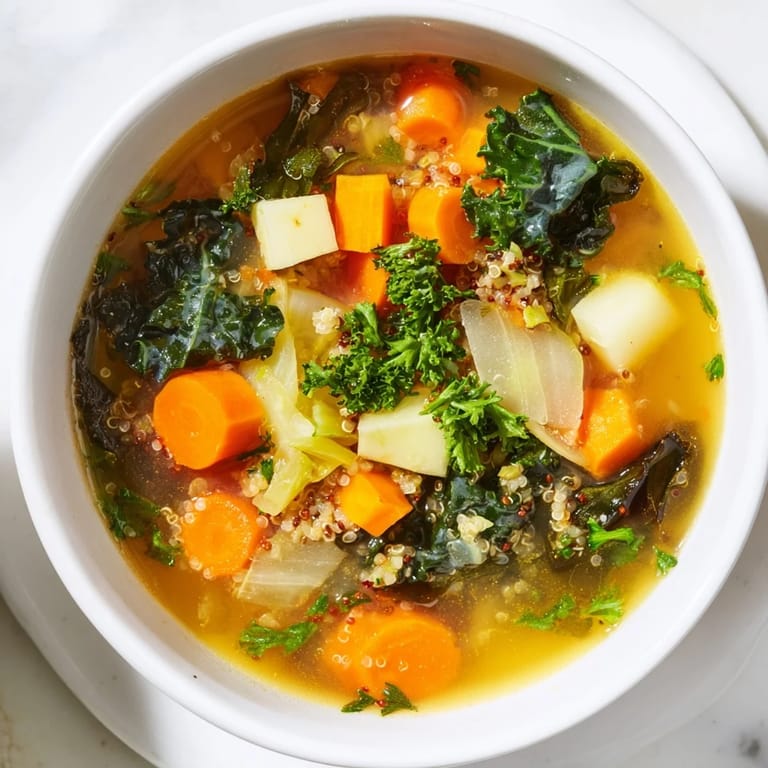
Save There's something about winter that makes me crave soup—not the fancy kind from restaurants, but the kind you build slowly on a Sunday afternoon, watching the steam rise from the pot while the whole kitchen smells like home. I stumbled into this version quite by accident, adding quinoa to stretch a batch of vegetables further, and something about that combination just clicked. The grains softened the richness of the broth, the kale gave it substance, and everything came together into something that felt both nourishing and deeply comforting.
I made this for my partner on a grey afternoon when we both felt a bit run down, and watching them eat three bowls while sitting by the window told me everything I needed to know. It became the soup I'd make on Monday nights, the one that somehow got people to stay longer at the table, talking and reaching for seconds without even thinking about it.
Ingredients
- Olive oil: Just a tablespoon is enough to build flavor without making the broth greasy; it's the foundation that lets everything else shine.
- Onion and garlic: These two are non-negotiable; they're what makes your kitchen smell like someone actually knows what they're doing.
- Carrots, celery, and parsnip: The holy trinity gets a third musketeer in the parsnip, which adds an almost sweet earthiness that keeps things interesting.
- Sweet potato: It dissolves slightly at the edges, thickening the broth naturally while adding subtle sweetness.
- Kale and cabbage: Kale holds its shape beautifully, while cabbage adds volume and a tender bite that makes each spoonful feel full.
- Tomatoes: Canned works just as well as fresh and adds acidity that keeps the broth from feeling heavy.
- Quinoa: Rinse it thoroughly or it tastes faintly soapy; this tiny grain becomes pillowy and adds protein without any fuss.
- Vegetable broth: Low-sodium lets you taste the vegetables themselves, not just salt.
- Thyme and oregano: These dried herbs whisper in the background, warming everything without overpowering; fresh would be a mistake here.
- Bay leaf: It imparts flavor you can't quite name but would definitely miss if it was gone.
Tired of Takeout? 🥡
Get 10 meals you can make faster than delivery arrives. Seriously.
One email. No spam. Unsubscribe anytime.
Instructions
- Sauté the aromatics:
- Heat the olive oil in your pot and let the onion and garlic get soft and golden—you'll know it's right when the smell hits you and makes you hungry immediately.
- Build the foundation:
- Add the harder vegetables (carrots, celery, parsnip, sweet potato) and let them soften for several minutes so they start releasing their flavors into the oil.
- Wilt the greens:
- The kale and cabbage go in next and will seem like too much at first, but they collapse down with just a couple minutes of heat.
- Add the broth and grains:
- Pour everything in—the broth, quinoa, herbs, and seasonings—and bring it all to a rolling boil so you know the heat is working.
- Simmer gently:
- Lower the heat, cover the pot, and let time do the work; the vegetables will turn tender and the quinoa will absorb the broth's warmth.
- Finish with brightness:
- A squeeze of lemon and scatter of fresh parsley at the end wakes everything up and makes it taste fresher than it has any right to.
 Save
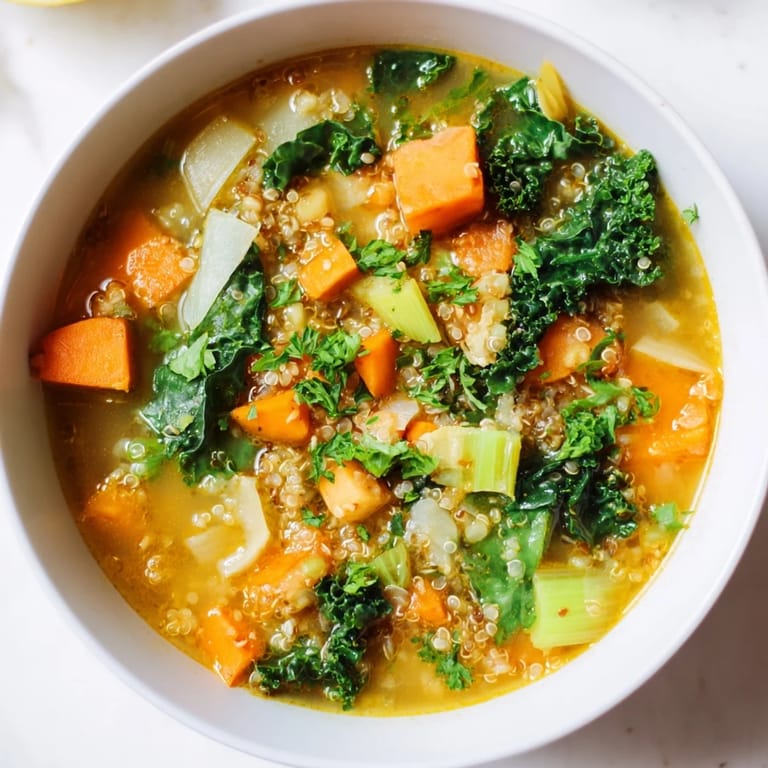
Save What struck me most was how this soup transformed leftovers into something that tasted intentional and care-filled, like I'd actually planned it instead of just emptying the vegetable drawer. It became the dish I'd make when someone needed feeding or when the world felt a bit too much.
Customizing Your Soup
This recipe is honestly more of a template than a strict formula, which is why it works so well. If you find yourself with different vegetables—turnips, leeks, zucchini—they'll work beautifully; just adjust the cooking time based on how dense they are. You can also swap the quinoa for rice, lentils, or beans depending on what you have on hand and what sounds right to you on that particular day.
When You Want More Substance
There are quiet ways to make this soup feel more complete without turning it into something unrecognizable. A can of chickpeas or white beans transforms it from a side dish into something that stands alone as a full meal; a swirl of tahini or a dollop of yogurt adds richness, though it changes the dairy-free element. Crumbled tofu, if you're familiar with cooking it, absorbs the broth beautifully and adds another layer of protein.
Storing and Serving
This soup is one of those rare dishes that tastes better the next day, after the flavors have had time to settle and deepen together in the fridge. It keeps for four or five days covered, and reheats gently on the stove with a splash of extra broth if it's thickened more than you'd like. Serve it in big bowls with crusty bread alongside, maybe with a small salad if you're feeling like making a full dinner out of it.
- Freeze it in portions and you'll have emergency comfort food for weeks.
- The fresh parsley and lemon juice really do matter at the end—don't skip them even if you're rushed.
- A crack of black pepper and a pinch of salt right before serving wakes up flavors that seemed to fade slightly as it cooled.
 Save
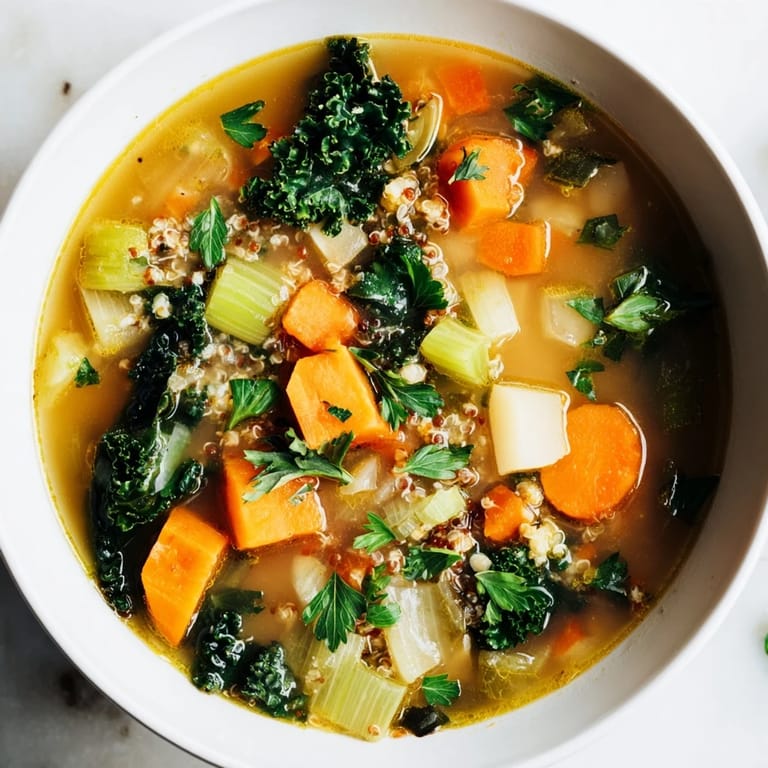
Save There's a quiet magic in a pot of soup that nourishes without asking for much in return. This one has become the thing I reach for when I want to cook something real, something that feeds both hunger and the smaller hungers we don't always name.
Recipe FAQs
- → What vegetables are used in this winter soup?
The soup includes carrots, celery, parsnip, sweet potato, kale or Swiss chard, cabbage, and diced tomatoes for vibrant flavors.
- → How is protein incorporated into the dish?
Protein comes from quinoa simmered within the broth; adding chickpeas or white beans can boost protein content.
- → Can I substitute the greens in the soup?
Yes, spinach can replace kale or Swiss chard for a milder green option without changing the texture much.
- → What seasonings enhance the soup's flavor?
Thyme, oregano, bay leaf, fresh parsley, and optional lemon juice create a balanced aromatic profile.
- → Is this soup suitable for special diets?
The dish is vegetarian, gluten-free, dairy-free, and nut-free, making it suitable for many dietary needs.
- → How long does it take to prepare and cook?
Preparation takes about 20 minutes and cooking roughly 35 minutes, totaling 55 minutes for a ready meal.