 Save
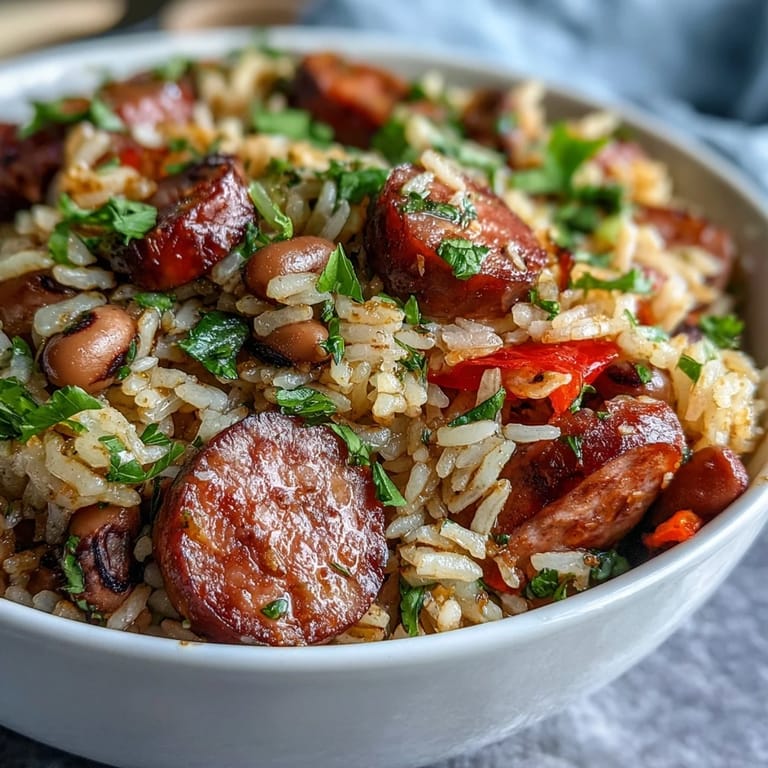
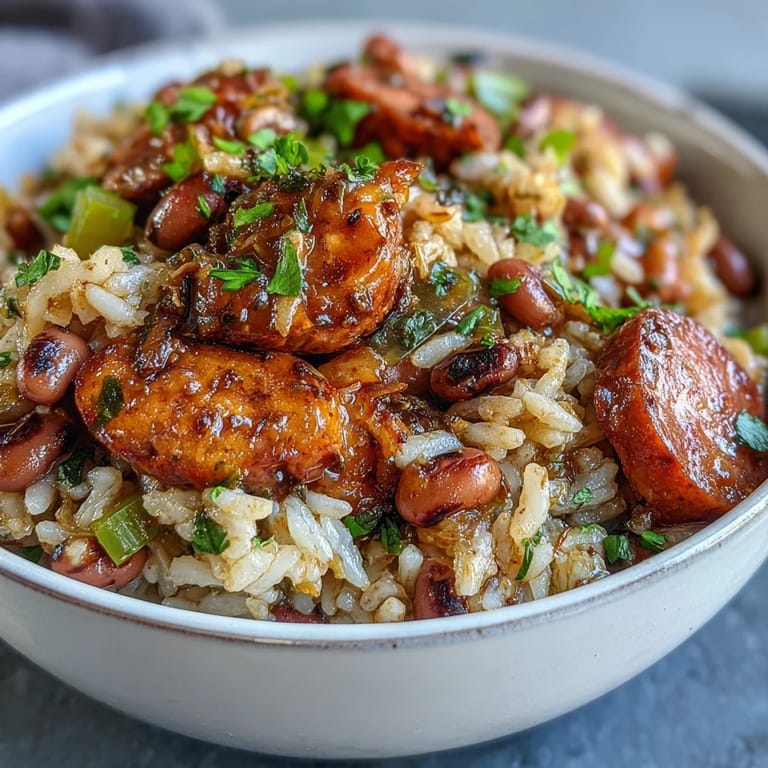
Save My neighbor Marcus showed up at my door one humid afternoon with a pot of jambalaya that smelled like an entire New Orleans kitchen had materialized on my stove. One spoonful and I was hooked—not just by the smoky sausage and that perfect rice texture, but by how he'd managed to build so much flavor in one pot without fussing. I pestered him for weeks before he finally laughed and shared his method, which turned out to be simpler than I'd imagined but somehow tasted like pure magic.
I made this for my book club one September evening, and what struck me most wasn't the compliments—though there were plenty—but watching everyone unconsciously slow down while eating. Two people asked for seconds, and one friend admitted she'd been skeptical about the black-eyed peas until that moment. That's when I realized this dish has a quiet power: it tastes like someone actually cared while making it.
Ingredients
- Smoked sausage (340 g): Andouille is traditional and brings authentic Cajun heat, but kielbasa works beautifully too—the key is that it's already cooked and smoky, so you're really just warming it through and letting its flavor season everything else.
- Onion, celery, and bell peppers (the holy trinity): These three vegetables are the foundation of Cajun cooking, and dicing them evenly ensures they soften at the same pace and distribute flavor throughout.
- Garlic (3 cloves): Added after the other vegetables soften prevents it from burning and keeps its flavor bright rather than bitter.
- Black-eyed peas (1 can, drained): Rinsing them removes excess sodium and starch, giving you cleaner flavor and better texture in the final dish.
- Long-grain white rice (300 g): Long-grain stays separate and fluffy rather than clumping, which is essential for jambalaya texture.
- Chicken broth (800 ml): Low-sodium lets you control the salt level and lets the spices shine without being masked.
- Diced tomatoes with juices (1 can): The acidity brightens the dish and the liquid contributes to the cooking of the rice.
- Cajun seasoning (1.5 tsp): This is your flavor anchor—it's a blend of paprika, garlic, onion, and cayenne that does most of the heavy lifting.
- Smoked paprika, thyme, oregano (measured amounts): Layering these spices creates depth; each one adds a different note that becomes part of the whole rather than tasting like individual seasonings.
- Bay leaf, salt, black pepper, cayenne (as listed): The bay leaf perfumes the entire pot during cooking, while cayenne is optional because heat preference is personal and you can always add hot sauce at the table.
- Olive oil (2 tbsp): Just enough to get the sausage rendering without making the dish greasy.
- Spring onions and fresh parsley (for garnish): These add brightness and color at the end—they're not fancy flourishes but actual flavor that cuts through the richness.
Tired of Takeout? 🥡
Get 10 meals you can make faster than delivery arrives. Seriously.
One email. No spam. Unsubscribe anytime.
Instructions
- Brown the sausage first:
- Heat your oil over medium heat and let the sausage sit undisturbed for a couple minutes so it develops a golden crust. This isn't just about looks—you're building flavor through browning that will season the entire pot.
- Build your flavor base with the holy trinity:
- Once the sausage is golden, add the onion, celery, and peppers and let them soften for 5 minutes. You'll notice the pot smelling sweeter and deeper—that's the vegetables releasing their sugars and beginning to caramelize.
- Add garlic and let it bloom:
- Cook it for just a minute until it's fragrant but not browning. This brief time releases the garlic's essential oils without letting them turn acrid.
- Toast the rice in the fat:
- Stir the rice into all the vegetables and oil, coating each grain. This step, called coating or toasting, seals the outside of the rice and helps it stay fluffy rather than mushy.
- Pour in your liquids and seasonings:
- Add the broth, tomatoes with their juices, black-eyed peas, and all your spices at once. Stir everything together so the seasoning distributes evenly, then bring it to a boil—you'll see steam rising and the mixture will look more active.
- Cover and let it simmer low and slow:
- Once it boils, reduce heat to low, cover with a lid, and don't touch it for 20–25 minutes. The covered pot traps steam that gently cooks the rice while the liquid gradually absorbs, carrying all that flavor into every grain.
- Rest before fluffing:
- Removing from heat and letting it sit covered for 5 minutes lets the rice finish cooking gently and the flavors settle. When you fluff with a fork, you'll see the grains separate beautifully.
- Garnish and serve warm:
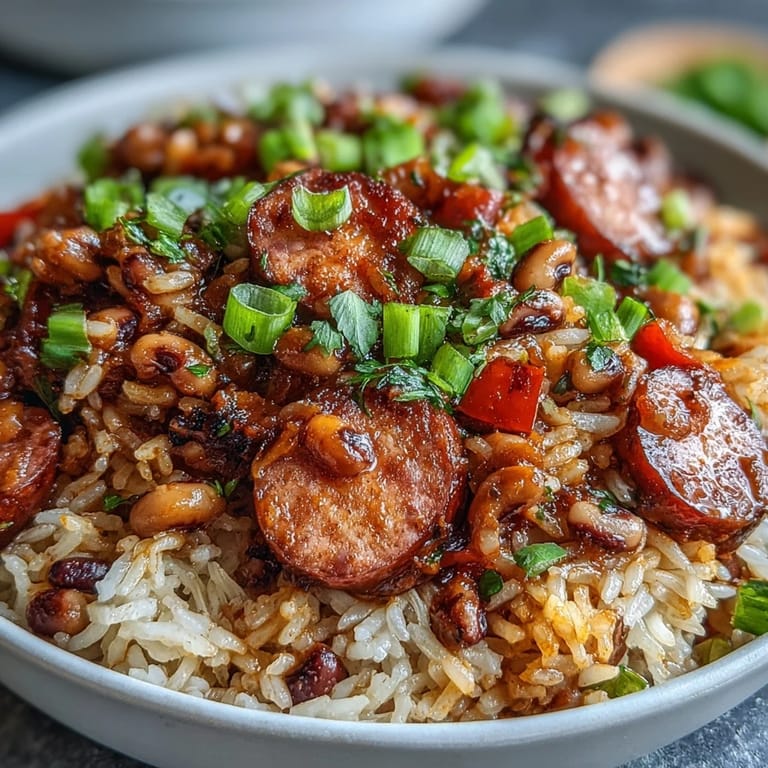
- Scatter spring onions and parsley over the top just before serving. Fresh herbs are your last-minute flavor boost that makes the dish feel alive on the plate.
 Save
Save The moment I understood this dish wasn't just dinner but something to celebrate was when my eight-year-old nephew, who usually picks at unfamiliar food, asked for more without prompting. His parents looked shocked, but I just smiled—there's something about jambalaya that feels like being taken care of, even when you're the one cooking it.
Getting the Spice Level Right
Cajun seasoning blends vary wildly between brands, and some are significantly spicier than others. I've had batches that made me reach for water and others that felt mild. My approach now is to add the main seasonings, taste a tiny spoonful of the finished jambalaya before plating, and keep hot sauce within reach at the table rather than trying to guess the perfect amount beforehand. This way everyone gets to customize their own heat level, which actually feels more authentic to how jambalaya is served anyway.
Why This Works as a One-Pot Meal
The beauty of jambalaya is that it's built on the principle of cooking things in sequence within the same vessel, with each step deepening the flavor. The sausage fat seasons the vegetables, the vegetables flavor the rice, and the liquid ties everything together. By the time you're spooning it into bowls, it doesn't taste like separate ingredients cooked together—it tastes like one unified, cohesive dish that somehow developed complexity without your having to manage multiple pans.
Making It Your Own
Once you've made this once or twice, you'll start seeing how flexible it actually is. I've added okra in summer, swapped in brown rice for earthier flavor, and once used coconut milk instead of some of the broth for a subtly different finish. The structure stays the same, but the dish is always willing to adapt to what you have on hand or what you're craving.
- For vegetarian versions, skip the sausage entirely and use vegetable broth with extra mushrooms or beans for that hearty, meaty feeling.
- If your sausage is particularly spicy, you might skip the cayenne—taste as you go rather than assuming you need all the heat called for.
- Leftover jambalaya keeps beautifully in the fridge and actually tastes better the next day as flavors settle and deepen.
 Save
Save There's something deeply satisfying about cooking jambalaya—the way a single pot becomes this bubbling, fragrant, impossibly flavorful thing that feeds people and makes them genuinely happy. Make this when you want dinner to feel like an event without the stress.
Recipe FAQs
- → Can I use dried black-eyed peas instead of canned?
Yes, but you'll need to cook them separately first. Soak dried peas overnight, then simmer until tender before adding to the jambalaya. Canned peas are more convenient for this one-pot method.
- → What's the best rice for jambalaya?
Long-grain white rice works best as it stays separate and fluffy during cooking. Avoid short-grain or Arborio rice, which becomes too sticky. Brown rice can be used but will require more liquid and longer cooking time.
- → How spicy is this dish?
The spice level is medium and customizable. The Cajun seasoning provides mild heat, while the optional cayenne adds extra kick. Adjust both to your preference, and serve with hot sauce for those who want more heat.
- → Can I make this vegetarian?
Absolutely. Simply omit the smoked sausage and use vegetable broth instead of chicken broth. Consider adding extra vegetables like mushrooms or okra, or plant-based sausage to maintain depth of flavor.
- → How do I store and reheat leftovers?
Store in an airtight container in the refrigerator for up to 4 days. Reheat gently on the stove with a splash of broth or water to prevent sticking. The flavors often improve after sitting overnight.
- → What can I serve with jambalaya?
Jambalaya is a complete meal on its own, but you can serve it with cornbread, crusty French bread, or a simple green salad. Hot sauce and pickled peppers make excellent condiments on the side.