 Save
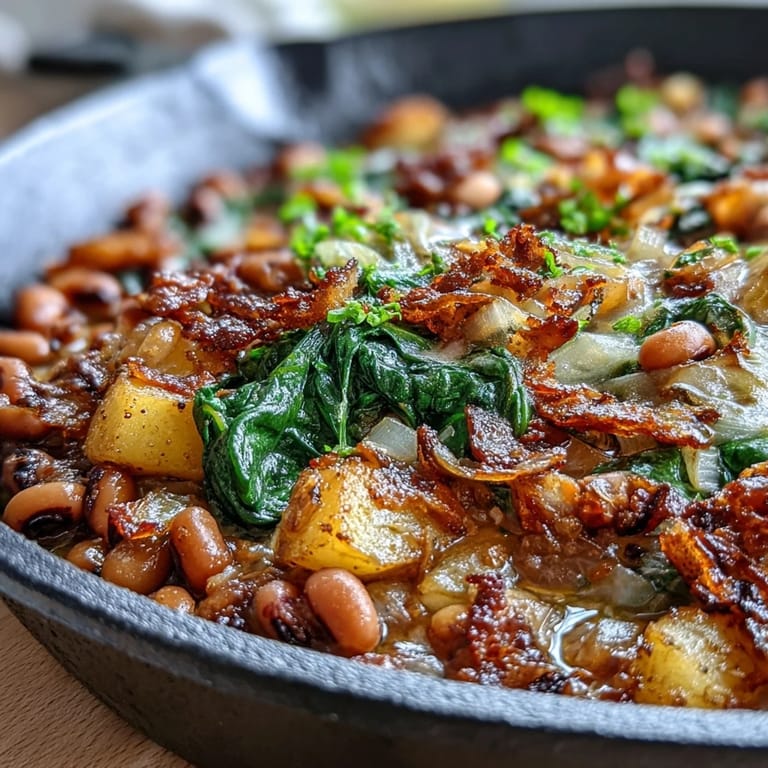
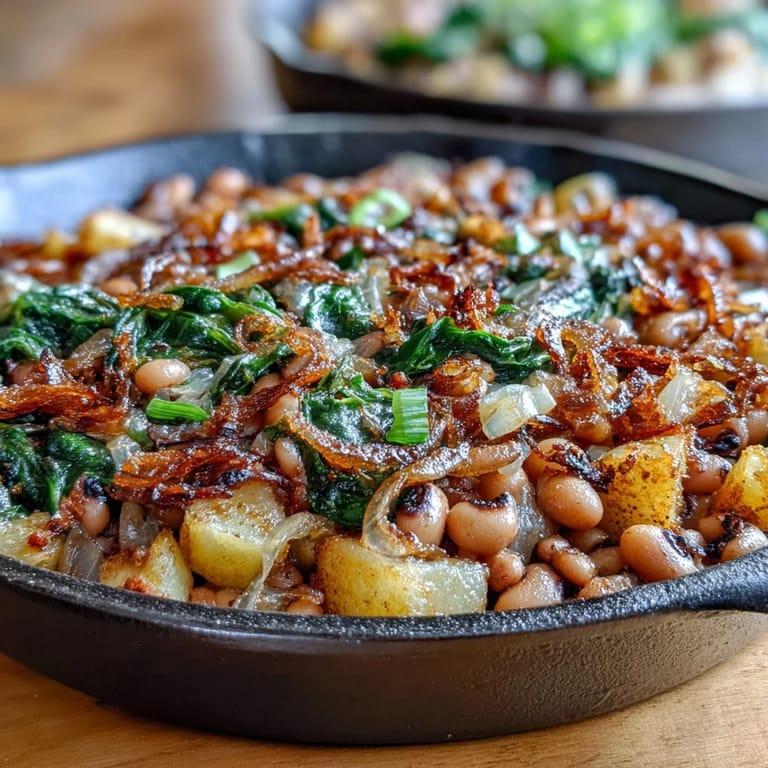
Save There's something about the way a cast iron skillet heats that makes you slow down, pay attention. I discovered this black-eyed pea dinner on a Tuesday night when I had spinach wilting in the crisper and a can of black-eyed peas staring at me from the pantry. Nothing fancy, nothing complicated—just the sudden realization that the best meals often come from what's already sitting in your kitchen waiting to be noticed. One pan, thirty minutes, and suddenly dinner felt like an accomplishment instead of a chore.
I made this for friends who showed up unannounced on a Thursday, and I watched their skepticism melt away as they took the first bites. One of them asked if I'd added butter or cream—the richness comes entirely from those golden potatoes and the way the spinach softens into the broth. That's when I knew this recipe had something special, the kind of food that makes people feel cared for without you having to spend all day proving it.
Ingredients
- Olive oil (2 tablespoons): Don't skimp here—good oil makes the onions caramelize properly and carries the flavor through the whole skillet.
- Large yellow onion (1, thinly sliced): Thin slices mean they'll soften faster and distribute their sweetness evenly, which is the backbone of this whole dish.
- Yukon Gold potatoes (3 medium, diced): These hold their shape better than russets and have a natural buttery quality that matters when you're relying on them for texture and substance.
- Fresh spinach (3 cups, roughly chopped): The rough chop is intentional—it wilts down unevenly, creating little pockets of tender green throughout.
- Black-eyed peas (2 cups cooked or 1 canned can, drained): Canned works beautifully if you rinse them well, though cooking dried from scratch changes the texture slightly for the better.
- Garlic (3 cloves, minced): This amount is barely enough to announce itself, which keeps the dish balanced instead of garlic-forward.
- Smoked paprika (1 teaspoon): The whole flavor secret lives here—it adds warmth and a whisper of smokiness that makes people wonder what you did.
- Dried thyme (1/2 teaspoon): Earthy and subtle, thyme keeps the Southern vibe without overpowering anything else.
- Crushed red pepper flakes (1/4 teaspoon, optional): Keep these on hand even if you skip them in the pan—pass them at the table for people who want heat.
- Salt and freshly ground black pepper: Taste as you go toward the end; the vegetable broth already carries salt, so you might need less than you think.
- Low-sodium vegetable broth (1/2 cup): This amount is deliberate—enough to steam the potatoes through, but not so much that you're left with soup.
- Fresh parsley (2 tablespoons, chopped, optional): A scatter of green at the end lifts everything visually and adds a fresh note against the earthiness.
- Lemon wedges (optional): Squeeze these over individual servings if you want brightness; it changes the whole flavor profile in the best way.
Tired of Takeout? 🥡
Get 10 meals you can make faster than delivery arrives. Seriously.
One email. No spam. Unsubscribe anytime.
Instructions
- Heat your skillet and start with onions:
- Pour the olive oil into your cast iron skillet and let it warm over medium heat until it shimmers slightly—you'll see the surface ripple just a bit. Add the sliced onions and listen for that gentle sizzle; they should smell sweet and buttery after about three minutes, and by four minutes they'll have turned translucent and softened just enough.
- Build the potato foundation:
- Stir in the diced potatoes and let them cook undisturbed for a few minutes before stirring occasionally—this gives them a chance to catch the heat and develop some golden edges. You're aiming for potatoes that are tender enough to pierce with a fork but still holding their shape, which usually takes about ten to twelve minutes.
- Wake everything up with aromatics:
- Add the garlic, smoked paprika, thyme, and red pepper flakes all at once, stirring constantly for about sixty seconds. This is the moment when your kitchen will smell absolutely incredible—don't rush past it.
- Simmer with the broth and beans:
- Pour in the vegetable broth and add the black-eyed peas, stirring well so the spices distribute evenly throughout. Cover the skillet and let it simmer over medium-low heat for eight to ten minutes—the liquid should reduce mostly down, and the potatoes should be completely fork-tender by the end.
- Finish with wilted spinach:
- Uncover the skillet and add the chopped spinach, stirring for about two minutes until it transforms from bright green to a soft, dark wilted state. It releases water as it cooks, which is fine—it flavors everything.
- Season and serve:
- Taste a forkful, then adjust salt and pepper to your preference. Sprinkle with fresh parsley if you have it, and serve hot with lemon wedges alongside so people can squeeze them over their own portions.
 Save
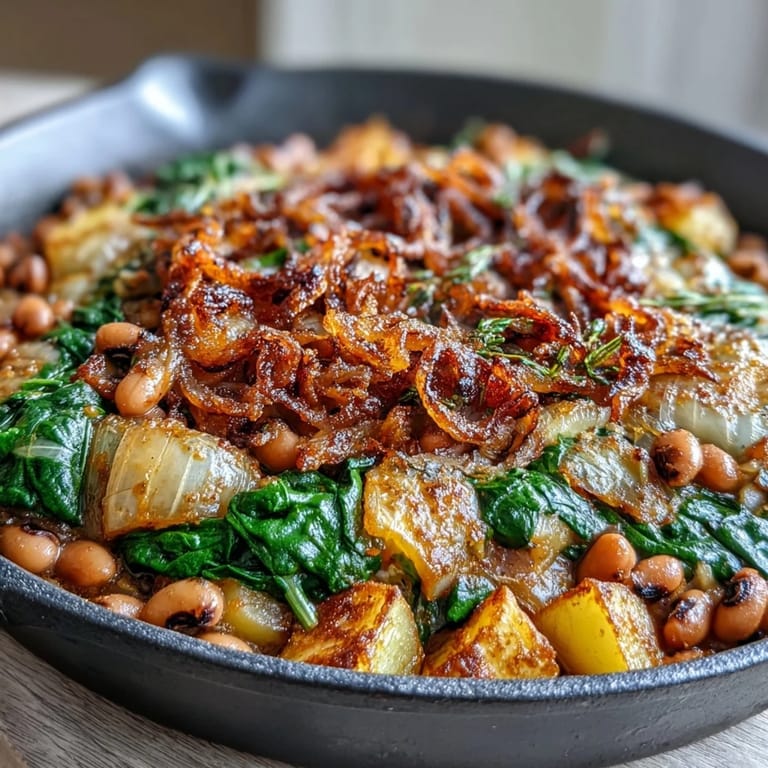
Save There was a moment when my partner came home midway through cooking, stood by the stove, and just breathed in for a long moment without saying anything. That's when I realized this recipe does something beyond nourishing—it creates an atmosphere, fills the kitchen with something that makes people want to stay and eat together. Food that does that is worth keeping.
Why Cast Iron Matters Here
A cast iron skillet holds heat differently than regular pans—it distributes it more evenly and retains it longer, which means your potatoes get properly golden instead of just softened. The slight slope of the sides also makes stirring natural and intuitive, and there's something about cooking in cast iron that makes the finished dish taste somehow warmer and more intentional. If you don't have cast iron, a heavy-bottomed stainless steel pan with a lid works fine, but you'll notice a difference.
Making It Your Own
This recipe is genuinely flexible, which is part of why it's become something I make on rotation. I've added diced jalapeños with the onions when I wanted heat, swapped in kale for spinach when that's what I had, and even stirred in sautéed tempeh cubes for friends who wanted extra protein. The structure holds up beautifully to substitution because the smoked paprika and thyme are what make it taste like itself, not any single ingredient.
Pairing and Serving Ideas
On its own, this is plenty filling, but it's also wonderful alongside something crispy—cornbread soaks up the broth beautifully, and rice turns it into something almost grain-bowl-like. A simple green salad with lemon vinaigrette feels right alongside it, especially if you want brightness against the earthiness. Some people even crumble cornbread directly into their bowl and eat it like a chunky stew, which is messier but absolutely delicious.
- Serve it family-style in the skillet at the table for a casual, shared meal feeling.
- Leftovers reheat perfectly and taste even better the next day when flavors have deepened.
- Make a double batch and freeze half in portions—it keeps beautifully for up to three months.
 Save
Save This recipe became a keeper because it asks so little and gives so much—a reminder that the most satisfying meals don't require complexity, just attention and a few ingredients you believe in. Make it when you need dinner without drama, or make it when you want to feed people something that feels genuine and thoughtful.
Recipe FAQs
- → How long should potatoes be cooked in the skillet?
Potatoes are cooked for 10–12 minutes until golden and tender, stirred occasionally to ensure even cooking.
- → Can I substitute spinach with other greens?
Yes, kale or Swiss chard can be used as alternatives to spinach for a different texture and flavor.
- → Is using canned black-eyed peas acceptable?
Canned black-eyed peas can be used after draining and rinsing to save time without compromising taste.
- → What adds the smoky flavor to the dish?
Smoked paprika provides a subtle smoky depth complementing the tender vegetables and peas.
- → How can this dish be made spicier?
Increasing crushed red pepper flakes or adding diced jalapeño with the onions will add heat to the skillet.
- → What tools are recommended for preparation?
A large cast iron skillet, chef’s knife, cutting board, and wooden spoon or spatula are optimal for best results.