 Save
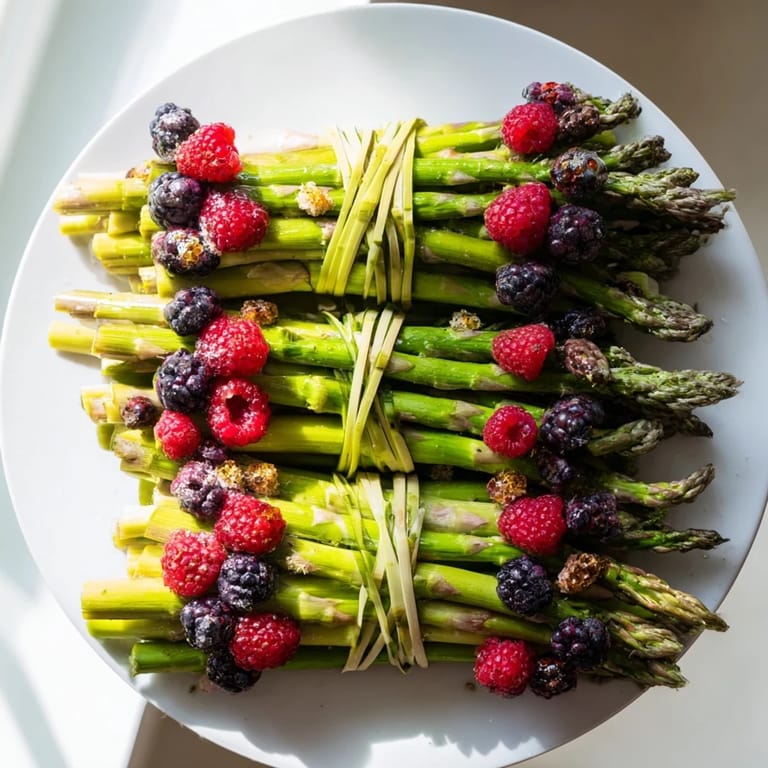
Save The first time I made this, I was standing in my kitchen on a Saturday morning in April, surrounded by farmers market bags overflowing with asparagus and berries at peak season. I wanted to do something that felt like spring itself—something that looked almost too beautiful to eat but tasted so fresh and alive. That's when the lattice idea struck me: why not let the vegetables and fruit do the talking, woven together like they'd been meant to meet all along.
I remember my neighbor watching from across the counter as I wove the last layer of asparagus, completely mesmerized. She kept saying, "You made that?" Like I'd done something impossible. But that's the magic of this dish—the technique looks complicated, but it's really just geometry and patience. By the time I scattered the berries into each square, even I was surprised at how elegant it had become.
Ingredients
- Asparagus stalks: You want them medium-thick so they hold their shape when woven but still cook tender in just a minute or two; too thin and they'll snap, too thick and they'll stay woody in the middle.
- Fresh chives: The long stems become your edible twine, holding the lattice together without needing toothpicks or tricks; they soften beautifully with just a quick dip in hot water.
- Mixed berries: Blueberries, raspberries, strawberries, and golden berries give you variety in color, texture, and sweetness; swap them for whatever's at your peak season or market.
- Extra virgin olive oil: A good one matters here since you're drizzling it at the end; it's one of the few ingredients front and center.
- Flaky sea salt and black pepper: These finish the dish with a whisper of seasoning that lets everything else shine.
Tired of Takeout? 🥡
Get 10 meals you can make faster than delivery arrives. Seriously.
One email. No spam. Unsubscribe anytime.
Instructions
- Blanch the asparagus:
- Boil salted water in a large pot and add your asparagus for just 1-2 minutes—you want them bright green and barely tender, still with a little snap to them. Plunge them immediately into an ice bath so they stop cooking and stay that perfect spring-green color, then pat them completely dry.
- Soften the chives:
- Dip each chive stem into hot water for about 5 seconds until it's pliable enough to tie without breaking, then cool it in ice water and pat dry. They'll feel almost silky at this point, ready to become your lattice ties.
- Build your lattice:
- Lay 8 asparagus stalks parallel on your platter with a little space between each one, then carefully weave 8 more stalks perpendicularly over and under to create a perfect grid. It's like the slowest, most delicious puzzle—take your time and enjoy the geometry of it.
- Tie it together:
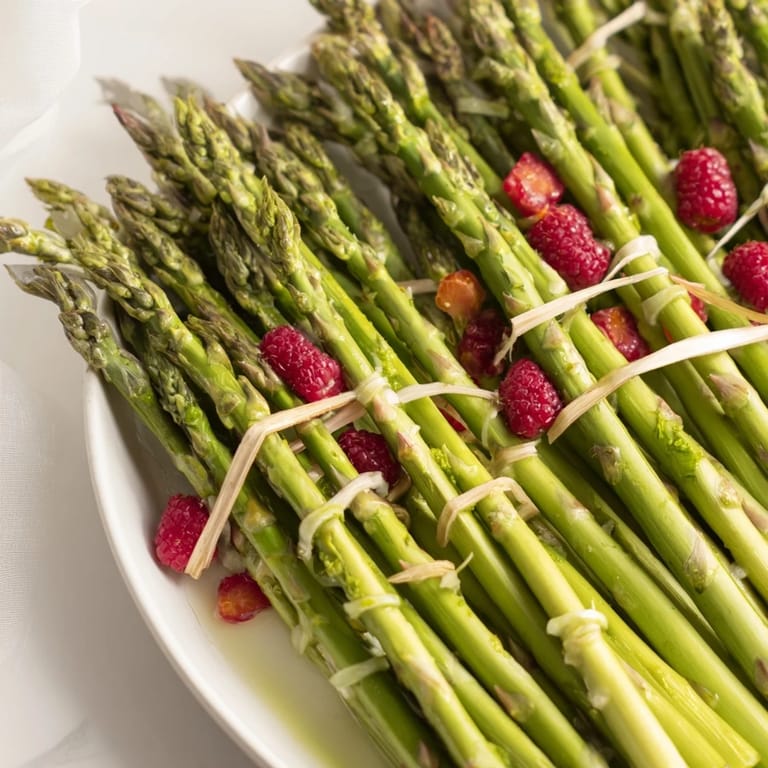
- Gently wrap a softened chive around each intersection where the asparagus crosses, tying just snug enough to hold everything in place without crushing the vegetables. This is what keeps your masterpiece from falling apart when you move it or serve it.
- Fill and finish:
- Nestle a mix of berries into each square of your lattice, then drizzle the whole thing lightly with olive oil, sprinkle with flaky salt, and add a whisper of black pepper right before serving.
 Save
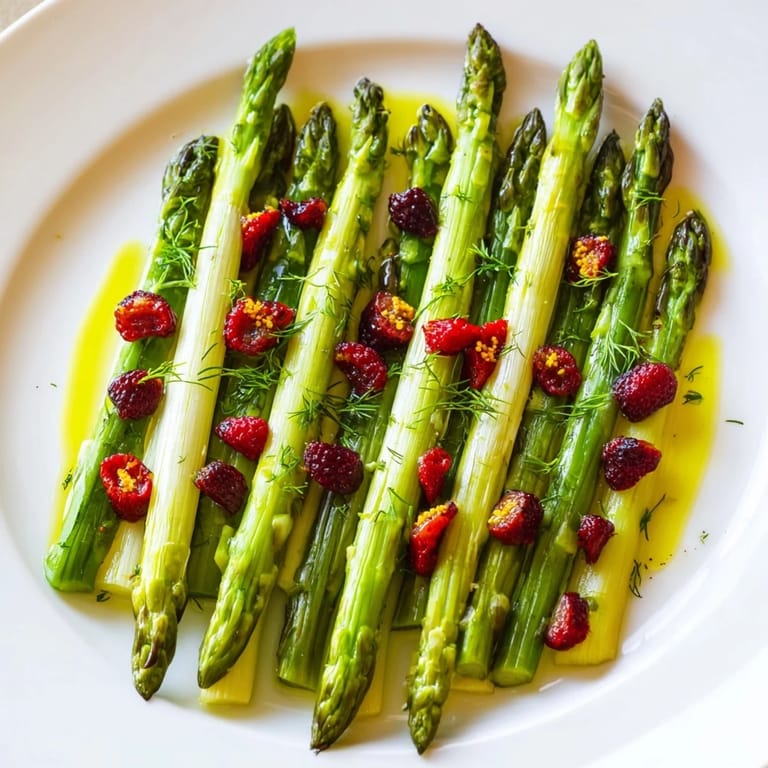
Save I made this for my sister's birthday brunch last spring, and watching people pause before eating it—actually taking a moment to appreciate how it looked before they tucked in—reminded me why I cook. It wasn't about impressing anyone; it was about creating something that felt like a celebration of the season itself.
Choosing Your Fruit
The beauty of this dish is that it adapts to what's fresh and beautiful at your market. Blackberries, red currants, pomegranate seeds, even small pieces of mango or kiwi work beautifully in the squares. I've found that sticking to berries and small stone fruits keeps the visual harmony, but honestly, if it's ripe and sweet, it belongs in this lattice. Just make sure everything is roughly the same size so the finished piece looks intentional rather than chaotic.
Making It Ahead
You can blanch and chill the asparagus and prep the chives several hours before your gathering, which takes a lot of pressure off the actual cooking. Build the lattice no more than an hour before serving so the asparagus doesn't get soggy, but the fruit can go in just before people arrive. One thing I learned the hard way: don't add the olive oil and salt until the very last moment, or everything gets slippery and starts sliding around.
Why This Works as a First Course
This appetizer sits somewhere between a vegetable dish and a fruit course, which means it's light enough not to fill anyone up but interesting enough to get dinner off to a memorable start. It's also something your guests will actually remember and talk about, which is half the battle of entertaining. I like to pair it with something herbaceous to drink—a crisp white wine or even a sparkling rosé—and let the springtime flavors do all the talking.
- Serve it chilled or at room temperature, depending on your kitchen temperature and how much time you have.
- If you're nervous about the lattice, you can also arrange the asparagus in stripes and scatter the berries on top for an equally beautiful effect.
- Make extra chives as ties in case a few break; there's no shame in having backups in the kitchen.
 Save
Save This dish reminds me that the best meals aren't always about technique or complexity—they're about honoring what's in season and taking a little extra care to make something that feels like love on a plate. Every time I make it, it looks different because the berries and asparagus are always a little different, and that's exactly how it should be.
Recipe FAQs
- → How do you prepare asparagus for the lattice?
Blanch asparagus in salted boiling water for 1-2 minutes until tender and bright green, then cool in an ice bath to stop the cooking and retain texture.
- → What is the best way to soften chives for weaving?
Dip chive stems in hot water for about 5 seconds to soften them, then cool in ice water before weaving to keep them flexible and fresh.
- → Can other fruits be used in the lattice squares?
Yes, small firm fruits like blackberries, red currants, or pomegranate seeds can be substituted for a similar burst of flavor and color.
- → How is the asparagus lattice secured?
Chive stems are gently tied around the crossing points of the asparagus stalks to hold the lattice structure together without damaging the vegetables.
- → What seasoning complements the lattice best?
A drizzle of extra virgin olive oil with flaky sea salt and freshly ground black pepper enhances the natural flavors without overpowering the fresh ingredients.
- → Is this dish served warm or chilled?
It is best served chilled, allowing the flavors to meld while keeping the textures crisp and refreshing, making it perfect for spring occasions.