 Save
Save I discovered this salad on a particularly hot summer afternoon when I was determined to create something that felt like edible art. Standing in my kitchen, surrounded by colorful produce, I remembered my architecture-student roommate sketching geometric patterns on napkins during lunch, and I thought: why not bring that precision and beauty to the plate? That's when Cube Geometry Study was born—a dish that transforms the simple act of cutting vegetables into a meditation on order, color, and flavor.
I'll never forget when I made this for my friend's dinner party last summer. As guests arrived and saw the perfectly arranged grid of colorful cubes on the table, the room went quiet for just a moment—then everyone's face lit up. It wasn't just food; it was a conversation starter, a tiny edible gallery that people photographed before eating. That's when I knew this recipe was special.
Ingredients
- Cucumber: The cool, watery foundation that keeps every bite refreshing. Peel it completely to remove any bitterness from the skin, and cut deliberately—uniform cubes matter here
- Mango: Your touch of tropical sweetness that bridges all the other flavors beautifully. Choose one that yields slightly to gentle pressure, not rock-hard
- Avocado: The creamy luxury that makes this feel indulgent. Cut it last and toss gently with a tiny squeeze of lemon juice to prevent browning
- Cooked beet: The showstopper color that catches everyone's eye. Cook it separately beforehand so it doesn't stain everything else, then chill before cubing
- Yellow bell pepper: Sweet, crisp, and adds brightness without overwhelming the palate. Remove every seed and white membrane for pure flavor
- Watermelon: A surprising guest that adds juicy sweetness and reinforces the playful spirit of this salad. Choose one with deep pink flesh
- Feta cheese: The salty anchor that ties everything together. It crumbles slightly in your mouth and creates pockets of tangy comfort
- Extra-virgin olive oil: Choose something you'd happily drink—quality matters here since it's doing real flavor work
- Lemon juice: Fresh only; it brightens without masking the individual ingredients
- Sea salt and pepper: Season boldly; this recipe forgives assertive seasoning
- Honey (optional): The gentlest kiss of sweetness that rounds out the dressing when the fruit needs balancing
Tired of Takeout? 🥡
Get 10 meals you can make faster than delivery arrives. Seriously.
One email. No spam. Unsubscribe anytime.
Instructions
- Gather your tools like you're preparing for surgery:
- Pull out your sharpest chef's knife—this is non-negotiable. A dull knife will crush the delicate vegetables instead of slicing cleanly. Lay out your cutting board, ideally a large one, because you'll need real estate. If you have a ruler handy, this is its moment to shine. Trust me, the precision pays off visually
- Start with the sturdy vegetables:
- Peel your cucumber completely and lay it flat on the cutting board. Slice it into 1 cm thick planks, then slice those planks into 1 cm wide batons, then turn and slice perpendicular to create neat little cubes. Do the same with bell pepper, watermelon (rind removed first), and your pre-cooked beet. The repetitive motion becomes almost meditative
- Handle the delicate fruits with care:
- Cube the mango by slicing lengthwise around the flat pit, then score the flesh in a crosshatch pattern before inverting and sliding cubes into a bowl. For avocado, cut it in half, remove the pit, scoop the flesh onto your cutting board, and cube gently—use a light touch here. These beauties are fragile and deserve respect
- Make your dressing in one small bowl:
- Pour the olive oil, add the lemon juice, scatter the salt and pepper, and whisk briskly until the mixture turns slightly opaque and emulsified. If using honey, dissolve it first in the lemon juice so it distributes evenly. This will take about 30 seconds of honest whisking. Taste it; it should be bright and assertive because the vegetables will soften it slightly
- Arrange with intention:
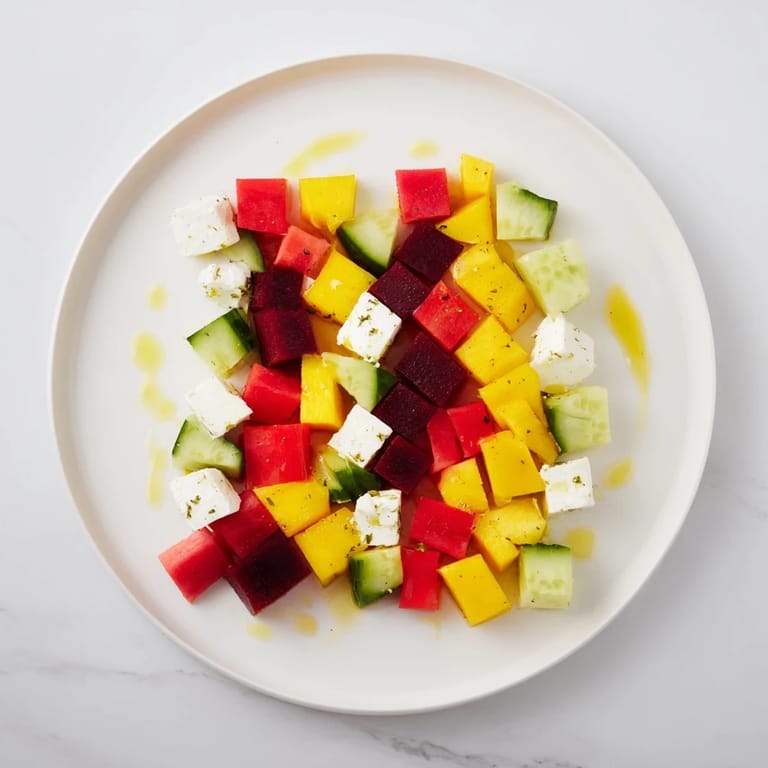
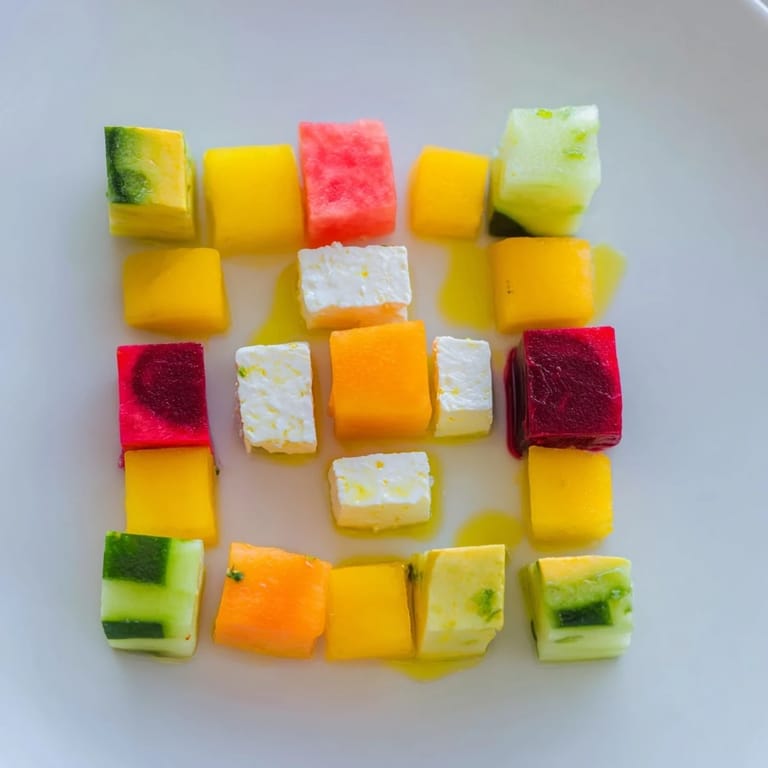
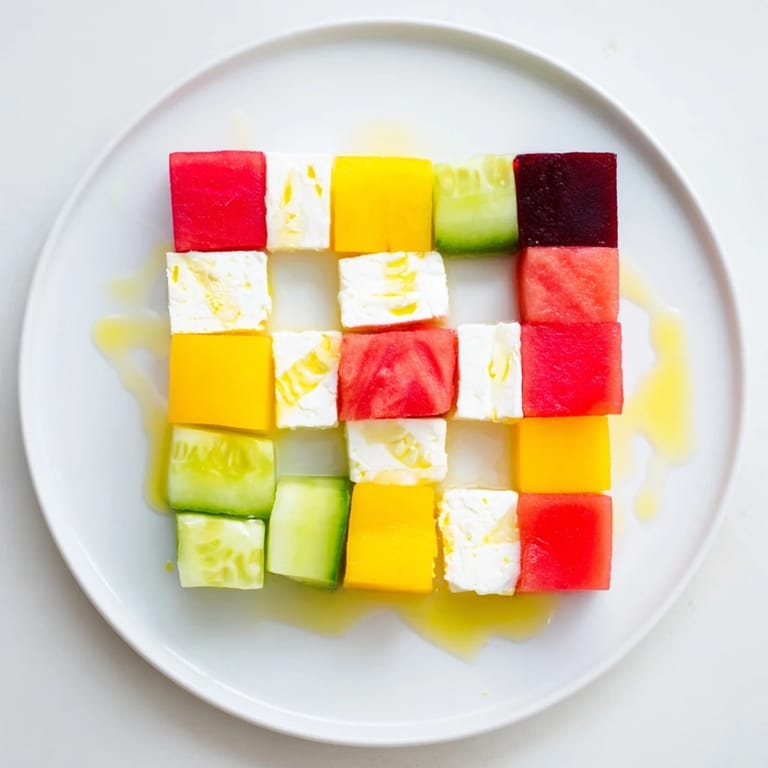
- Use a large platter—one that's almost too big. This isn't about cramming everything together; it's about giving each cube room to breathe. Start with one color and create a line, then move to the next. Alternate strategically so your eye travels smoothly across the arrangement. Think of it as painting with vegetables. Sprinkle the feta cubes throughout like edible confetti. This step takes time, but that's exactly the point
- Dress just before serving:
- Using a light hand, drizzle the dressing over the entire composition. Don't drown it—you want to taste each ingredient, not bathe them in oil. Watch as the colors seem to intensify and the whole composition comes alive
 Save
Save There was this moment when I served this to my mother for the first time—she just stared at it for a long moment before saying, 'It's almost too beautiful to eat.' Then she took a bite and smiled the kind of smile that made me realize food is never just about taste. It's about love, intention, and the care you put into every precise cut.
The Meditation of Precision
What struck me most while developing this recipe is that the constraint of cutting everything into uniform cubes actually frees you creatively. When ingredients are the same size, what matters is arrangement, color contrast, and how flavors interact. It taught me that limitations can be liberating—that sometimes the most interesting dishes come from self-imposed structure rather than throwing everything together. This salad forces you to slow down and really think about what you're making.
Variations That Keep It Fresh
The beauty of this recipe is that it's endlessly adaptable once you understand the principle. I've made versions with papaya instead of mango for a different kind of sweetness, created a completely vegan version by swapping feta for marinated tofu cubes, and even pushed it in unexpected directions with pickled red onion or pomegranate seeds. The structure stays the same, but the flavor story changes completely. Think of it as a framework for your creativity rather than a strict mandate.
Presentation and Pairing Ideas
This salad genuinely shines when you give it the stage it deserves. Serve it on your most beautiful platter—one that's large enough to show off the arrangement without crowding. The visual impact is part of the eating experience. It pairs wonderfully with a crisp Sauvignon Blanc if you're serving it at a dinner party, or with sparkling water and lime if you want something non-alcoholic that echoes the fresh, clean flavors. I've also found that it works beautifully as a light lunch beside crusty bread and soft cheese.
- Microgreens or edible flowers scattered delicately across the top add an extra layer of sophistication and can hide any minor imperfections in your cubing
- Serve it immediately after dressing—the vegetables are at their crispest and the visual arrangement is still at its sharpest
- If you're making this ahead for a party, prepare all the cubes separately and arrange them just before guests arrive for maximum impact
 Save
Save Every time I make this salad, I'm reminded that cooking doesn't always have to be about complexity or long cooking times to feel meaningful. Sometimes the most memorable dishes are the ones that ask you to be present, intentional, and willing to find beauty in simplicity.
Recipe FAQs
- → What is the best way to cut ingredients into uniform cubes?
Using a sharp chef's knife along with a ruler can help achieve precise 1 cm cubes for a consistent texture and elegant presentation.
- → Can I substitute the feta cheese for a vegan option?
Yes, firm tofu cubes can be used as an alternative to feta to keep the dish vegan and maintain the cube geometry.
- → How should the dressing be prepared for this salad?
Whisk together extra-virgin olive oil, lemon juice, sea salt, black pepper, and optional honey for a light, balanced dressing that complements the fresh ingredients.
- → What is the recommended serving method for this salad?
Arrange the cubed ingredients neatly in a geometric grid on a flat platter, drizzle dressing just before serving to maintain crispness and visual appeal.
- → Are there recommended flavor variations for this salad?
You can swap mango for papaya or pineapple for a different sweet note, and add microgreens or edible flowers for extra flair.