 Save
Save There's something about the smell of butternut squash caramelizing in the oven that instantly makes a kitchen feel like autumn, even if it's still technically summer outside. I discovered this soup on a random Tuesday when I had half a squash sitting in my pantry and absolutely no dinner plan, so I roasted it out of desperation and ended up with something so silky and naturally sweet that it became my go-to comfort meal. The beauty of it is how few ingredients you actually need, yet somehow it tastes like you've been simmering it all afternoon.
I made this for my sister's surprise visit last October, and she arrived exactly when the soup was hitting that perfect creamy stage where it clings to the spoon just right. She sat at my kitchen counter with a steaming bowl while I finished toasting the pumpkin seeds, and we talked for hours about nothing in particular—the kind of moment where good soup becomes the excuse to just be together.
Ingredients
- Butternut squash (1 large, about 2 lbs): The star of the show—look for one that feels heavy for its size and has a deep golden color, which signals ripeness and sweetness that will shine through in the final soup.
- Yellow onion (1 medium): This builds the savory foundation and adds body, so don't skip it even though the squash gets top billing.
- Garlic cloves (2): Just enough to whisper into the background rather than dominate, which keeps the soup feeling elegant and not overpowering.
- Carrot and celery (1 each): These create the classic aromatic base that grounds the sweetness and adds earthiness.
- Olive oil (2 tbsp): Use decent quality here since it's one of the few fats carrying flavor; it makes a noticeable difference in the final taste.
- Unsalted butter (2 tbsp, optional): Adds a luxurious richness if you want it, but honestly the soup is spectacular without it.
- Vegetable broth (4 cups): Low sodium is genuinely important because you'll be reducing flavors—if your broth is salty, the whole thing goes sideways.
- Ground cinnamon, nutmeg, black pepper, kosher salt: The spice blend is what transforms squash into something that feels intentional and warm; don't use pre-ground spices older than six months if you can help it.
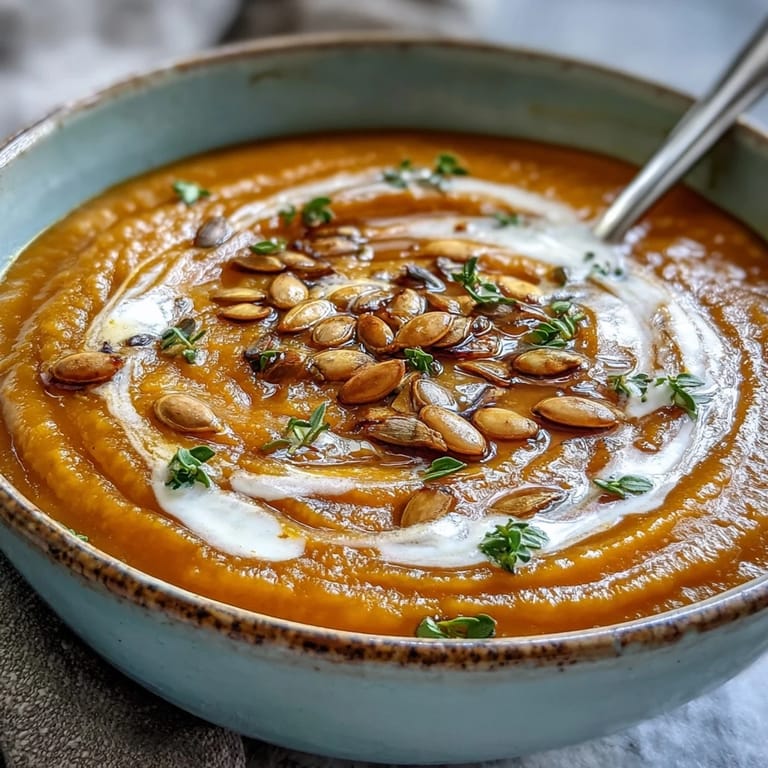
- Heavy cream or coconut milk for serving: A luxurious finish that cuts the slight earthiness and adds visual drama on top.
- Toasted pumpkin seeds and fresh thyme: These garnishes aren't decorative—they add texture and brightness that makes every spoonful feel special.
Tired of Takeout? 🥡
Get 10 meals you can make faster than delivery arrives. Seriously.
One email. No spam. Unsubscribe anytime.
Instructions
- Get Your Oven Ready and Prep the Squash:
- Heat your oven to 400°F and line a baking sheet with parchment paper. Toss your cubed squash with a tablespoon of olive oil, a pinch of salt, and pepper, then spread it out so each piece has room to breathe—crowding the pan means steaming instead of roasting, and you'll miss out on those caramelized edges.
- Roast Until Golden and Tender:
- Slide the baking sheet in and let it roast for 25 to 30 minutes, until the edges turn deep golden brown and the flesh is fork-tender. You'll know it's done when a fork slides through easily and the whole kitchen smells like toasted autumn.
- Build Your Aromatic Base:
- While the squash roasts, warm the remaining olive oil and butter in a large pot over medium heat. Add your chopped onion, carrot, and celery, then let them soften for 5 to 7 minutes, stirring occasionally—you want them tender and fragrant, not browned.
- Add the Garlic and Wake Everything Up:
- Toss in your garlic cloves and cook for just one more minute until the smell shifts and becomes more aromatic. This short window prevents the garlic from burning while releasing its flavor into the oil.
- Combine and Simmer:
- Pour in your roasted squash, vegetable broth, and all the spices—cinnamon, nutmeg, salt, and pepper. Bring the whole thing to a boil, then immediately lower the heat and let it simmer for 10 to 15 minutes so the flavors get to know each other.
- Blend Until Silky Smooth:
- Remove from heat and use an immersion blender to puree everything into a velvety consistency, or carefully work in batches with a countertop blender if that's what you've got. The immersion blender is honestly easier and means fewer dishes.
- Taste and Adjust:
- Take a spoonful, taste it carefully, and decide if it needs more salt, a whisper more cinnamon, or anything else your palate is craving. This is the moment to make it exactly yours.
- Serve with Style:
- Ladle into bowls and finish with a drizzle of cream or coconut milk, a small handful of toasted pumpkin seeds, and a few fresh thyme leaves. The garnishes aren't just pretty—they add a necessary textural contrast that makes the soup feel complete.
 Save
Save There was an afternoon when I made this for my neighbor who had just come home from the hospital, and watching her face light up as she tasted it reminded me that sometimes the simplest gestures—a warm bowl of something homemade—say more than any words ever could. That's when I realized this soup isn't just dinner; it's a way of showing up for people.
How to Know When It's Perfect
The finished soup should move slowly off your spoon like velvet, not slipping off instantly. If it's too thick, you can always whisk in more broth a quarter cup at a time until it reaches the consistency you prefer—some people like it thick enough to coat a spoon, others want it pourable like silk. The flavor should be warming and subtly sweet with just enough spice to make your palate feel awakened, never overwhelming.
Making It Your Own
This recipe is genuinely forgiving and invites experimentation without losing its soul. Some people add a pinch of cayenne for heat, others swirl in a tiny bit of sage-infused oil at the end, and I've had friends add a splash of orange juice for brightness. The foundation is strong enough that your personal touches will only make it better.
Storage and Batch Cooking
This soup keeps beautifully in the refrigerator for about five days in an airtight container, and it freezes wonderfully for up to three months—I always make double batches and freeze half in single portions so I have emergency comfort food ready to go. The texture stays creamy even after freezing, which is rare and wonderful.
- Let the soup cool completely before freezing so you don't send a warm container into your freezer.
- Leave about half an inch of headspace in your container because soup expands when frozen.
- When reheating from frozen, thaw overnight in the fridge first and then warm gently on the stovetop, stirring occasionally so it heats evenly.
 Save
Save This soup has become my seasonal anchor, the thing I make when I want to feel grounded and cared-for. I hope it becomes something like that for you too.
Recipe FAQs
- → Can I freeze this soup?
Yes, this freezes beautifully for up to 3 months. Cool completely before transferring to airtight containers. Thaw overnight in the refrigerator and reheat gently, adding a splash of broth if needed.
- → How do I know when the squash is properly roasted?
The squash cubes should be tender when pierced with a fork and show golden-brown caramelization at the edges. This typically takes 25-30 minutes at 400°F and develops the deep, sweet flavor essential to the finished soup.
- → What can I use instead of an immersion blender?
A countertop blender works perfectly. Cool the soup slightly first, then blend in batches, never filling more than halfway. Hold the lid firmly with a towel to prevent steam from pushing it off. Alternatively, use a potato masher for a chunkier rustic version.
- → How can I make this soup more filling?
Add a can of drained white beans during simmering for protein and body, or stir in cooked quinoa just before serving. Serving with crusty bread, croutons, or a side salad also makes for a more substantial meal.
- → Can I use other winter squash varieties?
Absolutely. Acorn squash, delicata, or kabocha squash all work well with slight flavor variations. Adjust roasting times as needed—smaller varieties like delicata may roast faster. The spices pair beautifully with any sweet winter squash.
- → Is this suitable for meal prep?
This soup is excellent for meal prep and often tastes better the next day as flavors meld. Store in the refrigerator for up to 5 days. Reheat gently over medium-low heat, stirring occasionally and adding broth if it has thickened too much.