 Save
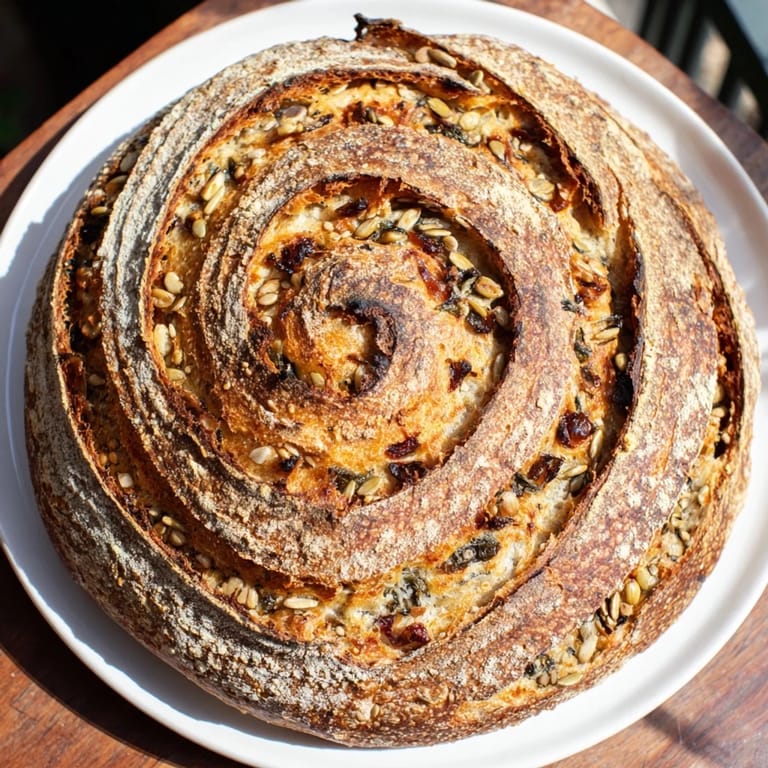
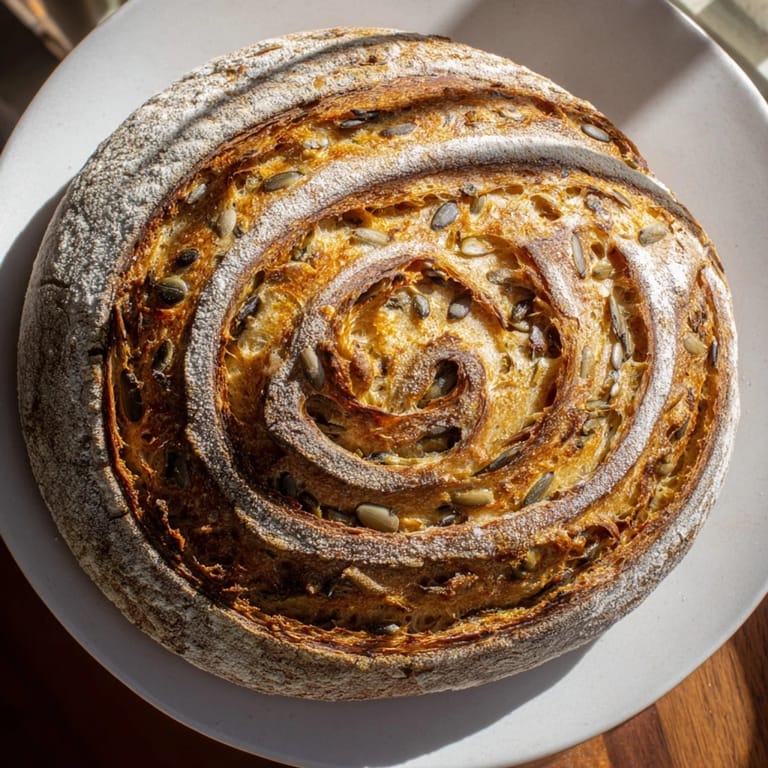
Save I discovered the magic of Fibonacci spirals while watching bread dough rise in my kitchen on a quiet Sunday morning. The mathematical beauty of nature had always fascinated me, but it wasn't until I decided to shape a loaf following that ancient spiral pattern—each coil slightly larger than the last—that I truly understood how art and baking could dance together. What started as an ambitious sketch on paper became a stunning loaf that looked too beautiful to slice, yet tasted even better than it looked.
I'll never forget bringing this bread to a dinner party and watching my friends' faces light up when they first saw it—the spiral was almost too gorgeous to disturb. But the moment we broke it open and the aroma of perfectly baked crust mixed with caramelized ingredients filled the room, everyone understood this was something special. That bread became the conversation starter for the whole evening.
Ingredients
- Strong bread flour (500 g): This high-gluten flour is your foundation—it develops the strength needed to support the spiral structure and create that beautiful, crispy crust you're after. I learned early that skimping on flour quality means a dense, flat loaf instead of the airy crumb we're chasing.
- Lukewarm water (350 ml): Temperature matters more than you'd think. Water that's too hot kills the yeast or starter, too cold and everything moves painfully slow. Lukewarm—like a baby's bathwater—is your sweet spot for happy fermentation.
- Sourdough starter or instant yeast (100 g starter or 7 g yeast): If you have an active starter, use it for that deep, complex flavor that develops over hours. If you're using commercial yeast, you'll get faster results but less of that tangy character. I prefer starter when I have the time.
- Fine sea salt (10 g): Salt strengthens the gluten network and seasons the dough from within. Measure it carefully—too much overwhelms, too little and the bread tastes flat and one-dimensional.
- Olive oil (15 ml): Just enough to enrich the dough and help it stay moist during that long rise. This small amount makes a surprising difference in the final crumb structure.
- Toasted sunflower seeds (20 g): The smallest addition in your first spiral segment. Toasting them first brings out their nutty character and prevents any raw, bland flavor.
- Chopped walnuts (30 g): Growing slightly with each segment, the walnuts add earthiness and a pleasant textural contrast. I learned to chop them fairly fine so they distribute evenly.
- Pumpkin seeds (40 g): These little green gems are tougher than sunflower seeds, so they hold their shape beautifully through the long bake. They're one of my favorite additions because they catch the heat and become almost sweet.
- Grated hard cheese (50 g—Gruyère or Parmesan): The saltiness and umami here creates an incredible depth. Fresh grating makes all the difference; pre-grated cheese often has anti-caking agents that change the texture.
- Sun-dried tomatoes (60 g, drained): These need to be well-drained or your dough becomes too wet. Their concentrated tomato flavor and slight sweetness provide a beautiful contrast to the salty elements.
- Mixed olives (70 g, pitted and chopped): The funk and brine from olives adds sophistication. I always pit them myself when possible, as I've had too many surprises with supposedly pitted olives.
- Sautéed spinach (80 g, well-drained): This is crucial—any excess water will ruin your dough structure. I cook the spinach, squeeze it dry in a kitchen towel, and squeeze again. It seems excessive until you bite into a perfectly crumbed loaf.
Tired of Takeout? 🥡
Get 10 meals you can make faster than delivery arrives. Seriously.
One email. No spam. Unsubscribe anytime.
Instructions
- Create your autolyse moment:
- Combine just your flour and lukewarm water in a large bowl, stirring until there are no dry bits left. This step seems simple, but it's transformative. Cover the bowl and let it rest for 30 minutes while the flour fully hydrates. You'll notice the dough becomes noticeably smoother even though you haven't added yeast yet. This is the flour doing its thing, and it makes a remarkable difference in final texture.
- Bring the dough to life:
- After the rest, add your sourdough starter (or yeast), salt, and olive oil. Mix gently at first, then begin kneading. If you're using a bowl, knead right there on the flour-dusted surface for 8 to 10 minutes until the dough transforms from shaggy and sticky into something smooth and elastic. You should feel the dough spring back when you push it. The window is perfect when it's still slightly tacky but no longer clings to your hands.
- Trust the long rise:
- Place your dough in a lightly oiled bowl, cover it loosely with a damp towel, and let it sit at cool room temperature. This 8 to 12 hour rise is where the magic actually happens. You're not rushing with commercial yeast here. The longer fermentation develops flavor, creates a more open crumb structure, and gives you flexibility—you can even refrigerate it partway through and bake the next day if life gets in the way.
- Divide with intention:
- Once the dough has roughly doubled, tip it onto a lightly floured surface and divide it into 7 equal portions. I use a kitchen scale for this because eyeballing always leads to one piece that's noticeably larger. Handle the dough gently at this stage—you're not trying to create more gluten, just divide what you've already built.
- Layer in your additions with increasing generosity:
- Now comes the creative part. Take your first portion and very gently knead the 20 grams of toasted sunflower seeds into it until they're evenly distributed. Then take the second piece and add 30 grams of walnuts, kneading until they're incorporated. Continue with the next piece adding 40 grams of pumpkin seeds, then the fourth with 50 grams of cheese, the fifth with 60 grams of sun-dried tomatoes, the sixth with 70 grams of olives, and finally the seventh with 80 grams of well-drained spinach. The increasing amounts create that beautiful Fibonacci progression—each spiral will be slightly denser and more ingredient-rich than the last.
- Shape into spiraling ropes:
- Roll each portion into a rope about 12 to 14 inches long. Start with your smallest spiral—the one with sunflower seeds. On a parchment-lined baking sheet, coil that rope tightly around a central point, tucking the end underneath. Then take your next rope and coil it around the first, creating a larger spiral. Continue with each successive rope, building outward and upward. By the end, you'll have created a beautiful mathematical form that somehow also looks delicious.
- The final rise:
- Cover your spiral loosely with a damp towel or plastic wrap and let it rise for about 1.5 hours. You're looking for it to become visibly puffy and jiggly—when you gently poke it, the indentation should slowly spring back about halfway. This is the window where your shaping is set but the final rise creates an open crumb.
- Prepare for oven steam:
- About 20 minutes before baking, preheat your oven to 230°C (445°F). Place an empty baking tray on the lowest oven rack. This tray will create steam when you pour hot water into it, and that steam is essential for a crispy, golden crust.
- Score with confidence:
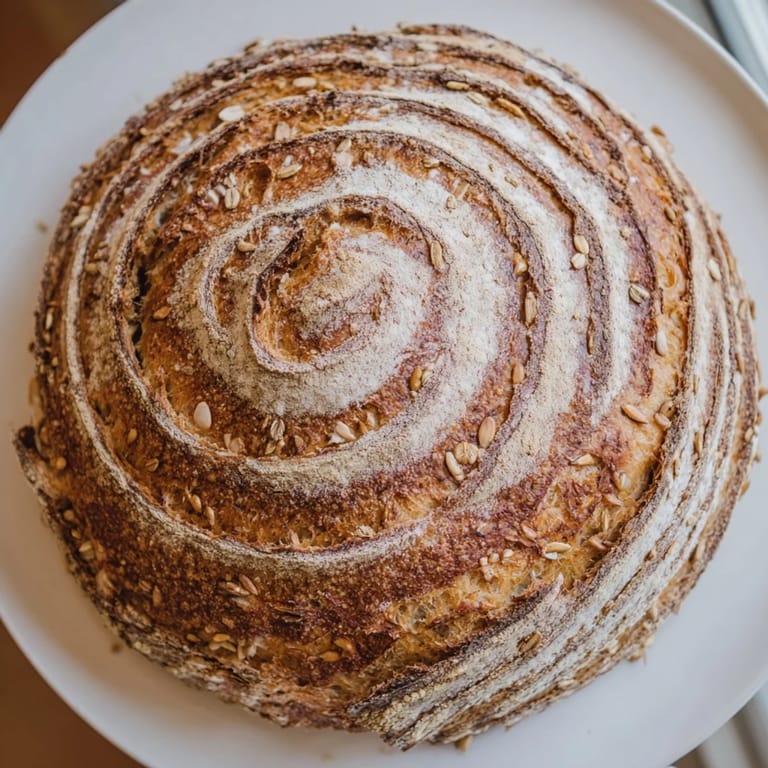
- Dust your spiral lightly with flour. Using a very sharp blade or bread lame, make confident slashes along the spiral lines—these guide the expansion and create that beautiful final shape. Don't hesitate or saw; one quick cut is better than multiple tentative ones.
- Introduce the steam:
- Carefully pour about a cup of hot water into the preheated tray on the oven floor. You'll hear a satisfying sizzle. Immediately place your loaf in the oven. The steam surrounds your bread for the first part of the bake, allowing it to expand fully before the crust sets.
- The bake itself:
- Bake for 40 minutes total, rotating the baking sheet halfway through (around the 20-minute mark) to ensure even browning. The crust should turn a deep golden brown, almost burnished in places. When you tap the bottom of the loaf, it should sound hollow and feel firm.
- Cool completely:
- This is the hardest step because the aroma will drive you crazy. Transfer your loaf to a wire rack and resist slicing it for at least 30 minutes, ideally longer. While the bread cools, the interior finishes setting. Slice too early and the crumb will be gummy and the slices will fall apart.
 Save
Save The first time I made this bread perfectly, my daughter was home from university for the weekend. I'd been experimenting with the spiral shape for weeks, and finally got it right. When she tasted that first slice, she sat quietly for a moment, then asked if I could make it again before she left. That's when I realized this wasn't just about beautiful shapes or mathematical elegance—it was about creating something that actually nourished people and made them feel cared for.
Understanding Fibonacci in Your Dough
The Fibonacci sequence appears throughout nature—in nautilus shells, sunflower seeds, and spiral galaxies. When you build this bread, you're not just making dinner; you're translating a mathematical pattern into something edible and alive. Each spiral segment is roughly 1.618 times larger than the last (the golden ratio), and as you build outward, you'll feel how naturally this progression flows. It seems complex on paper, but in practice, it's meditative and satisfying. The beauty is that even if your ratios aren't mathematically perfect, the bread still knows what to do.
Why Long Fermentation Changes Everything
Most bread recipes rush the process, but this one asks you to wait. That 8 to 12 hour rise isn't laziness—it's intentional flavor development. The longer fermentation allows the wild yeasts (if using starter) or commercial yeast to work slowly, creating organic acids and complex flavors that develop depth you simply can't rush. You'll also notice the dough becomes easier to shape after this long rise; the gluten network is fully developed, and everything feels more cooperative. Patience here pays you back with every slice.
Creating Texture Through Ingredient Layering
What makes this bread remarkable is how each spiral layer brings its own personality to the final loaf. The smallest inner spirals have delicate seed flavor, while the outer spirals with spinach and olives are bold and savory. When you slice through, you get this beautiful cross-section showing all your work, and more importantly, every bite contains a slightly different flavor combination. This is intentional design—you're not just stirring everything together and hoping for the best; you're creating deliberate flavor progression.
- Toast your seeds and nuts before adding them—this brings out deeper, more complex flavors that raw additions simply can't achieve
- If you don't have one of the ingredients listed, the spiral structure still works beautifully with any combination of seeds, nuts, and vegetables you prefer
- Consider the moisture content of your additions—the further out your spiral, the more robust the dough needs to be, which is why the densest ingredients go in the final segments
 Save
Save This bread represents something I've come to love about baking: the combination of precision and intuition, mathematics and creativity, science and art all working together in flour and water. Every time you make it, you'll get better at reading the dough and trusting your instincts.
Recipe FAQs
- → How does the Fibonacci spiral affect the bread's texture?
The gradual increase in density and ingredient variety in each spiral segment creates layered textures, from crunchy seeds to soft spinach, resulting in a complex crumb structure.
- → Can I substitute sourdough starter with yeast?
Yes, active sourdough starter can be replaced with instant yeast for a quicker fermentation, although flavor and texture may vary slightly.
- → What is the purpose of steaming during baking?
Steam helps develop a crisp and glossy crust by keeping the dough surface moist during the initial baking phase, allowing proper oven spring.
- → Are the nuts and seeds evenly distributed throughout the bread?
Each spiral segment is kneaded with a different ingredient, providing a gradual build-up of flavors and textures instead of an even distribution.
- → How long should the dough rise before shaping?
The dough requires an extended rise of 8–12 hours to develop flavor and structure before dividing and adding the fillings for the spiral.
- → Is it possible to make this bread vegan?
Yes, simply omit or replace the hard cheese with a plant-based alternative to maintain the spiral layers without animal products.