 Save
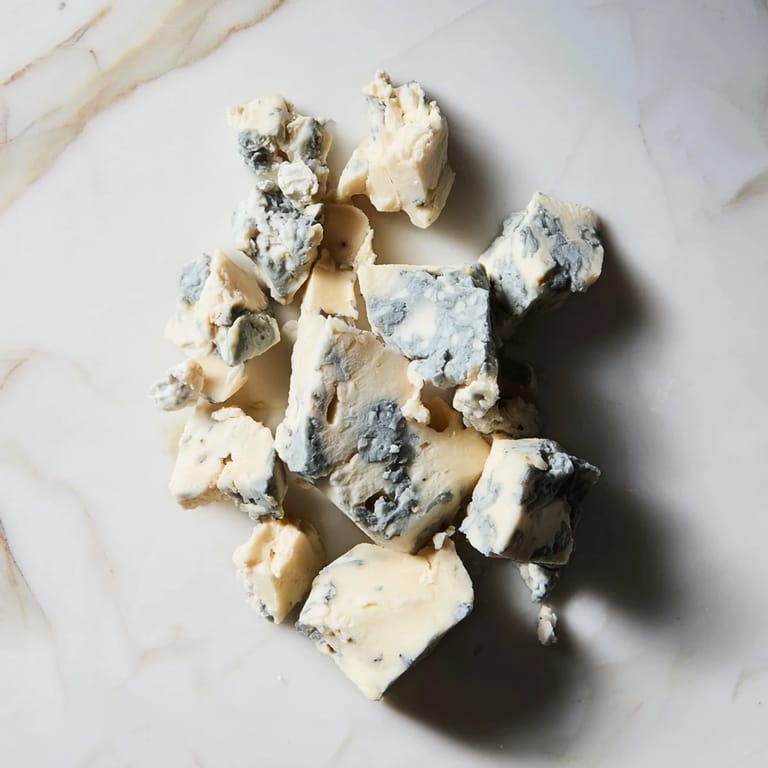
Save I discovered the magic of a cheese board quite by accident when I ran out of time before a dinner party and decided to embrace the chaos. Instead of fussing with small portions, I grabbed a chunk of blue cheese, a hunk of aged cheddar, and threw them onto a marble slab I'd been meaning to use. Something about the way the irregular pieces caught the light against that cool stone surface stopped everyone mid-conversation. It wasn't just a cheese board anymore—it was a landscape worth exploring.
My neighbor Sarah came over unexpectedly one autumn afternoon, and instead of rushing around, I simply pulled out that marble slab and arranged some cheeses while we talked by the window. The way the afternoon light played across the board, the way she reached for a piece and paused to really taste it—that's when I realized this wasn't just efficient, it was intimate. Sometimes the simplest presentations invite people to slow down.
Ingredients
- Blue cheese: The pungent, veined beauty that anchors the board—I learned that Roquefort brings elegance, Gorgonzola adds richness, and Stilton has this wonderful earthy depth, so choose based on your mood.
- Aged white cheddar: This is the grounding force, sharp and crystalline, cutting beautifully against the blue cheese's intensity without apologizing for itself.
- Fresh grapes or pears: These aren't just decoration—they're palate cleaners, offering sweetness and juiciness that makes you want another bite of cheese.
- Crackers or crusty bread: Your vehicle for the cheese, though honestly, some people skip these and just eat the cheese with their hands, which is entirely acceptable.
- Honey or fig jam: The secret weapon that adds warmth and complexity, especially when drizzled over the blue cheese where it pools into little golden pockets.
Tired of Takeout? 🥡
Get 10 meals you can make faster than delivery arrives. Seriously.
One email. No spam. Unsubscribe anytime.
Instructions
- Start with cold stone:
- Pop that marble slab in the fridge for a few minutes if you have the time—the coolness keeps the cheeses from sweating and gives everything a more composed feeling. It's a small touch that changes how the board looks and tastes.
- Cut with intention:
- Use a cheese knife to break the cheeses into large, uneven chunks, letting them have their own personality. Irregular pieces look more inviting and honest than uniform cubes.
- Arrange like a landscape:
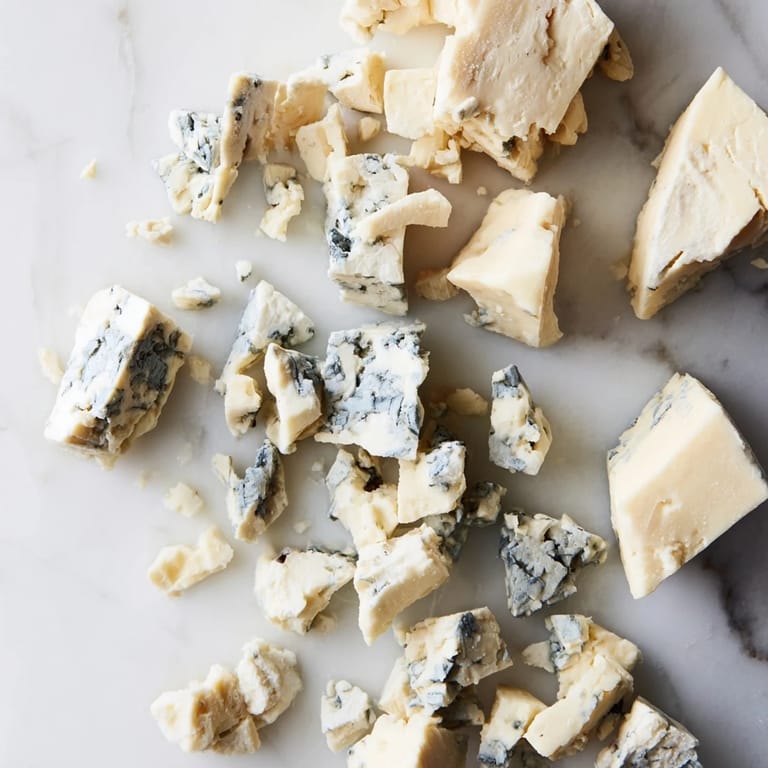
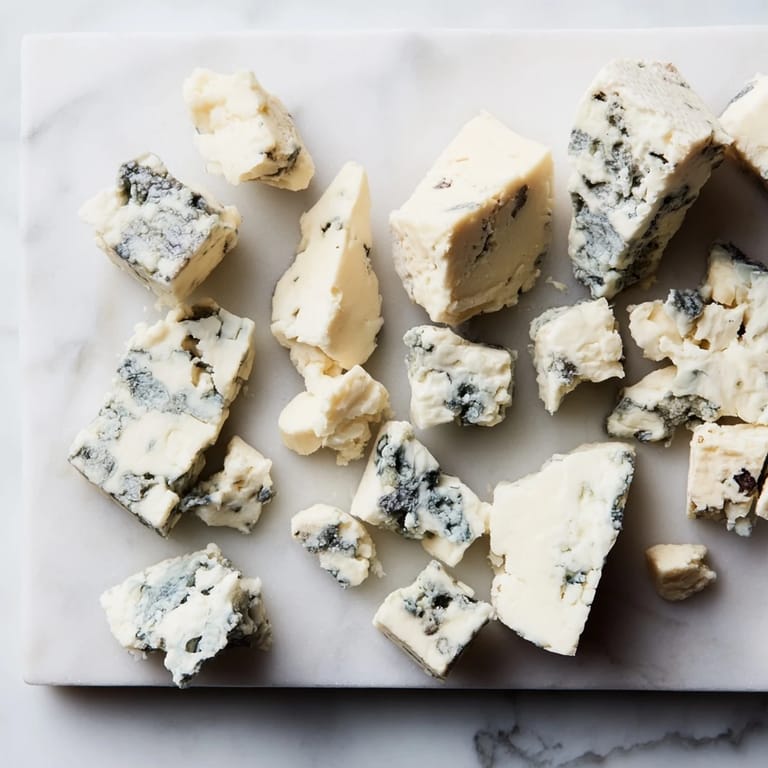
- Start with one cheese, scatter it loosely across the slab with actual space between pieces, then do the same with the other. You're creating a quarry effect, not filling every inch—let the marble breathe.
- Add the sweetness:
- Tuck grapes or pear slices into the gaps, creating little flavor partnerships throughout the board. Small bowls of honey and jam go at different spots so people naturally explore.
- Finish and serve:
- Step back and look at it—really look at it—before bringing it to the table. Crackers or bread go on the side, inviting but not crowding.
 Save
Save Last spring, my daughter brought this board to her school's international potluck, and it started the most unexpected conversation about why some people fear blue cheese and others can't live without it. Watching twelve-year-olds debate the merits of different cheeses while standing around a marble slab made me realize food does something that lectures never can—it makes people think and feel at the same time.
The Marble Slab as Canvas
The marble slab isn't just serving ware; it's part of the experience. The coolness, the subtle veining, the way light moves across it—all of this frames the cheeses and makes them look more intentional than they are. I've noticed that when food is presented on beautiful, natural materials, people slow down. They pay attention differently. The marble slab says without words that you care about how things look and how they taste.
Building Flavor Partnerships
The blue cheese and white cheddar aren't opposites that compete—they're partners that make each other more interesting. The sharp, mineral notes of aged cheddar cut through the blue cheese's pungency, while the blue cheese adds drama that makes the cheddar taste even more refined. Add grapes and suddenly you have sweetness that bridges both, and a drizzle of honey becomes the final note that ties everything together. This is why people reach for more instead of moving on to the next dish.
Making It Your Own
This board is a starting point, not a rule book, and I've learned that the best presentations happen when you trust your instincts. Golden washed-rind cheese adds visual warmth and creamy texture, creamy goat cheese brings a completely different note, and even a good sharp cheddar in a different color adds visual interest. The key is contrast—in color, texture, and flavor intensity. Think of it like composing a photograph where every element has something to say.
- If you can't find quality blue cheese, a good Danish blue or even a creamy goat cheese with some blue veining works beautifully.
- Serve this straight from the fridge or at cool room temperature, never warm—warmth is the enemy of cheese boards.
- Pair with a crisp white wine or light-bodied red, and watch people understand why cheese boards have existed in European cultures for centuries.
 Save
Save A marble quarry sounds imposing until you realize it's just large pieces of beautiful cheese arranged on beautiful stone, inviting people to explore and enjoy. This is the kind of food that reminds us that the simplest presentations are often the most memorable.
Recipe FAQs
- → What cheeses are used in the Marble Quarry?
Large chunks of blue cheese varieties like Roquefort or Gorgonzola and aged white cheddar create the core of this presentation.
- → How do I create the quarry effect with the cheese?
Scatter the irregular cheese pieces with spaces between them on the marble slab to mimic natural stone quarry patterns.
- → What accompaniments pair well with this cheese board?
Fresh grapes, sliced pears, honey or fig jam, and assorted crackers or crusty bread enhance both flavor and visual appeal.
- → Why use a marble slab for serving?
Marble keeps cheeses cool and adds an elegant, dramatic backdrop enhancing the visual presentation.
- → Can I add other cheeses to this display?
Yes, adding cheeses with contrasting colors or textures, such as washed-rind or creamy goat cheese, adds variety and interest.