 Save
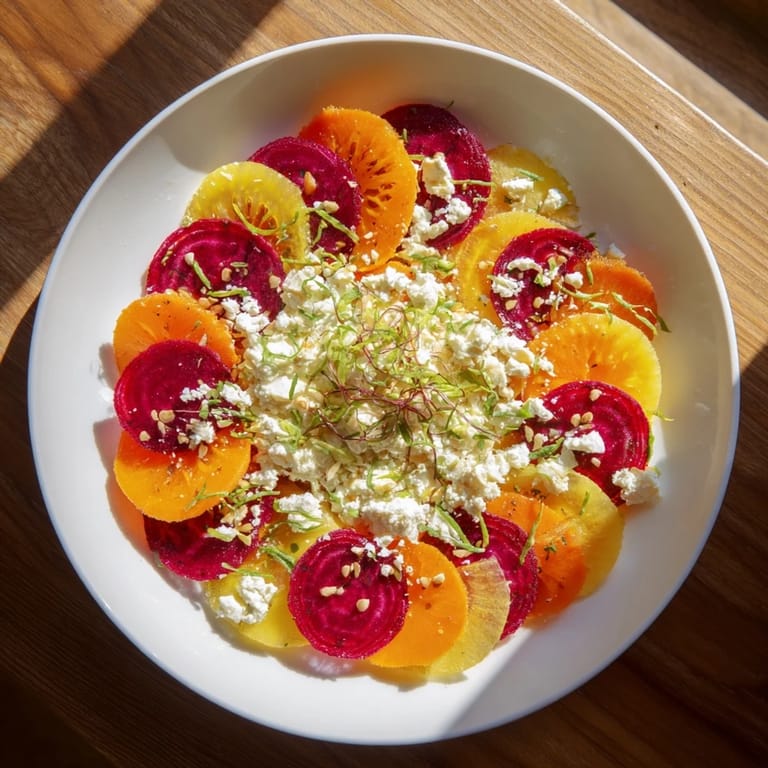
Save I'll never forget the moment I first saw a radial symmetry sunburst salad at a farm-to-table restaurant in Provence. The way the vegetables fanned out from that golden center of cheese caught the afternoon light like an edible work of art, and I knew immediately that I had to recreate it at home. That evening, I stood in my tiny kitchen with a mandoline and a stack of market vegetables, determined to capture that same magic. What started as an ambitious experiment became my signature dish—the one I now make whenever I want to impress without spending hours in the kitchen.
I remember making this for my sister's engagement party last summer, and watching her face light up when she saw it was worth every careful slice. The sunburst became the centerpiece of the entire table, and honestly, it was almost too beautiful to eat—almost. By the end of the evening, there wasn't a trace left, and three people asked me for the recipe.
Ingredients
- Golden beet: The sweetness of golden beets creates a beautiful contrast with the earthiness of the red variety, and they won't stain your hands or the other vegetables with beet juice the way red beets do
- Red beet: The jewel tone is essential for the visual impact—those deep crimsons are what make the sunburst truly dramatic
- Zucchini: Slice it paper-thin so it fans beautifully without being too flimsy; the mild flavor lets other vegetables shine
- Yellow squash: Brings brightness and a delicate sweetness that plays nicely against the tanginess of the goat cheese
- Watermelon radish: This is your show-stopper—those pink and white concentric circles are pure magic when you slice them thin
- Carrot: Orange carrots work, but hunt for heirloom varieties in purple, red, or white for extra dimension
- Goat cheese: Creamy, tangy, and it holds the center together both visually and flavor-wise; crumble it right before assembly
- Crème fraîche: This keeps the cheese from being too crumbly and adds a subtle richness that ties everything together
- Extra-virgin olive oil: Use the good stuff you actually care about—you'll taste the difference
- Lemon juice: Fresh squeezed only; bottled just won't sing the same way
- Honey: A tiny bit adds complexity and softens the acidity just enough
- Fresh chives: The mild onion flavor and fresh green color are the finishing touch
- Toasted sesame seeds: They add a subtle nuttiness and a little textural surprise
Tired of Takeout? 🥡
Get 10 meals you can make faster than delivery arrives. Seriously.
One email. No spam. Unsubscribe anytime.
Instructions
- Prepare your vegetables:
- Get out your sharpest knife or, better yet, a mandoline if you have one. Slice each vegetable as thin as you can—almost translucent. The thinner they are, the more delicate and elegant the final presentation. Lay them on paper towels as you go to remove excess moisture; dry vegetables arrange more beautifully and hold their shape better.
- Mark your center:
- Place a small bowl or ramekin in the dead center of your large round platter. This is your guide, your anchor point. Stand back and visualize how you want the colors to flow outward before you start arranging.
- Create the sunburst:
- Now comes the meditative part. Start with one vegetable and fan the slices outward from the center in one long, graceful arc. Overlap each slice slightly—about a quarter of the way—so they catch the light and create that radiating effect. Move to the next color and repeat, creating concentric rings. Alternate colors intentionally: a ring of golden beets, then zucchini, then watermelon radish. Step back frequently to check the balance. You want it to look effortless and balanced, like the sun's rays.
- Fill the center:
- Carefully remove that guiding bowl. Take your crumbled goat cheese and gently mix it with the crème fraîche until it's spreadable but still holds some texture. Pile it into that empty center space, creating a small, creamy focal point.
- Make the dressing:
- In a small bowl, whisk together the olive oil, fresh lemon juice, and a tiny drizzle of honey. Taste it and adjust the seasoning with salt and pepper. It should taste bright and balanced—not too acidic, not too sweet.
- Dress and garnish:
- Drizzle the dressing evenly over all those carefully arranged vegetables. It'll soak in slightly, which is perfect. Then scatter the fresh chives and toasted sesame seeds across the entire sunburst. If you're using edible flowers, this is when they go on—they'll add both color and a delicate, unexpected flavor note.
- Serve immediately:
- Get this to the table right away, while everything is still crisp and the colors are at their most vibrant. Take a photo if you must—this dish demands documentation.
 Save
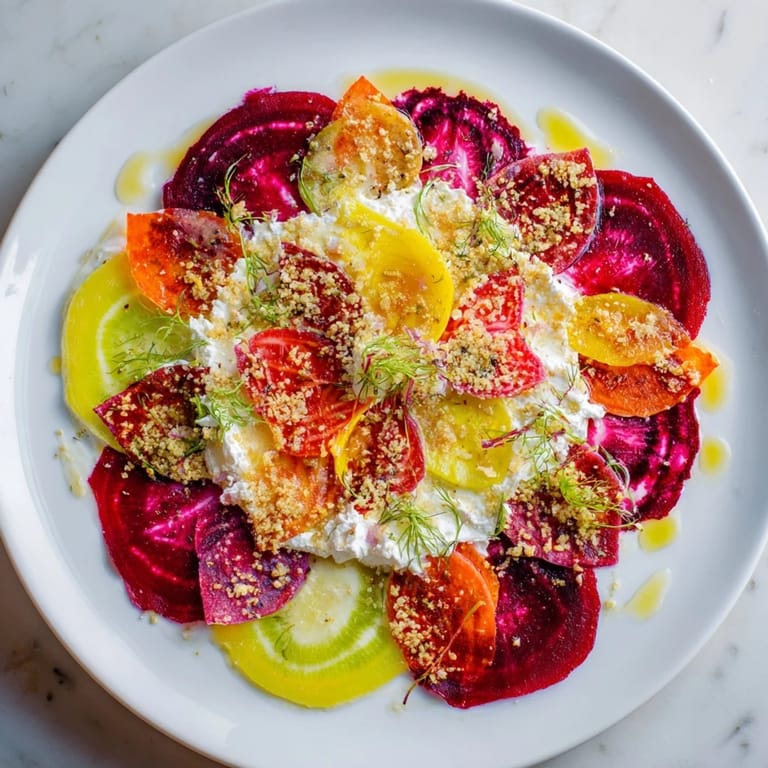
Save There's something about arranging food in perfect circles that makes you slow down and be present. That afternoon in my kitchen, with afternoon light streaming through the windows and nothing but the soft sound of vegetables being sliced, felt like a meditation. By the time I finished, I wasn't just making a salad—I'd made something I was proud to share.
The Art of the Mandoline
If you're serious about making this dish regularly, invest in a good mandoline. It's the difference between slices that are frustratingly thick and ones so thin they're nearly transparent. The vegetable varieties that work best are those with firm, dense flesh—beets, carrots, and radishes slice beautifully. Softer vegetables like zucchini and squash need a lighter hand so they don't tear. Practice on less expensive vegetables first, and always, always use the guard. Your fingertips will thank you.
Playing with Color Theory
The beauty of this dish is that it teaches you how to think about color on a plate. The warm oranges and reds dance against the cool greens of the zucchini. The deep crimson of the red beets creates drama, while the golden beets offer warmth and accessibility. If you want to push this further, seek out heirloom vegetables in unexpected colors—purple carrots, white beets, golden beets in a variety you've never seen. The market is full of surprises if you look beyond the standard orange, red, and green.
Variations and Make-Ahead Strategy
This recipe is endlessly adaptable once you understand the principle. In spring, swap in thinly shaved asparagus and radishes. In fall, add paper-thin slices of apple or pear for sweetness. Winter offers beautiful purple and golden beets, and summer is your moment for every squash and zucchini variety you can find. You can slice all your vegetables several hours ahead and layer them between paper towels in an airtight container in the refrigerator—just arrange them right before serving. If goat cheese isn't available or you're looking for something different, ricotta offers a lighter touch, while feta brings a sharper, more Mediterranean flavor.
- Try adding thinly shaved fennel for a subtle anise note that surprises and delights
- Swap the sesame seeds for toasted sunflower seeds or pumpkin seeds for a different texture
- Drizzle with a basil oil or walnut oil instead of plain olive oil for unexpected depth
 Save
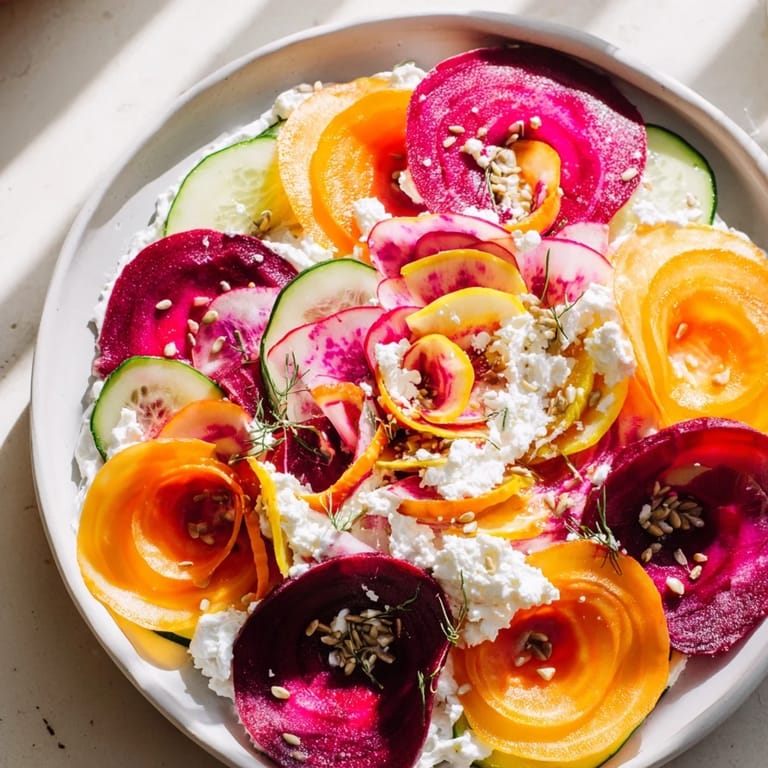
Save This salad has taught me that food doesn't need to be complicated to be impressive. Sometimes the simplest ingredients, arranged with intention and care, become something truly memorable.
Recipe FAQs
- → How should the vegetables be sliced for this dish?
Use a sharp knife or mandoline to slice vegetables as thinly as possible, allowing them to lay flat and overlap for the sunburst effect.
- → Can I substitute the goat cheese in the center?
Yes, ricotta or feta can be used as alternatives while maintaining creamy texture and tangy flavor.
- → What is the purpose of the small bowl in the center during arrangement?
The bowl marks the focal point for arranging the vegetables in symmetrical concentric circles, creating the sunburst design.
- → Is this dish suitable for gluten-free diets?
Yes, all ingredients are naturally gluten-free making it safe for gluten-sensitive individuals.
- → How can I add extra color to the arrangement?
Incorporate heirloom carrots or thinly sliced cucumber for additional vibrant hues and texture.
- → What dressing is recommended for this dish?
A simple blend of extra-virgin olive oil, lemon juice, honey, salt, and pepper enhances the freshness without overpowering the ingredients.