 Save
Save There's something almost magical about the moment you pull a sheet of roasted vegetables from a hot oven—the kitchen fills with this deep, caramelized sweetness that makes you pause mid-whatever-else-you-were-doing. I discovered this soup on a grey October afternoon when my farmer's market haul included both butternut squash and broccoli, and I had that restless feeling of wanting to turn them into something warm and soul-settling. What started as an experiment in roasting technique became my favorite weeknight comfort in a bowl, and I've been making it ever since.
I remember serving this to my neighbor on a cold evening when she'd been helping me move boxes, and she actually sat down at my kitchen island and ate three bowls while we talked about everything from her garden to my terrible attempts at sourdough. That's when I knew this recipe was something special—not because it was fancy, but because it made someone slow down and stay a little longer.
Ingredients
- Butternut squash (about 2 lbs, peeled and cubed): This is your soup's backbone—the natural sweetness mellows beautifully when roasted, and the texture becomes silky once blended. Don't skip the peeling step; a sharp vegetable peeler or knife makes quick work of it.
- Broccoli florets (about 4 cups from 1 large head): The roasting caramelizes the edges and brings out a slightly nutty depth that raw broccoli could never achieve, making the whole soup taste more complex than it has any right to.
- Yellow onion and garlic (1 medium onion, 3 cloves): These two get soft and sweet in the oven, then dissolve completely into the broth—they're the flavor foundation nobody really notices until it's missing.
- Vegetable broth (4 cups): Quality matters here since it's doing a lot of work; I use a low-sodium version so I can control the salt level myself and taste as I go.
- Coconut milk or heavy cream (1 cup): Coconut milk keeps it vegan and adds a subtle sweetness, while heavy cream makes it richer and more indulgent—choose based on what you're craving that day.
- Olive oil (2 tablespoons): This is for the roasting pan; it helps everything brown properly and creates those crispy-edged pieces that dissolve into the soup.
- Kosher salt, black pepper, cumin, and nutmeg: The cumin gets toasted during roasting and adds earthiness, while the nutmeg stirred in at the end feels like a secret ingredient that nobody can quite identify but everyone loves.
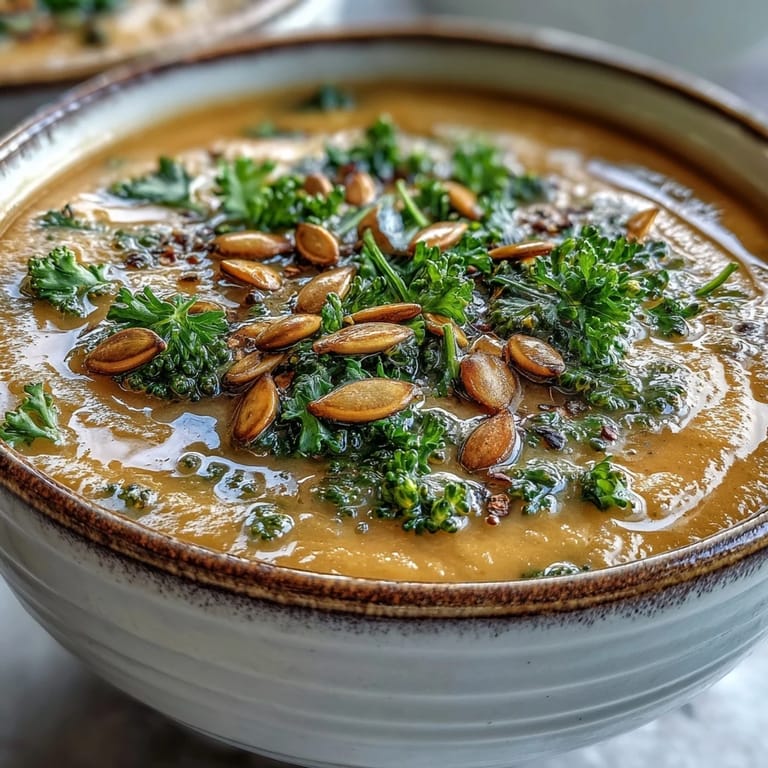
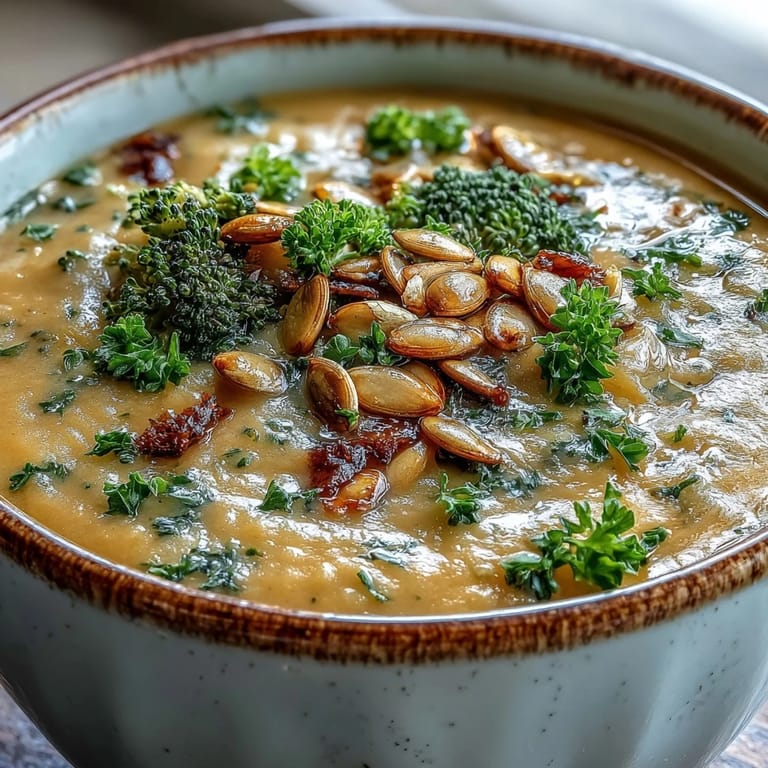
- Pumpkin seeds, parsley, and cream for garnish: These finish the soup beautifully—the seeds add crunch, the parsley brings fresh herbaceous notes, and a final cream drizzle makes it feel restaurant-quality.
Tired of Takeout? 🥡
Get 10 meals you can make faster than delivery arrives. Seriously.
One email. No spam. Unsubscribe anytime.
Instructions
- Get your oven ready and prep your vegetables:
- Preheat your oven to 425°F and line a baking sheet with parchment paper—this prevents sticking and makes cleanup actually enjoyable. While it heats, peel and cube your squash (aim for roughly 1-inch pieces so they roast evenly), chop your broccoli into florets, dice the onion into chunks, and leave your garlic cloves whole.
- Coat and roast until golden:
- Toss everything together on the baking sheet with olive oil, salt, pepper, and cumin, making sure each piece gets a light coating. Spread them out in a single layer, pop the sheet into the oven, and roast for 25 to 30 minutes, stirring halfway through—you want the squash tender and the broccoli edges deeply browned and crispy.
- Build your soup base:
- Transfer all the roasted vegetables to a large pot, pour in your vegetable broth, and let it simmer gently for about 10 minutes to allow all those roasted flavors to mingle and soften even further. You'll notice the kitchen smelling even better now, almost honey-like from the caramelized squash.
- Blend into creaminess:
- Remove from heat and use an immersion blender to puree everything until it reaches that smooth, silky consistency—work slowly so you don't splash hot soup everywhere, which I learned the hard way on my kitchen ceiling. If you're using a countertop blender, work in batches and don't fill it more than halfway so the heat and steam have room to escape.
- Season and finish:
- Stir in your coconut milk or cream and a pinch of nutmeg, which brings out all the subtle sweetness you've been building. Taste carefully and adjust your salt and pepper until it feels balanced—this is the moment you actually get to customize it to your own preferences.
- Serve with celebration:
- Ladle the soup into bowls and scatter pumpkin seeds on top, add a little fresh parsley for color and brightness, and maybe a final drizzle of cream if you're feeling generous. Serve it warm with crusty bread on the side, and watch people's faces light up as they taste it.
 Save
Save The most unexpected moment came when my teenage niece asked for the recipe because she'd made this soup at school and wanted to recreate it at home—something I never expected from someone who normally protests anything green on their plate. That's when I realized this soup has this quiet power to change minds and create memories, one warm bowl at a time.
Why Roasting Changes Everything
I spent years making vegetable soups by just throwing chopped vegetables straight into broth, and they were fine but forgettable. The roasting step isn't extra work—it's the difference between a soup that tastes like steamed vegetables and a soup that tastes like autumn on a spoon. When you caramelize vegetables first, their natural sugars concentrate and brown, creating a depth that you literally cannot achieve any other way, and once you taste it, you'll never make vegetable soup the old way again.
Making It Your Own
One night I had fresh sage on hand, so I scattered some leaves over the roasting vegetables and the whole soup took on this warm, almost herbal quality that nobody expected. The beauty of this recipe is how much room it has for your own touches—a squeeze of lemon brightens everything, a pinch of cayenne adds heat, or you can substitute sweet potato for squash if that's what you have in your pantry. I've made it with butternut, delicata, and kabocha squash, and each one brings its own subtle flavor personality while staying true to the soul of the dish.
Storing and Reheating
This soup actually tastes better the next day once the flavors have had time to rest and get cozy with each other, so don't hesitate to make a double batch on Sunday and have it waiting for you all week. Store it in the refrigerator in airtight containers for up to four days, and when you're ready to reheat, do it gently over medium-low heat, stirring occasionally and adding a splash of broth if it's thickened up. Honestly, I sometimes eat it straight from the container because I love it cold too, which surprises me every time, and you should definitely try it that way at least once.
- The immersion blender saves you from having to carefully transfer hot soup to a blender in batches, which is worth the minimal counter space it takes up.
- Make extra pumpkin seed garnish because everyone will want more than you think, and the crunch against the creamy soup is genuinely addictive.
- Save any leftover roasted vegetables separately before you blend the soup—they make an amazing addition to grain bowls or salads if you don't use them all.
 Save
Save This soup has become my secret weapon for those nights when I want to feel like I've cooked something special but don't have the energy for actual fussiness. It's the kind of meal that makes people grateful you exist, asks for almost nothing in return, and reminds us all why autumn tastes like home.
Recipe FAQs
- → Can I make this soup ahead of time?
Yes, this soup stores well for up to 4 days in the refrigerator. Reheat gently on the stove, adding a splash of broth if needed to thin consistency.
- → Can I freeze this soup?
Absolutely. Cool completely before transferring to airtight containers. Freeze for up to 3 months. Thaw overnight in the refrigerator before reheating.
- → What can I substitute for coconut milk?
Heavy cream creates a richer version, while additional vegetable broth keeps it dairy-free and lighter. Cashew cream also works beautifully for a creamy, nutty note.
- → How do I get the smoothest texture?
An immersion blender works well, but a countertop blender yields the silkiest results. Blend in batches if using a standard blender, and be cautious with hot liquids.
- → Can I use frozen vegetables?
Frozen butternut squash works in a pinch, though fresh offers better texture. Frozen broccoli tends to become waterlogged when roasted, so fresh is recommended for best results.