 Save
Save There's a moment every summer when tomatoes hit their peak, and I find myself standing in front of the farmers market stand, hands full of the ripest ones I can find, already imagining the smell of them roasting in my oven. A friend mentioned this soup last August, and I was skeptical at first—how could something so simple be restaurant-quality? But then I tried it, and suddenly I understood why Italian grandmothers have been doing this for generations. The roasting transforms everything, turning ordinary tomatoes into something deeply sweet and complex, almost unrecognizable from their raw state.
I made this for my partner on a rainy October evening when we were both exhausted from work, and I watched their face change the moment they took that first spoonful. They set down their phone, stopped mid-conversation, and just sat quietly for a moment. That's when I knew this recipe had become something special in our kitchen—it went from being dinner to being comfort in a bowl.
Ingredients
- Ripe tomatoes, halved (1.5 kg): Use the ripest, most fragrant ones you can find—their quality directly becomes your soup's soul, and underripe tomatoes will leave you disappointed.
- Yellow onion, quartered (1 large): The sweetness that emerges during roasting is what balances the tomato's natural acidity, so don't skip it.
- Garlic cloves, peeled (6): Whole cloves roast into soft, mellow nuggets of flavor rather than sharp garlic bite, which is the entire point.
- Extra-virgin olive oil (2 tbsp): This isn't the place to economize; good olive oil makes a noticeable difference in the final taste.
- Kosher salt (1 tsp): Distribute it evenly before roasting so the vegetables season themselves as they caramelize.
- Freshly ground black pepper (1/2 tsp): Grind it just before using—pre-ground loses its bite and won't give you that pleasant pepper flavor.
- Vegetable broth, low sodium (2 cups): Low sodium lets the roasted vegetables shine without competing background noise.
- Fresh basil leaves, packed (1/2 cup): Add it after blending, not before, so the flavor stays bright and alive instead of turning dark and muted.
- Unsalted butter, optional (1 tbsp): If you use it, it creates a silkier mouthfeel that makes the soup feel indulgent.
- Sugar, optional (1 tsp): A tiny pinch can soften the acidity if your tomatoes were on the tart side—taste first before adding.
- Heavy cream or crème fraîche for serving (1/4 cup): Drizzle it in a spiral pattern just before eating for maximum visual and flavor impact.
- Fresh basil leaves for garnish: Tear them by hand just before serving so they don't bruise and turn black.
- Croutons or toasted bread for serving: The textural contrast against the smooth soup is essential, not optional.
Tired of Takeout? 🥡
Get 10 meals you can make faster than delivery arrives. Seriously.
One email. No spam. Unsubscribe anytime.
Instructions
- Set your oven and prep your stage:
- Preheat to 220°C and line a baking sheet with parchment paper. This setup prevents sticking and makes cleanup nearly effortless.
- Arrange your vegetables with intention:
- Lay out the tomato halves cut-side up, scatter the onion pieces and garlic cloves around them, then drizzle everything with olive oil and season generously. The cut-side-up tomatoes will caramelize at their edges, which is where all the magic happens.
- Let the oven do the work:
- Roast for 35-40 minutes until the tomatoes have collapsed slightly and their edges are deeply browned, and the onions are so tender they're almost falling apart. Your kitchen will smell incredible at this point.
- Gather your roasted treasures:
- Scrape everything into a large pot, making sure to get all those sticky, flavorful bits from the pan. Pour in the vegetable broth and bring it to a gentle simmer—you want a quiet bubble, not a rolling boil.
- Build the flavor layers:
- Stir in the fresh basil, butter if using, and sugar if your tomatoes were particularly acidic. Let it all hang out together for 5 minutes so the flavors have time to merge.
- Transform it into silk:
- Using an immersion blender, puree until completely smooth—or carefully transfer to a countertop blender in batches if you prefer. Immersion blenders make less mess, but either way works beautifully.
- Refine and season one last time:
- Taste it now and adjust salt and pepper to your preference. For an incredibly luxurious texture, push it through a fine sieve, though it's not necessary.
- Serve with ritual:
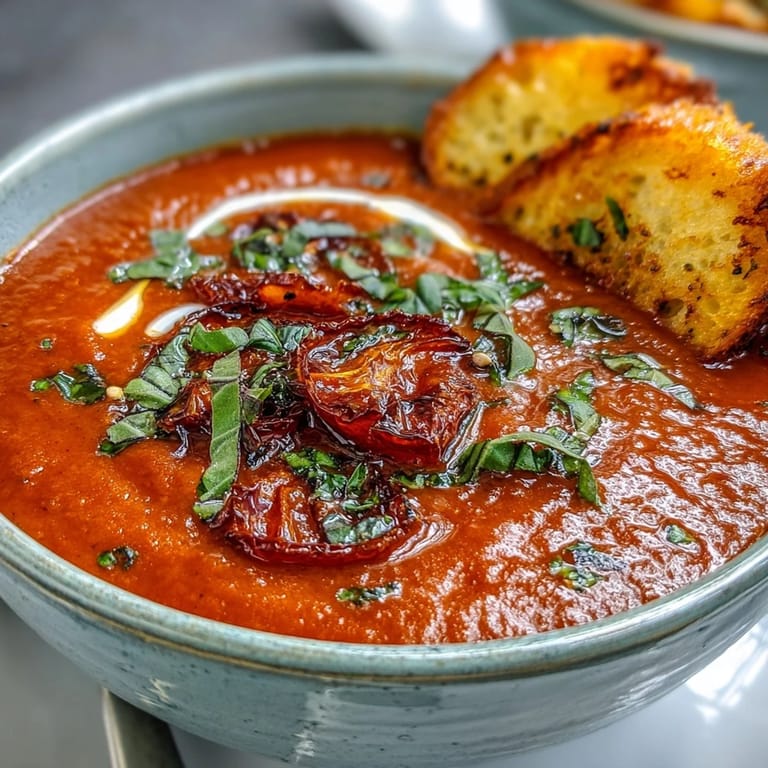
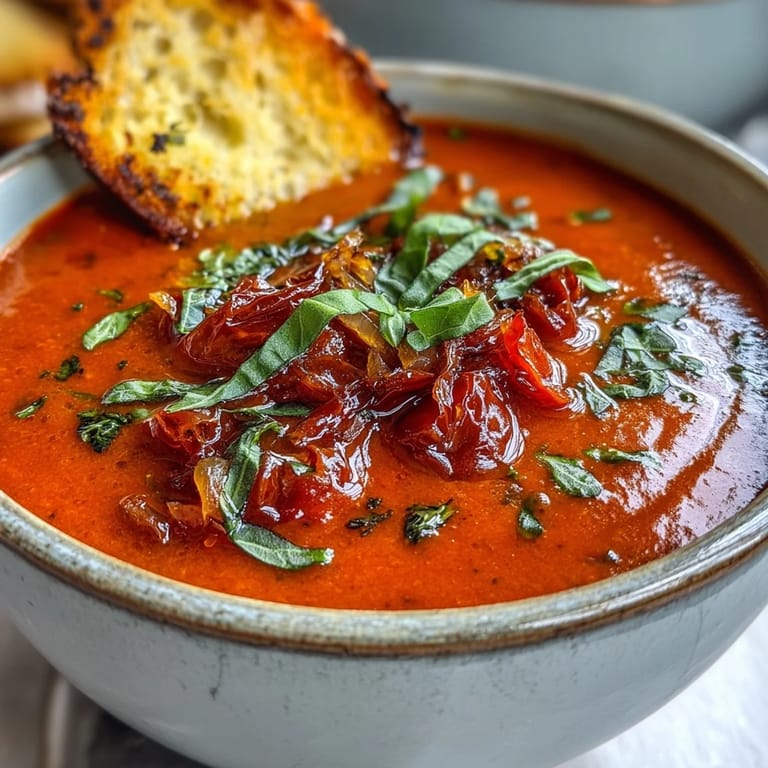
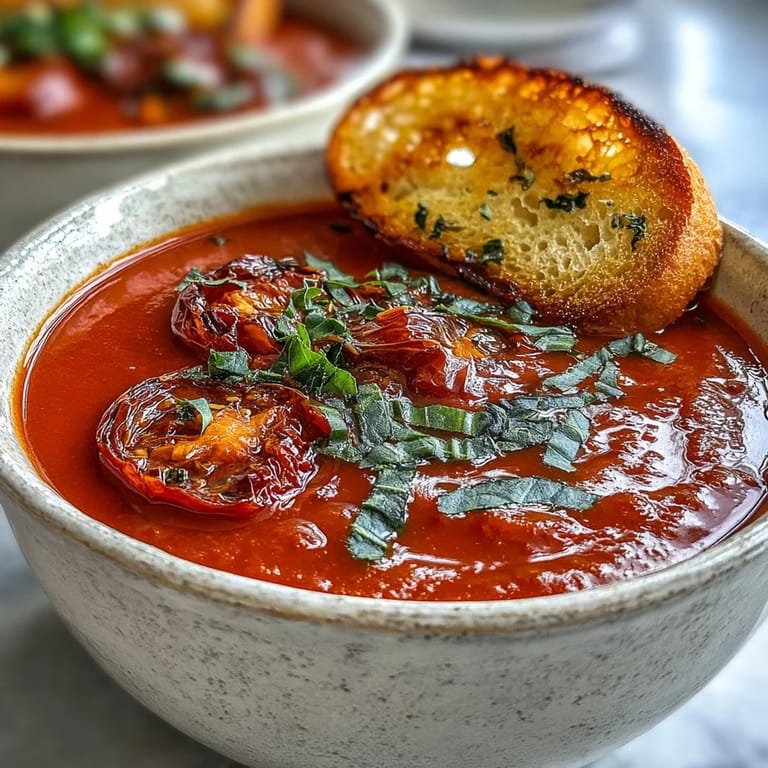
- Ladle into bowls, add a generous drizzle of cream, scatter basil leaves across the top, and add croutons for that essential textural contrast.
 Save
Save There was a winter night when my neighbor came over unexpectedly upset about something that had happened at work, and I made her this soup without asking. Watching her shoulders relax with each sip reminded me that sometimes food's real job isn't to be fancy—it's to say you're being taken care of.
Why Roasting Changes Everything
Roasting tomatoes instead of simmering them raw transforms their entire character. Raw tomatoes are acidic and bright, but roasted tomatoes become sweet, almost caramel-like, with a depth that makes people ask what secret ingredient you added. The heat concentrates their natural sugars and evaporates moisture, leaving behind pure tomato essence. It's the difference between a soup that tastes good and one that tastes like restaurant-quality comfort.
The Timing Game
The beauty of this recipe is its flexibility around your schedule. You can roast the vegetables ahead of time and store them in the refrigerator for up to two days, then blend and serve whenever you're ready. Some people find the soup even better the next day after the flavors have settled and deepened. If you're serving a crowd, roasting double the vegetables takes the same amount of oven time, and you'll have extra to blend into a bigger batch.
Making It Your Own
This is the kind of recipe that invites you to play around once you've made it once and understand the core technique. I've added a splash of balsamic vinegar for earthiness, a pinch of red pepper flakes for warmth, and once I stirred in a spoonful of tomato paste which deepened everything dramatically. The foundation is strong enough to handle your experiments without falling apart. Try any of these additions to see what speaks to your palate, or stick with the pure version and appreciate its elegant simplicity.
- A dash of balsamic vinegar adds complexity and subtle sweetness without announcing itself.
- Red pepper flakes bring gentle heat that builds as you eat, rather than overwhelming the tomato flavor.
- Tomato paste is the secret weapon if you want restaurant-intensity in a home kitchen.
 Save
Save This soup has become my go-to when I want to feel like I've done something special without the stress of complicated cooking. It's proof that the simplest recipes, made with intention and good ingredients, often taste the best.
Recipe FAQs
- → What type of tomatoes work best?
Roma, San Marzano, or vine-ripened tomatoes yield ideal results due to their meaty texture and balanced sweetness. Avoid mealy grocery store varieties—farmers' market or garden-fresh tomatoes make all the difference in final depth.
- → Can I make this ahead?
Absolutely. This actually improves overnight as flavors meld. Cool completely, refrigerate up to 4 days, or freeze for 3 months. Reheat gently, adding splash of broth if thickened.
- → How do I achieve restaurant-quality smoothness?
After blending, pass through a fine-mesh sieve. This extra step removes skins and seeds for that silky, professional finish. For garnish, reserve some roasted tomatoes before blending.
- → What can I substitute for heavy cream?
Coconut cream adds richness with subtle sweetness, while Greek yogurt provides tangy creaminess. Cashew cream offers neutral richness perfect for letting tomato flavors shine.
- → Why roast instead of simmer on stovetop?
Roasting at high heat caramelizes natural sugars, concentrating flavors and creating sweet, smoky depth. Stovetop cooking cannot achieve the same complexity—oven time is the secret ingredient.
- → Is this suitable for meal prep?
Perfect for batch cooking. The flavors deepen over time, making it ideal for Sunday meal prep. Portion into airtight containers, refrigerate, and enjoy throughout the week.