 Save
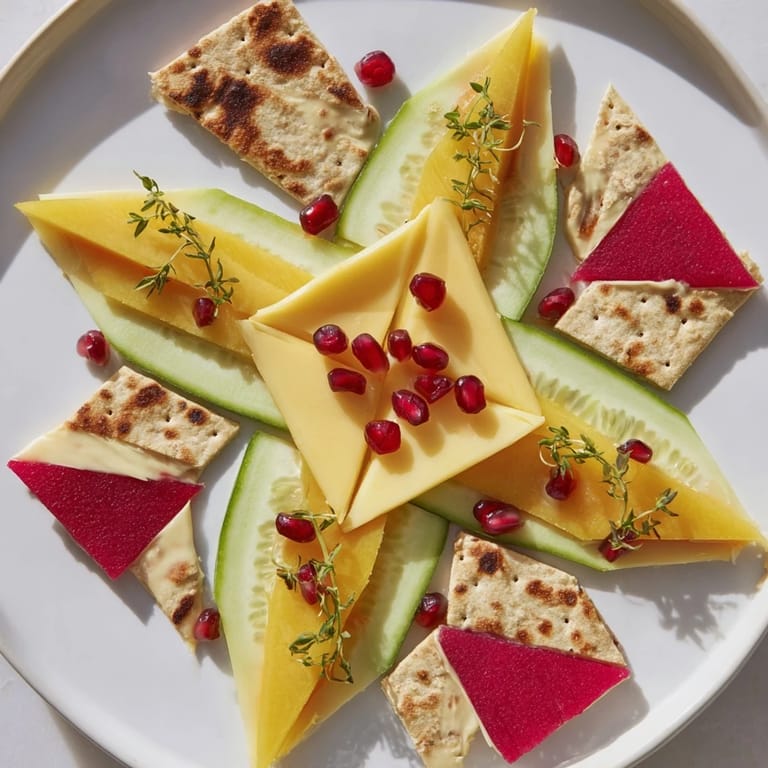
Save I first discovered the magic of geometric food design at a gallery opening where the appetizer spread stopped everyone in their tracks. It wasn't just delicious—it was a conversation piece. That's when I realized that food doesn't have to choose between beauty and taste. The Tessellation Triangle was born from that moment, a way to turn a simple grazing board into an edible work of art that makes guests pause and admire before they dive in.
I'll never forget the dinner party where a guest who claimed to be "not into appetizers" spent twenty minutes just studying the board, tracing the triangular patterns with her eyes before finally breaking into the pattern to grab a piece. That's when I knew this wasn't just a pretty plate—it was an experience that draws people in.
Ingredients
- Aged cheddar, 100 g, sliced into triangles: The sharpness anchors the whole board and provides that satisfying bite that cuts through the sweetness of the pear. Cold cheddar slices like butter.
- Manchego, 100 g, sliced into triangles: This Spanish beauty adds a slightly nutty, creamy note that feels more sophisticated than you'd expect from a simple cheese board piece.
- Goat cheese, 100 g, chilled and cut into triangles: The tangy, creamy contrast here is what makes people come back for another triangle. Keep it cold so it holds its shape beautifully.
- Cucumber, 1 medium, peeled and sliced into thin triangles: This brings freshness and a delicate crunch that reminds you why simplicity matters. The thin triangles fit perfectly into tight spaces.
- Red bell pepper, 1 large, seeded and cut into triangles: Sweet, crisp, and that jewel-like red color is exactly what the pattern needs for visual drama. The flavor is subtle enough not to compete.
- Beet, 1 small, cooked and sliced into very thin triangles: This is your secret weapon for color and earthiness. Cook and chill it ahead so the slices stay firm and those deep burgundy triangles really pop against the lighter pieces.
- Pear, 1 large, cored and sliced into thin triangles: The gentle sweetness and pale color balance the stronger cheeses. Slice it close to serving time and have a bit of lemon juice nearby if oxidation concerns you.
- Watermelon, 1/2 cup, cut into small triangles: This is pure joy in a shape. The bright pink and refreshing taste add a playful note that keeps the whole thing from feeling too serious.
- Whole grain crackers, 100 g, cut if needed into triangles: These provide structure and texture. Some crackers already come in convenient shapes, so you might skip the cutting entirely.
- Roasted almonds, 1/4 cup: Scattered in the gaps like jewels, they add crunch and help fill spaces that won't take another triangle. They're also your backup for any spots that look empty.
- Pomegranate seeds, 1/4 cup: These brilliant rubies are both functional and gorgeous, filling tiny gaps while adding bursts of tartness and color.
- Honey, 2 tbsp (optional): A light drizzle over the goat cheese creates sweetness against the tang. Use sparingly—you want to enhance, not overwhelm.
- Fresh herbs, thyme or mint: A final whisper of green and aroma. Thyme feels more elegant, mint feels more playful. Choose based on your mood.
Tired of Takeout? 🥡
Get 10 meals you can make faster than delivery arrives. Seriously.
One email. No spam. Unsubscribe anytime.
Instructions
- Start with your canvas:
- Find your largest, most beautiful board or platter. This is going to be your masterpiece, so make sure it's clean and you have plenty of room to work. A wooden board feels warm and natural for this kind of arrangement.
- Cut everything into uniform triangles:
- This is where patience becomes your secret ingredient. Use a sharp chef's knife for cheeses and vegetables, and honestly, if you have a mandoline, this is the moment to use it for the ultra-thin cucumber and beet slices. Take your time here—uniform sizes make the pattern work. They don't have to be perfectly identical, but close counts.
- Lay out your palette and see the colors:
- Before you start arranging, set all your triangles out on a separate plate or surface. Really look at the colors together. You want warm and cool tones playing against each other. This is like a painter stepping back to assess before adding another brushstroke.
- Begin from one corner:
- Start in a corner of the board and work your way across and down, like you're filling a puzzle. Place each triangle thoughtfully, angling them to fit snugly against their neighbors. Think about the visual rhythm—alternate colors as you go. One cheese triangle, then vegetable, then fruit, then another cheese. The pattern emerges as you work.
- Fit them tight and trace the pattern:
- This is the meditative part. Each triangle should nestle against the ones around it with minimal gaps. As you place pieces, you'll start to see the tessellation taking shape. Sometimes a piece needs to be angled differently to make the geometry work. That's not a mistake, that's you finding the right spot.
- Keep going until the board is full:
- It takes longer than you'd think, and that's okay. You're creating something worth the time. Continue across the entire board, maintaining that conversation of colors and textures. Step back occasionally to see how the overall pattern is developing.
- Fill the tiny gaps like you're completing a puzzle:
- Once the main triangles are placed, you'll see small spaces. This is where the pomegranate seeds and almonds become your friends. Scatter them into gaps with intention, almost like you're dotting the piece with punctuation marks. These little touches make the whole thing feel intentional and finished.
- Add the honey whisper:
- If you're using it, drizzle honey lightly over the goat cheese triangles. Think of it as adding a final gloss to a painting. A thin stream is all you need. Let gravity be your guide.
- Finish with herbs and serve:
- At the last moment, scatter your fresh herbs over the top. This adds that final breath of freshness and color. Serve immediately while everything is still cool and crisp. This is the moment people see it for the first time, so let that magic happen.
 Save
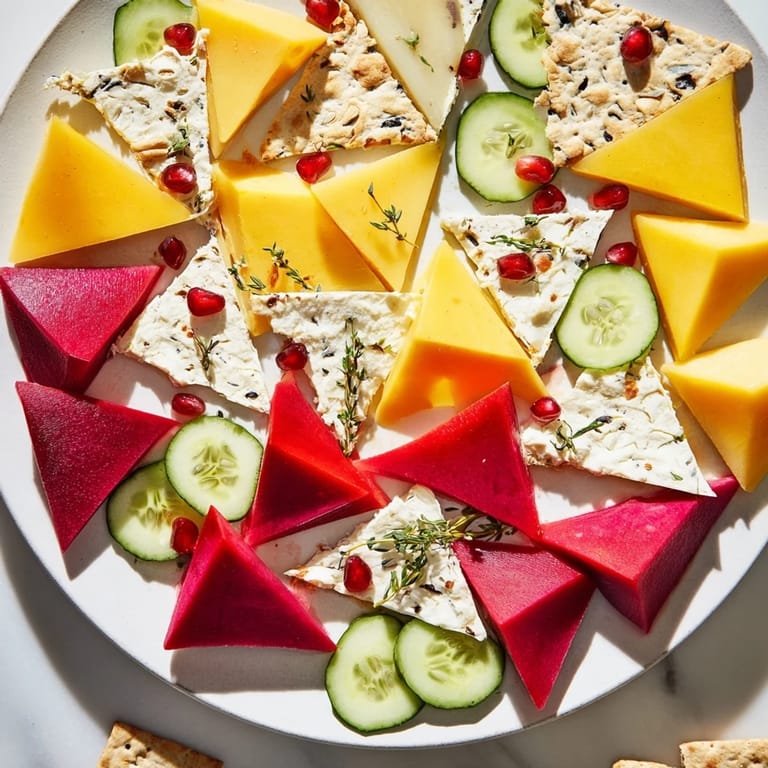
Save The moment that really matters is when you step back and see the whole thing finished. It's like watching a pattern emerge from randomness. All those individual triangles suddenly become something bigger than themselves. That's when you know this isn't just food—it's an invitation to slow down and appreciate the care that went into arranging it.
Choosing Your Cheeses Wisely
The three cheeses here each play a different role, and that's intentional. The aged cheddar brings boldness, the Manchego brings sophistication, and the goat cheese brings tang and creaminess. But here's what I've learned: you can substitute based on what's available or what you love. Gruyère works beautifully instead of Manchego if that's what you have. Brie can replace goat cheese if you want something milder. The key is balance—pick one sharp, one creamy, one somewhere in between. The tessellation pattern will hold the whole thing together no matter which three you choose.
The Vegetable and Fruit Dance
What makes this board work beyond just being pretty is the conversation between vegetables and fruits. The sweetness of the pear and watermelon plays off the earthiness of the beet and the slight bitterness of the cucumber. The bell pepper bridges them both. This isn't random—it's intentional flavor storytelling. If you're not a watermelon person, try fresh figs instead. Don't love beets? Thinly sliced carrots offer a sweeter earthiness. The arrangement will teach you as you work about which flavors actually want to live next to each other.
Styling Secrets for Maximum Impact
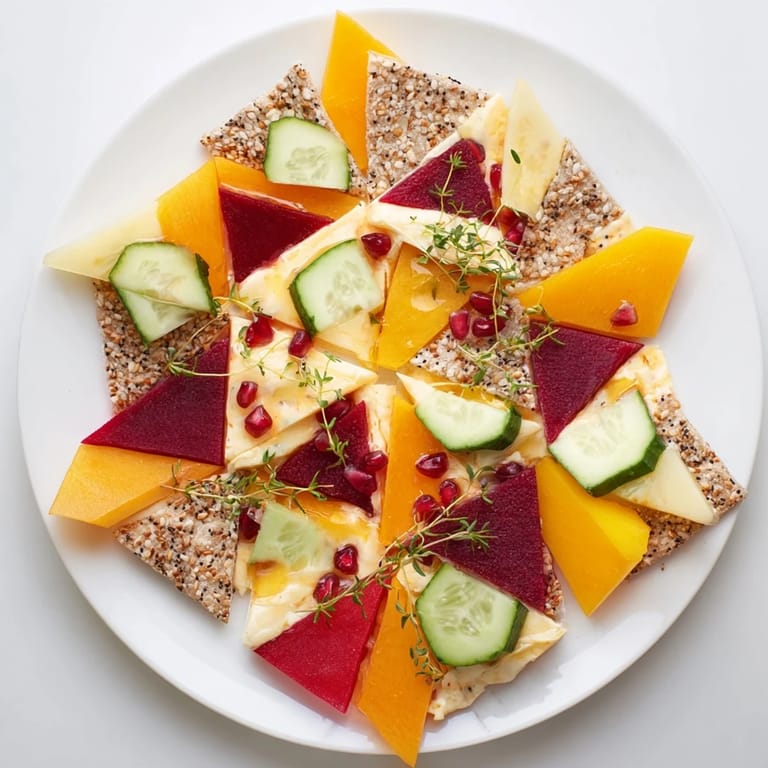
Here's something nobody tells you: the way light hits the board matters as much as the arrangement itself. If you're serving this during the day, place it where natural light can catch those pomegranate seeds and the glossy cheese surfaces. In the evening, warm overhead lighting makes the colors glow. The beet triangles especially will shine like little jewels under the right light. One more thing that changed everything for me—serve this on a board that contrasts with your food. Light food looks stunning on dark wood, darker ingredients pop on lighter surfaces. Make the board your co-star, not just your stage.
- Step back and view the arrangement from different angles before guests arrive to make sure it looks intentional from every direction
- Drizzle the honey at the very last moment so it catches the light and looks fresh, not sticky
- Keep the board cool right up until serving time by storing it in a cool place, but don't refrigerate if you can avoid it—cheese should breathe
 Save
Save The Tessellation Triangle isn't really about geometry or perfection. It's about showing people that you took time and care, that you thought about their experience, that you wanted to create something they'd remember. That's love in appetizer form.
Recipe FAQs
- → What types of cheeses work best for this board?
Aged cheddar, Manchego, and chilled goat cheese sliced into triangles provide a nice balance of flavors and textures.
- → How can I achieve uniform triangle shapes?
Use a sharp chef's knife or a mandoline slicer to cut cheeses, fruits, and vegetables into consistent triangle shapes for a neat tessellated effect.
- → Can this be adapted for a vegan diet?
Yes, substituting plant-based cheeses allows a vegan-friendly version without sacrificing the visual appeal.
- → How should I arrange the pieces for the best presentation?
Alternate colors and textures while arranging the triangles closely to create a tight, interlocking geometric pattern across the board.
- → What accompaniments complement this arrangement?
Roasted almonds, pomegranate seeds, and a light honey drizzle add crunch and subtle sweetness, enhancing the overall experience.