 Save
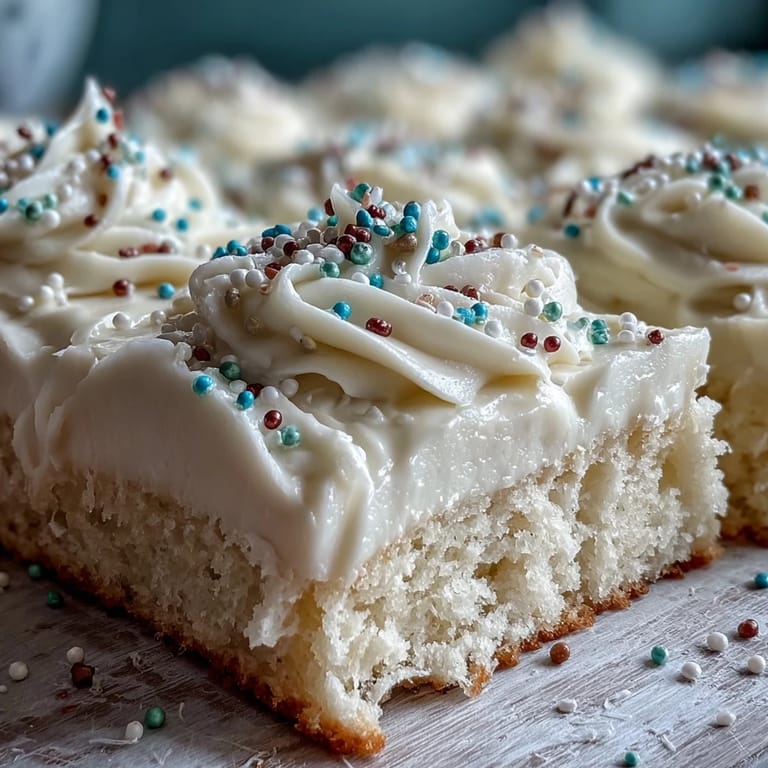
Save My nephew called me three weeks before graduation asking if I could bake something for his class party—nothing fancy, just enough cake to feed twenty-four hungry graduates. I stood in the kitchen that evening, thinking about how vanilla cake has this quiet magic: it shows up for every milestone without needing to shout about itself. This sheet cake became his answer, and somehow it became mine too.
I remember pulling that finished cake out of the oven while my sister called out decorating ideas from across the kitchen—should we do school colors, should we add their mascot? The smell of vanilla and butter filled the whole house, and by the time the frosting went on, three neighborhood kids had mysteriously appeared in my kitchen asking if they could help. That's when I knew this cake wasn't just a recipe; it was an invitation to celebrate together.
Ingredients
- All-purpose flour (3 cups): Don't sift unless you want an even more delicate crumb; whisking it together with the leavening agents does the job and saves a step.
- Baking powder and baking soda (2½ tsp and ½ tsp): These two work together to give you lift without that metallic aftertaste, so measure them carefully and don't swap one for the other.
- Unsalted butter (1 cup for cake, 1 cup for frosting): Room temperature is the secret here—cold butter won't cream properly, and you'll end up with a denser cake than you want.
- Granulated sugar (2 cups): This feeds the butter and creates that fluffy texture that makes people close their eyes when they take a bite.
- Large eggs (4): Room temperature eggs blend in smoothly without creating lumps, and they add structure without making the cake tough.
- Vanilla extract (1 tbsp for cake, 2 tsp for frosting): Real vanilla extract matters here because vanilla is the whole story—use the good stuff and let it shine.
- Whole milk (1½ cups for cake, ¼ cup for frosting): It's warmer than the other ingredients, which helps everything come together seamlessly and keeps the batter from seizing.
- Powdered sugar (4 cups): Sift it even if it looks fine, because those tiny lumps will ruin your frosting texture and you'll taste them.
- Graduation decorations and food coloring: These are your chance to make it personal, so choose colors that match the celebration or let the baker in your life pick them out.
Tired of Takeout? 🥡
Get 10 meals you can make faster than delivery arrives. Seriously.
One email. No spam. Unsubscribe anytime.
Instructions
- Set yourself up for success:
- Preheat your oven to 350°F and grease that 12x18-inch pan like you mean it—use butter or cooking spray, then line it with parchment paper so the cake slides out cleanly. Having everything ready before you start mixing is the difference between a calm baking session and a frantic one.
- Build your dry mixture:
- Whisk together the flour, baking powder, baking soda, and salt in a medium bowl until they look evenly combined. This distributes the leavening agents so you don't end up with pockets of dense cake.
- Cream the butter and sugar:
- In a large bowl, beat the softened butter and sugar together for about three minutes until the mixture is pale and fluffy, like clouds. This is where the texture of your cake is born, so don't rush it.
- Bring in the eggs:
- Add each egg one at a time, beating well after each addition so the mixture stays smooth and incorporated. If you add them all at once, the batter can break and you'll end up with a grainier crumb.
- Mix in your flavor:
- Stir in the vanilla extract until it's evenly distributed throughout the wet mixture.
- Combine everything gently:
- Add half the dry ingredients to the wet mixture and mix on low speed, then pour in half the milk, mix gently. Repeat with the remaining dry ingredients and milk, stopping as soon as everything comes together. Overmixing develops gluten and makes the cake tough, so let it be.
- Pour and smooth:
- Transfer the batter into your prepared pan and use a spatula to spread it evenly into the corners. A smooth top bakes more evenly and looks more polished.
- Bake with patience:
- Slide the pan into the oven for 28 to 32 minutes—start checking at 28 with a toothpick inserted in the center. When it comes out clean or with just a few moist crumbs, you're done; overbaking dries out the cake.
- Cool completely:
- Leave the cake in the pan on a wire rack until it's completely room temperature. This prevents the frosting from melting into puddles and gives you a stable foundation to decorate.
- Make the frosting:
- Beat the room temperature butter in a large bowl until it's creamy and pale, about two minutes. Gradually add the sifted powdered sugar, mixing on low speed so you don't create a cloud of sugar in your kitchen.
- Finish the frosting:
- Add the vanilla extract, milk, and a pinch of salt, then beat on high speed for 2 to 3 minutes until the frosting is light, fluffy, and spreadable. Add food coloring if you want to match school colors or make it festive.
- Frost and decorate:
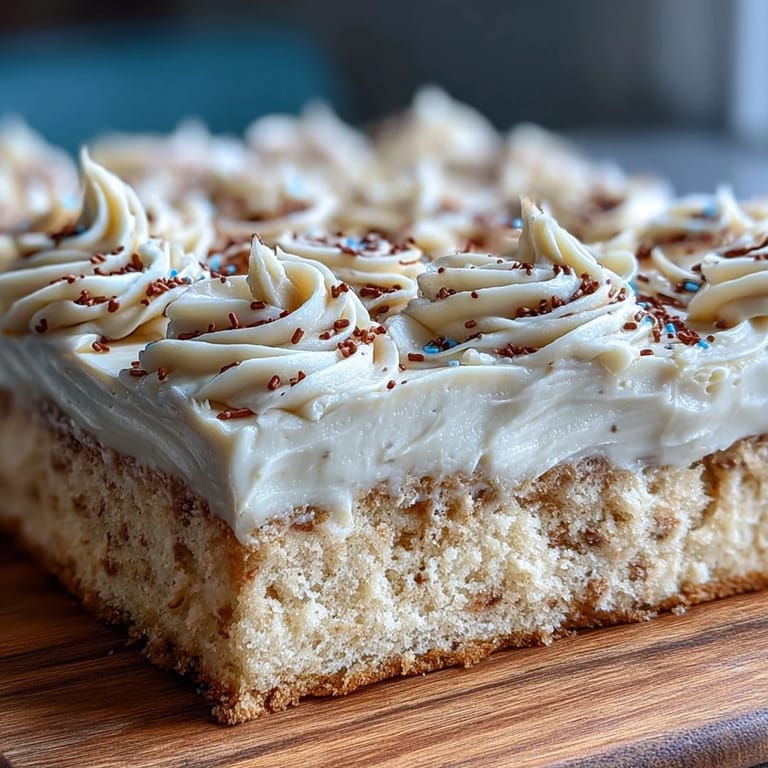
- Spread the buttercream evenly over the cooled cake using an offset spatula or the back of a spoon. Then let loose with the sprinkles and decorations—this is where you make it celebrate.
 Save
Save The afternoon of my nephew's graduation party, I watched someone's grandmother ask for the recipe while holding a plate with just crumbs left on it. Those crumbs mattered more than any fancy technique or expensive ingredient ever could.
Why Vanilla Wins for Big Gatherings
When you're feeding two dozen people at a celebration, you can't guess what everyone will want—but vanilla is the flavor nobody argues with. It's neutral enough that it doesn't compete with the moment, and pure enough that it tastes like actual cake, not a chemistry experiment. This is the cake you bake when the occasion is bigger than any single flavor.
Making It Your Own
The decorations are where your personality takes over, so don't hold back. Use the school colors, write a message with a piping bag, add edible flowers if you're feeling fancy, or let the graduates themselves decorate it as part of the celebration. I've seen kids spend twenty minutes carefully placing sprinkles on a cake, and that time together mattered as much as the cake itself.
Storage and Make-Ahead Moves
This cake actually improves if you make it a day ahead—the flavors settle and the crumb gets more tender as it sits covered at room temperature. If you need it to last longer, wrap it well and refrigerate it for up to four days. On the morning of your party, you can frost and decorate it fresh, or frost it the night before and just add sprinkles and final touches before guests arrive.
- For extra depth, stir ½ tsp almond extract into the batter alongside the vanilla.
- If you're serving this gluten-free, swap the all-purpose flour for a 1:1 gluten-free baking blend and measure it by weight if you can.
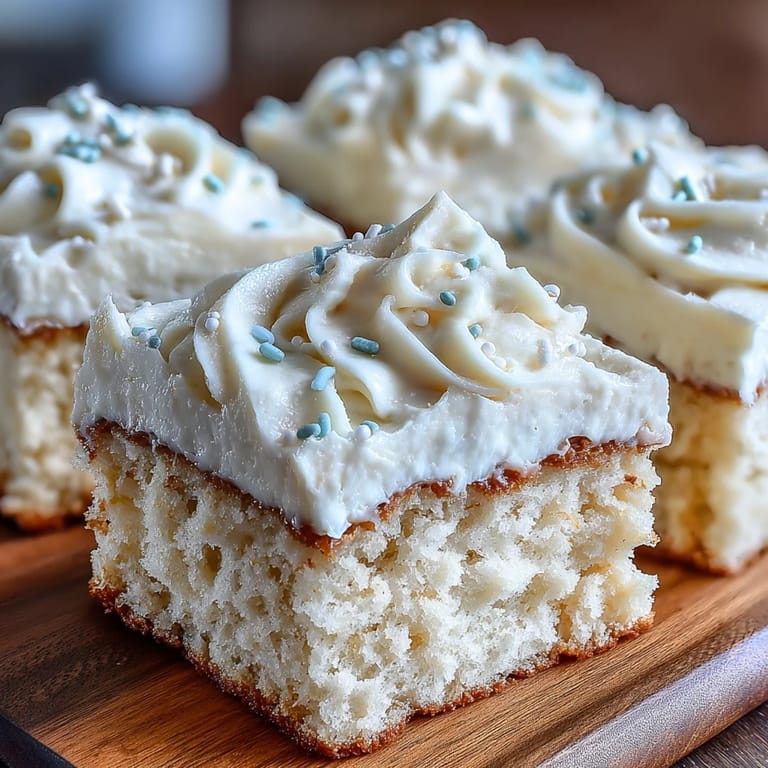
- A piping bag with a round tip lets you write names or dates on the frosting, turning a sheet cake into something personalized.
 Save
Save This cake has shown up for graduations, office parties, and quiet family dinners, and it's never once let me down. Bake it with confidence and watch people's faces light up when they taste something so simple and honest.
Recipe FAQs
- → What ingredients make the cake fluffy?
The combination of baking powder, baking soda, and well-beaten butter and sugar helps create a light, airy texture in the cake.
- → Can I add different flavor extracts?
Yes, adding ½ tsp of almond extract to the batter enhances the flavor without overpowering the vanilla base.
- → How do I ensure the cake bakes evenly?
Using a 12x18-inch pan lined with parchment paper and baking at 350°F ensures even cooking. Avoid opening the oven frequently during baking.
- → What is the best way to make smooth buttercream?
Beat the butter until creamy, slowly add sifted powdered sugar, then incorporate vanilla and milk before whipping until fluffy for a smooth finish.
- → How should leftovers be stored?
Cover the cake to keep it moist and store at room temperature for one day or refrigerate for up to four days.
- → Are there gluten-free alternatives?
Yes, replace all-purpose flour with a 1:1 gluten-free baking blend to make a gluten-free version.