 Save
Save I'll never forget the first time I arranged food like I was painting a canvas. I was prepping for a dinner party and wanted something that would make my guests pause when they walked in, not just reach for something to eat. That's when the zig-zag moment happened—I grabbed bold strips of red and yellow peppers, arranged them diagonally across a board, and suddenly my platter became art. The angular lines, the shocking contrast of colors, the way everything seemed to vibrate against each other. From that night on, I stopped thinking of appetizers as just food to pick at. They became the opening act, the conversation starter, the edible proof that you cared enough to make something beautiful.
I made this board for my best friend's birthday brunch last spring, and we ended up spending twenty minutes just photographing it before anyone would let me start plating the main course. That moment taught me something: the most memorable meals aren't always about the food itself, but about how it brings people together and makes them feel like they've stepped into something special. This platter did exactly that.
Ingredients
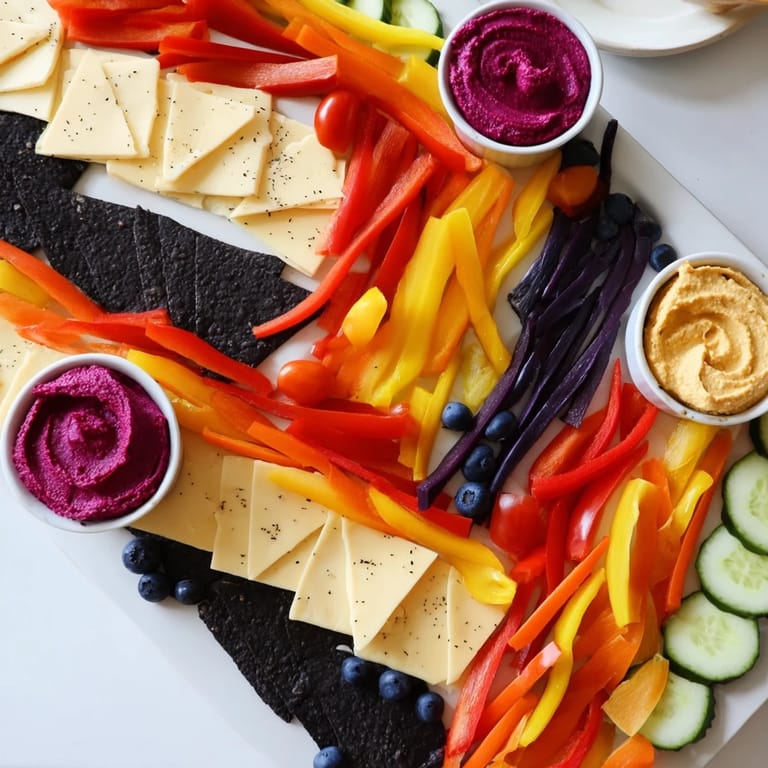
- Red bell pepper strips: The hero of your zig-zag—use 1 cup cut into long, sharp strips. Red peppers have the sweetest, most vibrant personality, and they're what your eye lands on first. Pro tip: slice them lengthwise to emphasize those bold lines.
- Yellow bell pepper strips: Your complementary contrast with 1 cup also cut angular. Yellow next to red creates an electric energy that makes the whole board feel alive.
- Cucumber sticks: 1 cup of refreshing green that grounds all that bold color. Cut them on a bias to match the angular theme—it sounds small but it matters.
- Purple carrots, cut into sticks: 1 cup of unexpected deep color. These bring sophistication and earthiness that sweet peppers can't offer. If you can't find purple, orange works fine, but purple stops people cold.
- Sharp white cheddar, sliced into thin angular pieces: 100 g (3.5 oz) of that clean, punchy flavor. Slice it thin so it reads visually on the board. The sharpness cuts through the sweetness of the peppers.
- Black wax gouda, sliced: 100 g (3.5 oz) of smoky, complex richness. The black exterior is pure visual drama, and the creamy inside melts beautifully with crackers. This is the ingredient that elevates everything.
- Blueberries: 1/2 cup scattered throughout. They're less about flavor and more about creating little jeweled pauses in the composition. Use them deliberately.
- Golden cherry tomatoes, halved: 1/2 cup of concentrated sweetness. The golden ones feel warmer and more elegant than red; they feel like they belong on a special board.
- Beet hummus: 1/2 cup in a small bowl. The earthy, slightly sweet element that surprises people. Beet hummus adds a flavor they weren't expecting in the best way.
- Classic hummus: 1/2 cup in its own small bowl. Your reliable anchor, the familiar comfort that makes everything accessible. The creamy pale color is essential visual contrast to the bold vegetables.
- Blue corn tortilla chips: 1 cup as your crunchy punctuation marks. Blue corn has a sophisticated depth that yellow chips don't offer. It feels intentional.
- Black sesame rice crackers: 1/2 cup tucked along the edges. The sesame adds an unexpected nutty note, and the black color reinforces your drama. These are architectural elements as much as they're food.
Tired of Takeout? 🥡
Get 10 meals you can make faster than delivery arrives. Seriously.
One email. No spam. Unsubscribe anytime.
Instructions
- Prepare everything with intention:
- Wash all your produce first—you want it crisp and clean. As you peel and cut, think about sharp lines and bold angles. Cut your vegetables and fruits into long sticks or strips, always emphasizing that diagonal energy. This isn't the time for meditative knife work; this is the time for confident, angular cuts. Everything should feel pointed, not gentle. Set each prepared ingredient in its own small pile so you can see your color palette laid out.
- Build your lightning bolt:
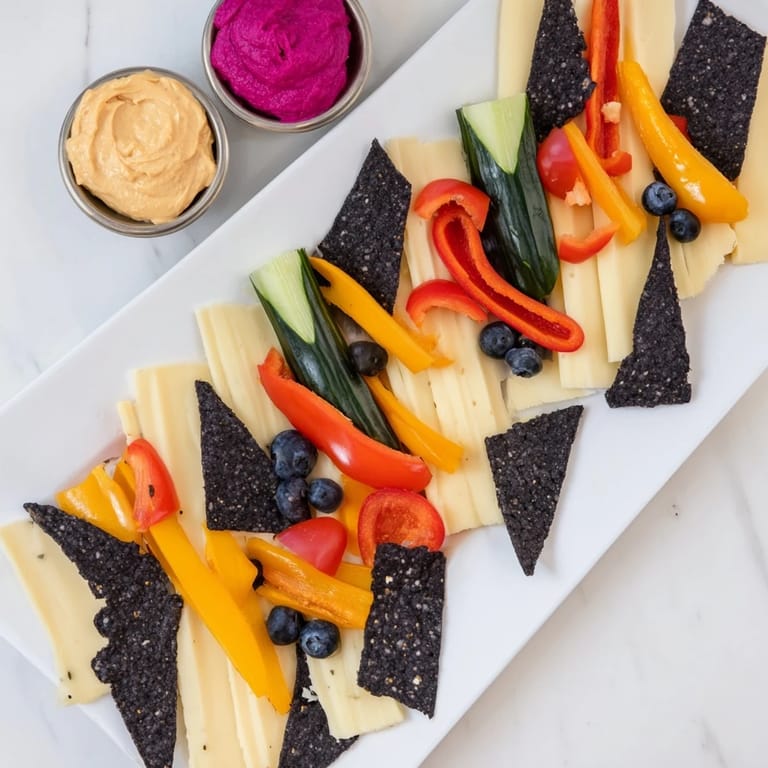
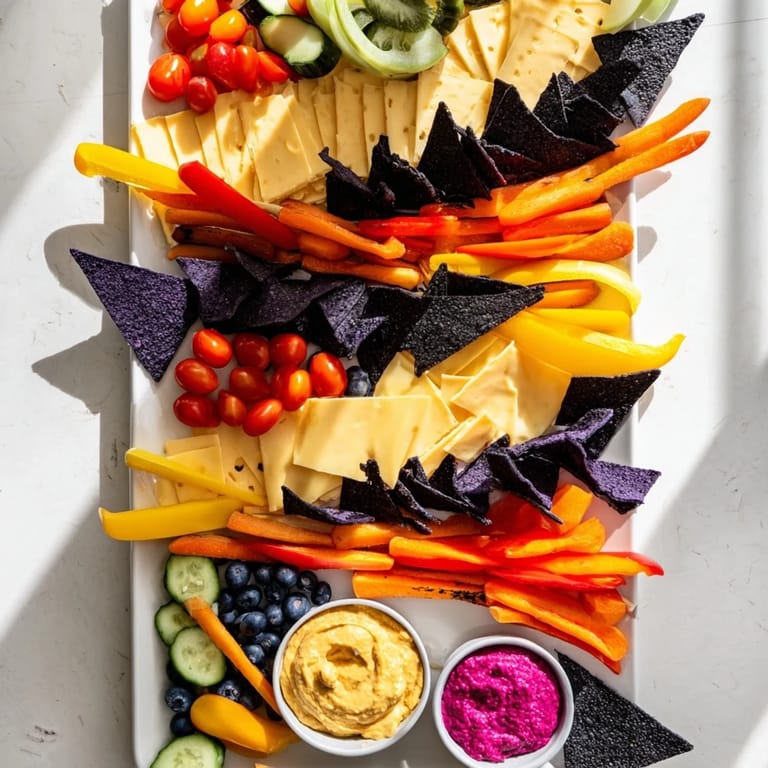
- Place your large rectangular board or platter in front of you. Now imagine a lightning bolt traveling diagonally from one corner to the opposite. This is your zig-zag path. Start at one corner and begin your arrangement, alternating colors as dramatically as possible. Red pepper strip, then white cheddar, then cucumber, then black gouda, then yellow pepper—make each transition feel like a shock to the system. The key is maximum contrast. You're not trying to be subtle; you're trying to create visual electricity.
- Anchor with the dips:
- Place your beet hummus in a small bowl at one junction of the zig-zag, and your classic hummus at another. These aren't afterthoughts—they're stopping points. They create little focal moments where the eye can rest before jumping to the next color explosion.
- Frame with texture:
- Now tuck those blue corn tortilla chips and black sesame rice crackers along the outer edges of your zig-zag path. They reinforce the angular shape and add that crucial textural contrast. Think of them as the borders that hold the whole composition together. This is where your board stops being flat and starts having dimension.
- Scatter your jewels:
- Take your blueberries and halved cherry tomatoes and place them deliberately along the zig-zag. These aren't filler—they're the moments of visual surprise. Let them rest in the negative space between your strips and slices. A few blueberries near the white cheddar, some golden tomatoes near the red pepper. Think about where your eye needs a little rest.
- Present with confidence:
- Step back and look. Does it feel electric? Can you trace the lightning bolt with your eye? Serve immediately so everything stays crisp and the visual impact stays sharp. This is the moment when people see it before they eat it, and that's where the magic lives.
 Save
Save There was a moment at that birthday brunch when someone stopped mid-bite of a cracker topped with beet hummus and blueberry, and they just looked up and smiled. They didn't say anything—they didn't need to. That's when food stops being about nutrition or even taste. It becomes about the feeling of being celebrated, of someone caring enough to make something beautiful. That's what this board does.
The Art of Angular Design
Working with angles and sharp lines changes the way you think about composition. Instead of thinking about filling space, you're thinking about creating movement and energy with your knife and your arrangement. This board taught me that food doesn't have to be soft and rounded to be beautiful—sometimes the most striking presentations come from confidence and straight lines. When you commit to a zig-zag pattern, you're not just arranging food; you're creating a visual path that guides people's eyes and their hands. It's architectural, and once you understand that principle, you start seeing appetizers differently forever.
Color Theory on a Platter
Every color choice on this board is fighting for attention in the best way possible. The red and yellow peppers create warmth and energy, the purple carrots and dark gouda add depth and sophistication, and the white cheddar creates visual breathing room. The blueberries and golden tomatoes are like punctuation marks—moments where the eye can focus and find sweetness. Understanding how colors speak to each other is just as important as understanding how flavors work together. I learned this by accident, but it's become intentional now. When you're creating something meant to be seen before it's eaten, color becomes your primary ingredient.
Texture and the Element of Surprise
The reason this board feels complete isn't just because it looks stunning—it's because every bite offers something different. Crisp vegetables, creamy cheese, soft hummus, crunchy chips and crackers, bursts of juicy fruit. Each element stands on its own but feels necessary to the whole. The sesame crackers especially caught me off guard the first time I used them. That nutty, toasted flavor was unexpected in the best way. When you're building a platter like this, think about how each texture tells a story and how together they create a full sensory experience.
- Layer your dips strategically so they become destinations, not afterthoughts
- Use the chips and crackers as structural elements that define your composition
- Mix temperatures if you can—serving this with something cold nearby makes the contrast even more satisfying
 Save
Save Make this board when you want people to remember not just what they ate, but how it made them feel. That's the whole point. This is the kind of appetizer that opens doors to conversations and connections.
Recipe FAQs
- → How can the angular shapes be achieved effectively?
Cut vegetables and cheeses into long, sharp strips or thin slices to emphasize the zig-zag pattern’s bold lines.
- → What dips pair best with this platter?
Beet hummus and classic hummus add creamy textures and vibrant colors that enhance the visual and flavor profiles.
- → Can this arrangement accommodate dietary restrictions?
Yes, use plant-based cheeses for vegan options and select gluten-free crackers to suit dietary needs.
- → What tools help achieve the best presentation?
A sharp chef’s knife and a large serving board are essential for clean cuts and proper layout.
- → How to enhance the flavor contrast on the board?
Incorporate a mix of sweet fruits like blueberries and savory sharp cheeses along with crunchy cracker textures.